Table of Contents
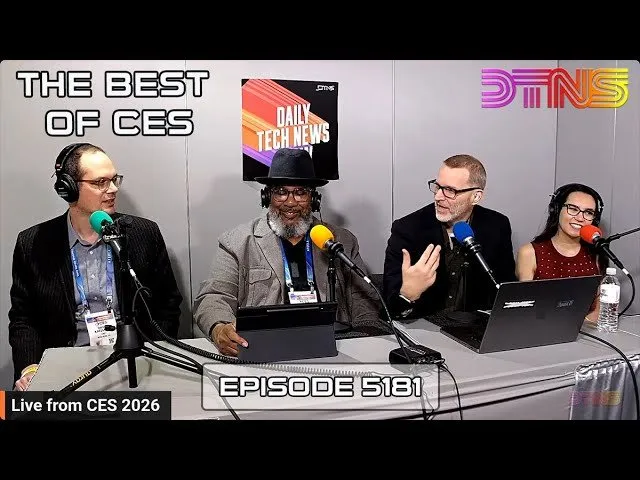
CES 2026 concluded Thursday in Las Vegas, showcasing a definitive shift toward "physical AI" and practical, shipping consumer hardware. From CNET’s official "Best of CES" awards highlighting the next generation of foldable phones to a massive influx of specialized robotics and smart home innovations, the event set the tone for the technology landscape of the coming year.
Key Points
- Top Honors: The Samsung Galaxy Fold trifold smartphone won CNET's "Best of CES," signaling the maturity of foldable display technology.
- Chip Architecture: Intel’s Core Ultra 300 "Panther Lake" chips were recognized for promising up to 43-hour battery life in upcoming laptops.
- Robotics Boom: The show floor was dominated by "physical AI," with over 100 new robot models ranging from autonomous lawnmowers to construction equipment.
- Smart Home Integration: Matter support has become standard, exemplified by Aqara’s new U400 lock and AT&T’s security partnership with Abode.
- Travel Innovation: JITLife debuted ridable carry-on luggage capable of speeds up to 8 mph, addressing micrmobility in airports.
Major Award Winners Signal Market Maturity
As the official awards partner for the Consumer Technology Association (CTA), CNET revealed its selections for the most impactful technology of the show. The rigorous selection process, involving over 40 editors and 22 categories, prioritized products that are scheduled to ship to consumers in 2026 rather than conceptual prototypes.
The coveted Best of CES award went to the Samsung Galaxy Fold, a trifold smartphone that expands into a full-sized tablet. Unlike previous iterations, this device features a three-way fold that allows users to consolidate their phone, tablet, and potentially laptop into a single unit. According to CNET Editor-in-Chief David Katzmaier, the win reflects the hardware's readiness for the mass market.
"This is something that's coming out this year... Samsung has come so far in the durability of the hinges and the thinness of the individual pieces of the accordion. It really feels like a solid product."
In the computing sector, Intel’s Core Ultra 300 (Panther Lake) secured the win for Deep Computing. While Nvidia’s Reuben chip made headlines for data centers, Intel’s offering was selected for its direct consumer impact. The new architecture is expected to power the majority of 2026 laptops, offering significant efficiency leaps with manufacturers citing battery life extending nearly two days on a single charge.
Other notable winners included the Lego Smart Brick, a $70 interactive component shipping in March that allows traditional bricks to communicate via sensors and lights, and Willow, a startup demonstrating "force field" wireless charging technology that powers devices simply when they enter a designated zone.
The Era of "Physical AI" and Ubiquitous Robotics
A distinct trend at CES 2026 was the pivot from generative text AI to "physical AI"—intelligence embedded into hardware capable of interacting with the physical world. While the term "AI" remains a marketing buzzword, the application has shifted toward autonomous navigation and task completion.
The show floor featured an unprecedented volume of robotics. Observers noted more than 115 distinct robot models, ranging from robotic bobcats for construction to domestic assistants. A standout in this category was the Strut EV1, a winner in the transportation category. Described as an autonomous mobility scooter, the EV1 allows users to input a destination and be transported without manual steering, effectively bringing self-driving technology to personal mobility devices.
This trend extended to outdoor maintenance as well. Aiper, known for pool cleaners, introduced the Irrisense 2, a smart irrigation system described as a "water cannon" capable of targeting specific plant zones up to 12 meters away. By utilizing weather data and soil sensors, the $500 unit aims to modernize water usage for homeowners.
Smart Home and Travel Innovations
The smart home sector continues to coalesce around the Matter standard, ensuring interoperability between brands. Aqara introduced the U400 smart lock ($270), which leverages Apple’s Ultra Wideband technology to unlock doors automatically as a resident approaches, distinguishing between someone inside or outside the home.
In a significant service shift, AT&T announced a partnership with security firm Abode. This collaboration allows AT&T customers to bundle home security monitoring for $11 to $22 per month, integrating hardware from various manufacturers like Google Nest under a single billing umbrella without requiring a cellular contract.
Travel technology also saw practical, if eccentric, innovation. The JITLife ridable luggage garnered attention for its ability to transport a 250-pound adult at speeds up to 8 mph. Unlike previous concepts, this motorized carry-on features a motorcycle-style throttle and is currently shipping, though battery regulations for air travel remain a key consideration for buyers.
Display Technology and Financial Shifts
Television technology remains a CES staple. While Samsung took home awards for its S95H OLED with advanced anti-glare technology, TCL impressed analysts with its SQD MiniLED. By utilizing up to 20,000 dimming zones, TCL has achieved contrast levels that rival OLED panels while maintaining the superior brightness of LED, offering a premium viewing experience at a potentially lower price point.
Beyond the hardware, several industry shifts were confirmed during the event:
- Apple Card Transition: Apple announced it will transition its credit card partnership from Goldman Sachs to JP Morgan Chase over the next two years.
- Alphabet Valuation: Alphabet’s market cap surpassed Apple’s to take the number two spot globally, with Nvidia remaining number one.
- Drone Manufacturing: With regulatory pressure mounting on Chinese manufacturer DJI, US-based companies like Helio saw increased interest, emphasizing domestic supply chains for commercial drone hardware.
As the consumer electronics industry moves into the rest of 2026, the focus is clearly on the integration of AI into physical tasks and the refinement of form factors like foldables and wearables. Products revealed this week are expected to begin hitting retail shelves throughout Q1 and Q2.