Table of Contents
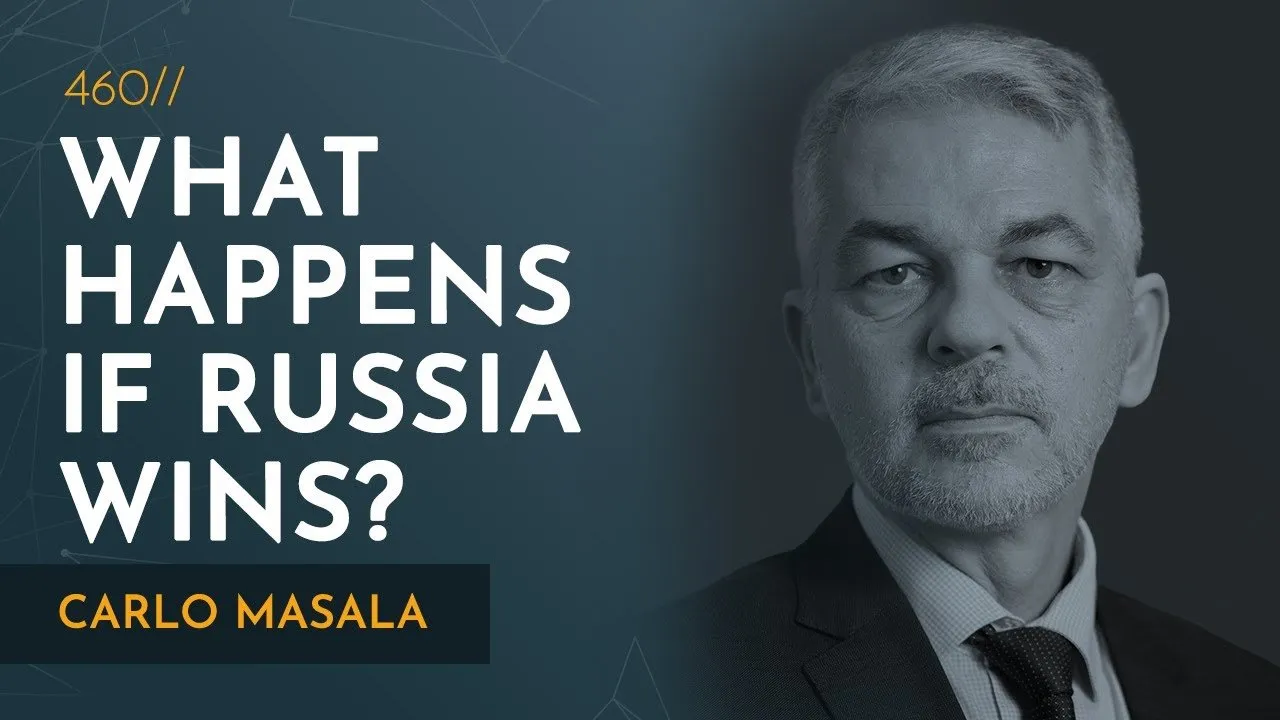
In the summer of 2024, intelligence agencies across Europe began sounding a synchronized alarm: by 2029, the Russian Federation could possess a military capable of attacking a NATO member state. This assessment sparked a fierce debate across Western capitals. Critics argued that attacking NATO would be suicidal given the alliance's military superiority, or pointed to Russia’s struggles in Ukraine as evidence of their incapacity. However, political scientist Carlo Masala argues that this conventional wisdom misses the point entirely. Russia’s goal isn’t necessarily to conquer Europe with tank divisions; it is to shatter the political will of the NATO alliance.
In his book, If Russia Wins, Masala presents a chilling thought experiment: a limited, calculated incursion into the Estonian city of Narva in 2028. This scenario is not a prediction of inevitable doom, but a strategic stress test designed to expose the vulnerabilities in Western defense commitments. By exploring this scenario, we uncover the fragile state of European security, the implications of a distracted America, and why the threat from Moscow extends far beyond the tenure of Vladimir Putin.
Key Takeaways
- The Goal is Destruction, Not Conquest: Russia’s primary objective may not be territorial expansion, but the political destruction of NATO by proving Article 5 is unenforceable.
- The "Narva Scenario": A limited incursion into a Russian-speaking NATO city could freeze the alliance, forcing members to choose between nuclear escalation or abandoning an ally.
- The Threat is Systemic: The imperial ambitions driving the war in Ukraine are rooted in the Russian regime, not just Vladimir Putin; a successor could be equally dangerous or more deceptive.
- Global Coordination: The scenario envisions a multi-domain strategy where crises in the South China Sea and migration waves from Africa distract Western powers from the Eastern flank.
- Hybrid Warfare is Already Here: Acts of sabotage, drone incursions, and infrastructure attacks across Europe suggest the "testing" of NATO borders has already begun.
The "Narva Scenario": A Calculated Stress Test
To understand the threat facing Europe, one must look past the grinding trench warfare of Ukraine and consider how Russia might leverage "salami tactics" against NATO. Masala’s scenario takes place in March 2028, following a hypothetical peace deal in Ukraine that leaves Russia with occupied territory and a demilitarized Kyiv.
In this timeline, Russia does not launch a full-scale invasion of Poland or the Baltics. Instead, they target Narva, an Estonian city with a significant Russian-speaking population. This mirrors the strategy used in Donbas in 2014, utilizing the narrative of protecting oppressed minorities to justify intervention.
The Rhineland Analogy
The strategic logic behind this move draws from a specific historical precedent: the remilitarization of the Rhineland in 1936. At the time, Nazi Germany sent troops into a demilitarized zone, gambling that France and Britain would not risk war to stop them. Hitler knew his forces were inferior, but he bet on Western indecision.
"The Russians just have to put NATO on a test and to see whether NATO is willing to invoke Article 5... It’s not necessary to attack a NATO country full-fledgely... If NATO doesn't react, then they would stay and NATO would be dead."
By occupying a small border city and then pausing, Russia places the burden of escalation on NATO. The alliance faces a paralyzing dilemma: launch a massive counter-offensive—potentially triggering a nuclear exchange—to liberate a small city, or accept the fait accompli. If NATO chooses the latter, Article 5 is rendered meaningless, and the US security guarantee effectively evaporates.
The Illusion of a Post-Putin Reset
A dangerous assumption pervades Western diplomatic circles: that the current aggression is "Putin’s War," and his eventual departure will lead to a normalization of relations. Masala’s scenario challenges this by introducing a fictional successor—a young, charismatic leader who charms European diplomats while quietly continuing neo-imperial policies.
This narrative device highlights a critical reality: Russian revisionism is systemic. The demand to roll back NATO infrastructure to 1997 lines—effectively removing US protection from Eastern Europe—is not merely a Putinist obsession but a geopolitical goal shared by the wider Russian security elite.
Notably, the only significant domestic criticism of the war in Ukraine within Russia has come from hardliners arguing that Putin has been too soft. Consequently, a leadership transition presents a moment of supreme danger. A new leader could exploit Western war-weariness, pausing rearmament efforts in Europe under the guise of a diplomatic "thaw," only to strike when defenses are lowered.
The Multi-Domain Trap: Stretching the West
A Russian incursion into NATO territory would likely not happen in a vacuum. A successful challenge to the alliance requires the United States—the backbone of European defense—to be distracted elsewhere. The scenario posits a coordinated effort between revisionist powers to overstretch Western resources.
The Role of China and the Global South
In Masala’s analysis, the attack on Narva coincides with two manufactured crises:
- Migration Warfare: Russian paramilitary groups in Africa push waves of migrants toward the Mediterranean, forcing European governments to focus on border control rather than their Eastern flank.
- Pacific Distraction: China initiates a confrontation in the South China Sea, compelling the United States to divert carrier strike groups and attention to the Indo-Pacific.
This alignment of interests is already visible. China’s support for Russia—through economic lifelines and dual-use technology—serves Beijing’s strategic interest by keeping the US bogged down in Europe. The ultimate goal for both powers is the degradation of American global hegemony.
"The Russian president says to the Chinese president, 'You know, things are moving faster than they did over the past century.' And the Chinese president answers by saying, 'Yes, and we are in the driving seat.'"
This exchange, which actually occurred between Putin and Xi Jinping, underscores their shared belief that history is accelerating in their favor.
From Fiction to Reality: The Hybrid War Has Begun
While the invasion of Narva remains a hypothetical scenario, the "low threshold" warfare described by experts like David Kilcullen is already a reality. Europe is currently experiencing a wave of sabotage operations that fall below the threshold of open war but serve to intimidate and destabilize.
Recent incidents include:
- Infrastructure Sabotage: The severing of undersea data cables in the Baltic Sea.
- Industrial Attacks: Arson attacks on warehouses connected to Ukraine aid and assassination attempts against arms manufacturers.
- Airspace Violations: Drone incursions over critical infrastructure, airports, and military bases in Germany and Scandinavia.
These actions are designed to demonstrate the inability of European states to protect their own territory. They create a psychological environment where the population feels defenseless, eroding trust in government and security institutions.
Conclusion: The Necessity of Going It Alone
The central warning of If Russia Wins is that Europe can no longer take American protection for granted. Whether due to a strategic pivot to Asia or a shift in domestic US politics, the American umbrella is becoming less reliable. If the perception takes hold in Moscow that the US will not fight for Narva—or Lithuania, or Poland—the window of opportunity for aggression opens wide.
For Europe, the implication is stark. To prevent the "Narva Scenario" from becoming history, European nations must develop the capabilities to deter Russia independently. This requires not only rearmament but a psychological shift: accepting that the era of relying solely on Article 5 is ending, and the defense of the continent may soon rest in European hands alone.