Table of Contents
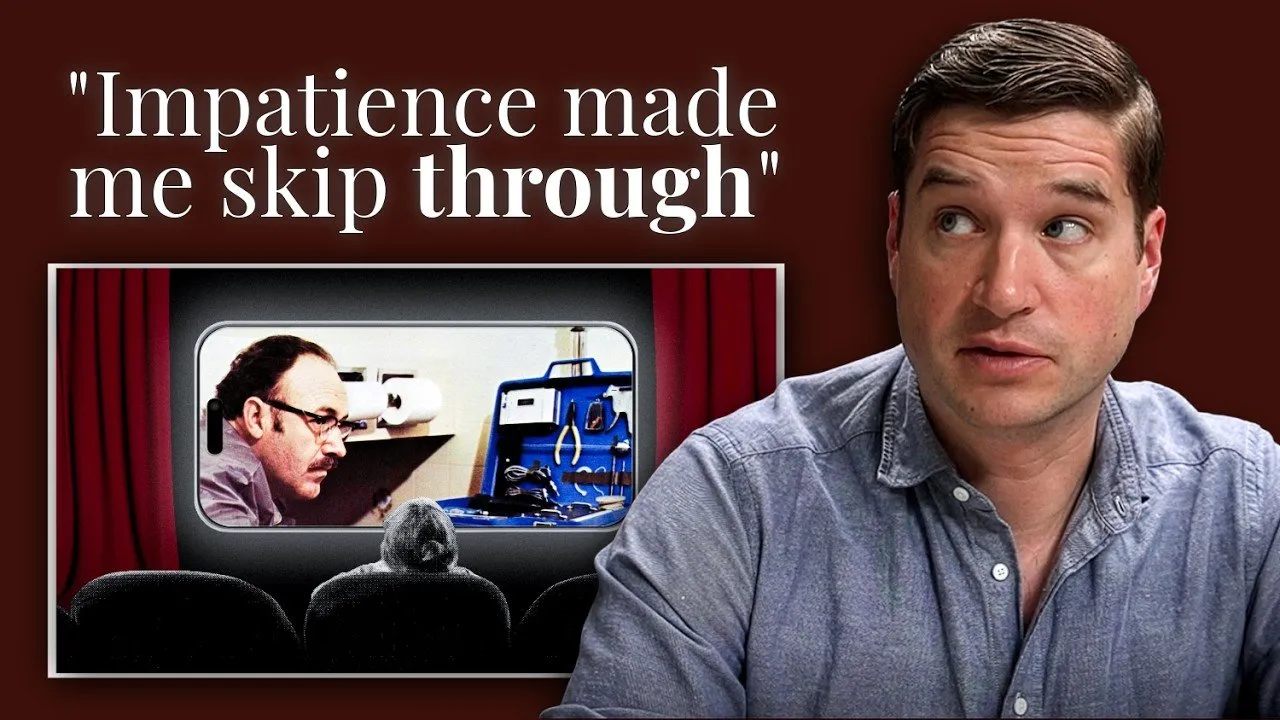
In a recent report for The Atlantic, a troubling trend has emerged among the very people one would expect to be the champions of long-form storytelling: film students. Professors from top-tier programs are reporting that their students, despite their passion for the craft, can no longer sit through a feature-length film. They fidget, they check their screens, and they struggle to follow narratives that don't provide immediate, high-octane stimulation. This phenomenon isn't just a quirk of the modern classroom; it is a "canary in the coal mine" for the state of the human brain in the age of the smartphone.
Key Takeaways
- Cognitive Patience is Waning: The ability to sustain focus on a single, non-interactive task is being eroded by the constant, short-term rewards of digital technology.
- Streaming Services are Adapting: Filmmakers are being pressured to abandon classic narrative structures in favor of constant plot repetition and early action sequences to keep distracted viewers from "flipping away."
- The Reward System Conflict: Our brains are caught between a short-term reward system (dopamine from notifications) and a long-term system (satisfaction from deep engagement) that must be actively trained.
- Movies as Mental Fitness: Relearning how to watch a movie serves as an ideal "5K race" for the mind, helping individuals rebuild the focus required for a deeper, more meaningful life.
The Erosion of Cognitive Patience
The struggle to watch a movie is a symptom of a broader decline in cognitive patience. This term, coined by reading researcher Maryanne Wolf, refers to the ability to process complex information with sustained attention while delaying gratification. As we spend hours flicking through short-form videos and switching browser tabs every 47 seconds, we are effectively training our brains to reject any stimulus that doesn't offer a high "expected value" of reward within moments.
The impact of this shift is already visible in how movies are produced. During a recent interview, actor Matt Damon noted that streaming platforms are now encouraging writers to reiterate the plot multiple times throughout the script. This isn't for clarity, but for the benefit of viewers who are looking at their phones during key exposition. Damon observed:
"Streamers are now pushing filmmakers to avoid the classic three-act structure and to instead reiterate the plot three or four times in the dialogue because people are on their phones while they're watching."
In contrast, classic cinema often relied on "the slow burn." In The Godfather, Al Pacino’s character remains quiet and unassuming for over an hour before his pivotal transition into the family business. Today, such a delay in character development would likely be deemed too risky for an audience primed for immediate action.
The Neuroscience of Distraction
To solve the problem of declining focus, we must understand the neurological tug-of-war happening in our heads. Our brains utilize two distinct reward systems. The first is a short-term reward system. When your phone is nearby, specific bundles of neurons "vote" for you to pick it up, anticipating the hit of dopamine that comes from an algorithmically curated feed. This manifests as a physical urge—similar to the withdrawal symptoms of a nicotine addict.
The second system is the long-term reward system. This part of the brain predicts future satisfaction—the deep, philosophical, or emotional fulfillment that comes from finishing a great book or a moving film. Unlike the short-term system, the long-term system requires training. Every time we give in to the urge to check our phones, the long-term system loses its standing, and our "attentional autonomy" shrinks.
The Danger of the Feedback Loop
When we lose the ability to engage with art, we lose the ability to engage with anything that requires delayed gratification. This includes deep work, complex relationships, and self-reflection. If we cannot endure the "boredom" of a 90-minute film, we will struggle to find satisfaction in any endeavor that doesn't provide a constant stream of digital pings.
Practical Strategies to Reclaim Your Focus
Rebuilding attention is a physical exercise, much like training for a marathon. You cannot expect to sit through a slow-paced masterpiece like The Searchers if your brain is accustomed to 15-second TikTok loops. Cal Newport suggests a structured approach to "becoming a better movie watcher."
The 30-Minute Rule
If you find your focus flagging, use the 30-Minute Rule. Do not simply force yourself to stare at the screen. Instead, watch for 30 minutes, then pause to read a professional review or a cinematographic analysis of the film. This "primes" the brain, helping you understand why the movie is considered great and what details you should be looking for. This increases the "salience" of the film, making it more rewarding to your long-term reward system.
Removing the Trigger
The simplest tactical move is to remove the phone from the room entirely. If the device is within reach, your short-term reward system will continue to "vote" for distraction, creating a state of constant mental friction. By physically distancing yourself from the stimulus, you allow your brain to settle into the narrative of the film without the constant threat of interruption.
The AI Hype and the Reality of Human Skill
The discussion of focus extends into the world of technology and work. Recently, an essay titled "Something Big is Happening" by Matt Schumer went viral, suggesting that AI is about to undergo a "recursive self-improvement" loop where it begins to code and improve itself at an exponential rate. However, a closer look at the ground truth of computer programming suggests a more nuanced reality.
While AI is remarkably good at handling tedious, structured coding tasks, it is not yet capable of replacing the conceptual, mathematical innovations that drive human progress. Professional programmers are not "walking away" while the AI builds their apps; they are using it as a tool for specific, supervised tasks. The hype surrounding AI often mirrors our digital distractions—it promises a "shortcut" to results without the need for the deep, sustained human thought that actually solves complex problems.
Cultivating the Deep Life
Reclaiming your brain from your phone isn't just about enjoying movies; it's about attentional autonomy. Whether it is an Olympic athlete struggling with "vile online hatred" or a professional trying to finish a complex project, the ability to control where your mind goes is the ultimate competitive advantage in the 21st century.
This is the core of the "Deep Life." It is not enough to simply say that phones are bad; we must build lives that are so interesting and engaging that the phone becomes the least attractive thing in the room. By practicing focus through the medium of film, we take the first step toward a more intentional existence.
Conclusion
Movies are not just entertainment; they are a training ground for the soul. The struggle of film students to watch films is a warning that our cognitive fitness is in decline. However, by treating focus as a skill to be practiced rather than a given trait, we can reverse the damage. Start by putting your phone in another room, picking a classic film, and committing to the experience. Reclaiming your brain starts with a single, uninterrupted story.