Table of Contents
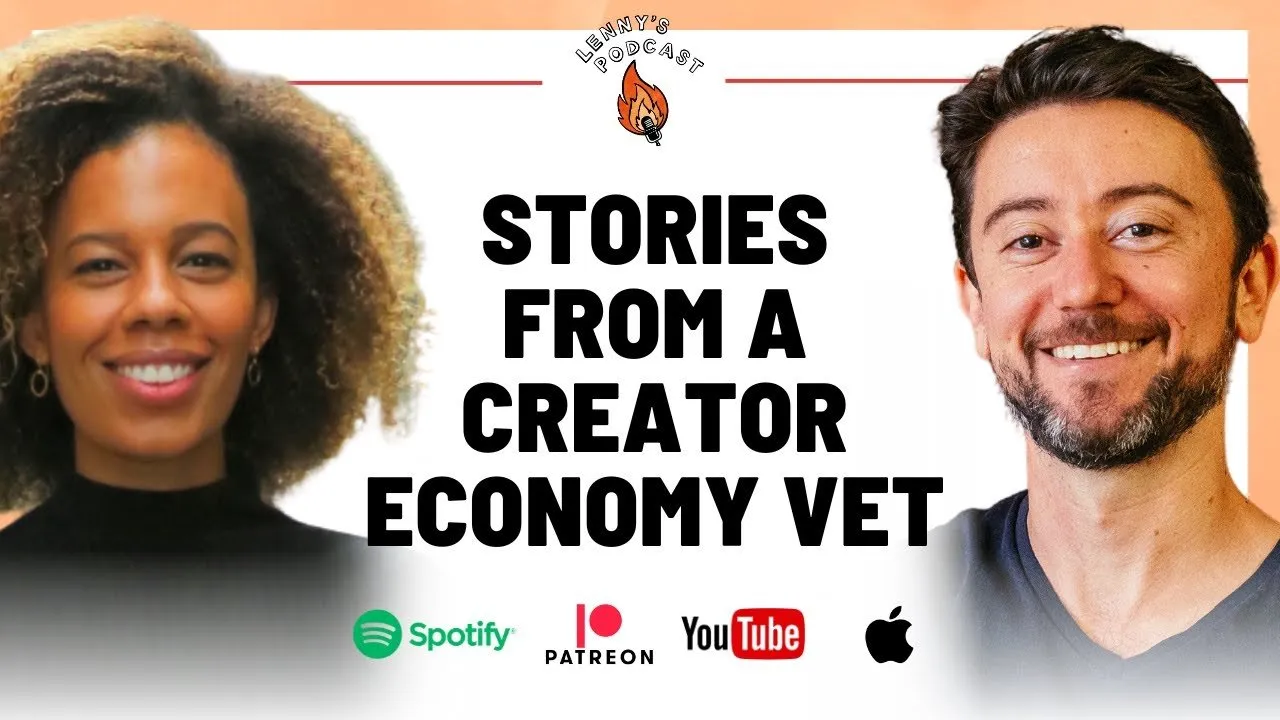
From the early days of iTunes to the algorithmic dominance of YouTube and the community-focused models of Patreon and Spotify, Camille Hearst has worked at the intersection of art and technology for nearly two decades. Currently serving as the Head of Fan Monetization at Spotify, Hearst offers a unique vantage point on how the creator economy has matured and where it is heading next.
The narrative of the "starving artist" is being rewritten by platforms that allow creators to monetize directly. However, the transition from creative passion to sustainable business is rarely a straight line. Whether it is navigating the "hamster wheel" of constant content production or understanding the nuanced dynamics of two-sided marketplaces, today’s product leaders must balance the emotional needs of creators with the cold realities of scaling a business.
Drawing from her experiences as a founder, a product leader at major tech firms, and a "radical Buddhist artist technologist," Hearst provides a masterclass on building for the creator economy, the distinct product culture at Apple, and the strategic imperatives of marketplace growth.
Key Takeaways
- Supply dictates marketplace success: In two-sided marketplaces, aggregating supply is almost always the primary challenge. Without high-quality inventory (whether cars for ride-sharing or art for patrons), demand cannot be sustained.
- The psychological barrier to monetization: Musicians often struggle more than other creators to charge for their work due to a deep-seated desire to share their art freely, necessitating platforms to facilitate value exchange without guilt.
- Apple’s craft-led product culture: Unlike the strategy-heavy approach of other tech giants, Apple operates on a design and engineering-led model where intuition and perfectionism drive development rather than A/B testing alone.
- De-risking via Dual Track Agile: Effective product teams run discovery and delivery simultaneously, prioritizing the riskiest assumptions first to avoid investing engineering hours in unproven concepts.
- Exit strategy is a relationship game: Founders looking to sell their companies should cultivate relationships with potential acquirers years in advance, treating the acquisition as a strategic partnership rather than a transactional sales process.
The Psychology of Fan Monetization
While the infrastructure for the creator economy has solidified, the psychological hurdles for creators—particularly musicians—remain a significant friction point. Unlike educational creators or journalists on Substack who may view their output as a distinct product, musicians often operate under an ethos that prioritizes broad accessibility over revenue.
Hearst notes that this "starving artist" mentality makes it difficult for musicians to ask for direct support, even when their "superfans" are eager to open their wallets. The role of the platform, therefore, is to normalize this value exchange.
"To some degree, there has to be a value exchange that happens in order for a creative person to live from their art... We really look at it as a way that fans want to support the artists they love. They want to open up their wallets... they look at it as a badge of honor."
Moving Beyond Streaming Royalties
At Spotify, the focus has shifted toward diversifying revenue streams beyond standard streaming payouts. The modern fan economy is built on connection and exclusivity. Current initiatives include:
- Merchandise integration: Making physical goods easily accessible within the streaming interface.
- Exclusive rewards: Offering top listeners special access, discounts, or digital badges that signal their status within a fandom.
- Virtual events: Listening parties that gather communities in real-time, replicating the communal energy of a concert in a digital space.
The "Hamster Wheel" of Content Creation
A critical downside to the direct-to-fan model is the pressure of consistency. Subscription models, while providing predictable income, lock creators into a cycle where taking a break feels like a financial risk. Hearst describes this as the "hamster wheel of content creation."
Future platform innovations may need to address creator burnout directly. This could involve financial tools that smooth out revenue during breaks, or AI-assisted tooling that helps maintain audience engagement without requiring the creator to be "on" 24/7. The longevity of the creator economy depends on making the career path sustainable for humans, not just algorithms.
Marketplace Dynamics: Why Supply Wins
Having worked across various marketplace models, including ride-sharing competitors to Uber, Hearst argues that the supply side is the linchpin of liquidity. While many view marketplaces as a "chicken and egg" problem, the reality is that the "egg" (supply) must almost always come first.
In the context of ride-sharing, it did not matter how sleek the user interface was or how aggressive the marketing campaigns were; if a user opened the app and saw "no cars available," the product failed. This principle applies across verticals:
- Inventory is trust: Empty shelves (or empty feeds) destroy consumer trust instantly.
- Supply quality defines the brand: In the early days of iTunes, meticulous attention was paid to the library's curation to ensure it met the standards of music aficionados like Steve Jobs.
- Operations backing the UI: A great digital experience is often just a wrapper for heavy operational lifting on the supply side.
The Rise of the Curator
As the barrier to entry for content creation lowers, the volume of content explodes, creating a new problem: discovery. Hearst predicts that the next wave of the creator economy will elevate the "Curator" to a creator status in their own right. Just as record labels and radio DJs once acted as filters, trusted individuals who can navigate the noise and recommend quality content will become essential, monetizeable nodes in the network.
Product Philosophy: The Apple Way vs. Agile Discovery
Hearst’s tenure at Apple during the iPod and iTunes era provided a foundational education in a specific type of product culture—one defined by craft, intuition, and high-stakes presentation.
Apple’s Craft-Led Culture
At Apple, the role of a Product Manager was notably different from the industry standard. The company was driven by design and engineering, often described as a culture of "craftspeople" rather than strategists. Decisions were not always data-led in the traditional sense; they were vision-led.
This culture trickled down from Steve Jobs, whose attention to detail was legendary. Hearst recalls managing press rooms where iTunes libraries had to be hand-curated to match Jobs’ specific musical tastes—Bob Dylan and The Beatles—ensuring that even the demo experience was authentic to his vision.
Dual Track Agile and "Eating the Frog"
Transitioning from the secretive, launch-focused culture of Apple to broader tech ecosystems, Hearst adopted the "Dual Track Agile" framework, popularized by Marty Cagan. This approach divides product work into two simultaneous streams:
- Discovery: The work of determining what to build. This involves validating user needs and technical feasibility before code is written.
- Delivery: The work of building the product to production quality.
Crucial to this methodology is the concept of prioritizing risk. Hearst advocates for tackling the most dangerous assumptions—the "frogs"—first. By prioritizing the tasks or hypotheses that are most likely to fail or block the project, teams can de-risk innovation early.
"If you constantly put those [risky ideas] off in favor of the lower risk or more predictable, smaller swings, how are you ever going to truly innovate and get to the next level?"
Navigating Startup Acquisitions
Before joining Spotify, Hearst founded Kit, a product discovery community, which she eventually sold to Patreon. Her experience offers a sober look at the reality of M&A (Mergers and Acquisitions) for founders.
The process of selling a company is rarely a cinematic moment where a tech giant swoops in with an unsolicited offer. It is a rigorous sales funnel, much like fundraising. Hearst advises founders to treat potential acquirers as long-term relationships rather than emergency contacts.
Strategic Advice for Founders:
- Build relationships early: Do not wait until you are running out of cash to meet corporate development teams. Engage with potential acquirers years in advance under the guise of partnerships or knowledge sharing.
- Align on vision: An acquisition is more likely to succeed if the acquirer understands your long-term product vision and how it accelerates their own roadmap.
- Treat it like a process: Managing an exit requires a pipeline of conversations, due diligence, and negotiation. It requires the same operational rigor as sales or recruitment.
Conclusion
The creator economy is settling into a mature phase. The frantic "gold rush" of new platforms has calmed, leaving established giants to consolidate and refine their offerings. However, the core human needs remain unchanged: creators need to grow audiences and sustain their livelihoods.
Whether it is through better monetization tools on Spotify, community building on Patreon, or the emergence of new curation layers, the future of this space belongs to those who can solve the operational and psychological friction points of being a creator. As Hearst suggests, the technology is ultimately just a vehicle to help people pursue their "radical" creative passions without starving for them.