Table of Contents
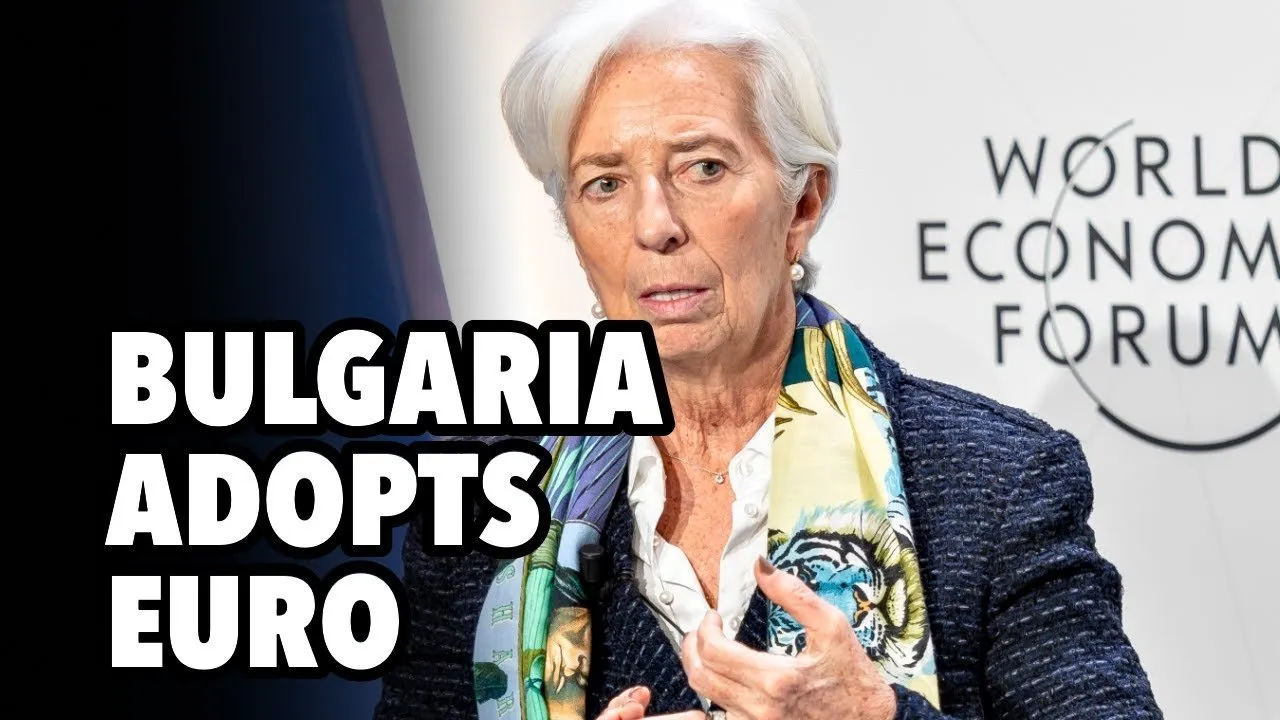
Bulgaria’s imminent accession to the Eurozone represents a watershed moment for the Balkan nation, marking a permanent shift in its economic sovereignty and geopolitical alignment. Despite significant internal political instability—including a succession of eight prime ministers since 2020—and substantial public skepticism, the transition from the Lev to the Euro is proceeding. This move raises critical questions about the future of Bulgarian industry, the potential for a Greek-style debt crisis, and the broader implications for a Eurozone already grappling with stagnation. By analyzing the structural mechanics of this transition, we can project the likely economic trajectory for Sofia and its impact on the European Union’s financial stability.
Key Takeaways
- Public Opposition vs. Political Momentum: The push for Euro adoption proceeds despite polls indicating that up to 70% of the Bulgarian population opposes the move, highlighting a disconnect between the electorate and the ruling class.
- Loss of Competitiveness: Swapping a sovereign soft currency for a hard currency removes Bulgaria's ability to use devaluation as a tool for industrial competitiveness, potentially mirroring the de-industrialization seen in Southern Europe.
- The "Hotel California" Trap: Once monetary sovereignty is ceded to the European Central Bank (ECB), there is no legal or practical exit mechanism, effectively locking Bulgaria’s economy into decisions made in Frankfurt and Brussels.
- Geopolitical Consolidation: Adopting the Euro serves as a geopolitical anchor, reducing Bulgaria's ability to dissent on foreign policy issues by placing its liquidity directly under EU control.
- The Boom-Bust Cycle: Analysts predict an initial consumption boom fueled by cheap credit, followed by a severe debt crisis and the potential distress sale of national assets.
The Democratic Deficit and Political Context
The political backdrop of Bulgaria’s entry into the Eurozone is characterized by profound instability. Since 2020, the nation has seen a revolving door of leadership, with eight different prime ministers attempting to steer the government. This lack of continuity has led to a persistent governance crisis, exacerbated by corruption scandals and public protests. Yet, amidst this chaos, the trajectory toward the Euro remains the singular constant policy.
Notably, this major constitutional change is occurring without a direct referendum. Critics argue that the move is being driven by the EU leadership and a specific segment of the local business elite and state bureaucracy, rather than democratic consensus. The President of Bulgaria, holding a largely ceremonial yet influential role, has expressed deep skepticism regarding the transition, reflecting a broader public sentiment that is largely being overridden.
The polls had 70% of the people did not want it... Bulgaria did not want to join the Euro. The Bulgarian people did not join the euro. There's never been a vote on it.
This "democratic deficit" suggests that the adoption of the Euro is not merely an economic decision but a political enforcement, driven by external expectations and internal collaborators who stand to benefit from the new financial regime.
Economic Sovereignty and the Risk of De-industrialization
The most immediate economic consequence of abandoning the Lev is the loss of monetary flexibility. Historically, nations with "softer" currencies have utilized devaluation as a mechanism to maintain competitiveness in export markets. By lowering the value of their currency, they make their goods cheaper abroad, protecting their industrial base.
The Structural Trap
By adopting the Euro, Bulgaria surrenders this lever of control. The economy will effectively be swapping a manageable soft currency for a "hard" currency calibrated for economies like Germany and the Netherlands, not the developing markets of the Balkans. Economic history across the Eurozone—specifically in Italy, France, and Greece—demonstrates that when weaker economies are locked into a strong currency, they often suffer from de-industrialization.
Bulgaria possesses a significant, albeit eroding, industrial base. Without the ability to devalue, these industries may find themselves uncompetitive against global rivals, leading to factory closures and job losses. This phenomenon is structural; once a country joins the monetary union, it cannot adjust its money supply to suit local economic conditions.
The "Hotel California" Effect
The structure of the Eurozone creates a scenario often compared to "Hotel California": you can check out any time you like, but you can never leave. The integration of banking systems and debt markets makes exiting the currency union practically impossible without triggering a total economic collapse.
If you lose control of your currency, your economy is controlled from Brussels and Frankfurt, they can switch off the money as they did in Greece... Unless there is a total collapse of the Euro zone... Bulgaria brought into this against its will, is now trapped inside it.
Once inside, Bulgaria’s monetary fate is sealed by decisions made by the European Central Bank (ECB), which prioritizes the stability of the core Eurozone economies over the periphery.
The Predicted Economic Cycle: Boom, Bust, and Asset Seizure
Based on the precedents set by other Southern/Eastern European nations joining the Euro, analysts forecast a distinct three-phase economic cycle for Bulgaria.
Phase 1: The Consumption Boom
Initially, the adoption of the Euro is likely to trigger a "honeymoon phase." Access to the Eurozone’s credit markets will lower borrowing costs, leading to a massive speculative and consumption boom. Both the government and private citizens will likely "tank up" on debt, utilizing the "Euro credit card." During this period, international financial media often hail the country as a new economic miracle, citing GDP growth driven by debt-fueled spending.
Phase 2: The Inevitable Crash
As debt levels rise at both the state and private levels, the underlying lack of competitiveness begins to weigh on the economy. Once the credit cycle turns, or when the industrial base erodes sufficiently, a crash becomes inevitable. This creates a deeply indebted economy with no means to print its way out of trouble or devalue its currency to recover.
Phase 3: The Fire Sale
The aftermath of the crash typically invites intervention from international bodies such as the IMF and the ECB. This phase is characterized by austerity measures and the privatization of state assets.
- Asset Stripping: A "fire sale" of state and private assets often ensues, where foreign investors acquire valuable resources—agricultural land, infrastructure, and potential arms industries—at depressed prices.
- Demographic Shift: The economic strain accelerates demographic decline. Young professionals, finding no opportunity in a de-industrialized home market, emigrate to the Eurozone core. Meanwhile, the older generation remains, often supporting the Euro purely to protect the value of their pensions, creating a political divide.
Geopolitical Alignment and the End of Dissent
Beyond economics, the Euro serves as a potent tool for geopolitical compliance. Bulgaria has historically served as a cultural and geographical crossroads, maintaining deep historical, religious, and linguistic ties with Russia. The population has traditionally held sentiments that are less hostile toward Moscow compared to other NATO members.
However, currency adoption effectively neutralizes the potential for political dissent. Control over the money supply gives the EU leadership the ability to exert extreme pressure on member states that deviate from the consensus view on foreign policy—such as sanctions regimes or military aid.
If a Bulgarian government were to echo the dissenting rhetoric of leaders in Hungary or Slovakia regarding the conflict in Ukraine, the ECB possesses the power to restrict liquidity. The threat is implicit but clear: political non-compliance can result in a financial shutdown, similar to the pressure tactics applied during the Greek crisis. In this sense, the Euro acts as a mechanism to ensure total alignment with Brussels' geopolitical objectives.
Impact on the Eurozone’s Stability
Finally, the inclusion of Bulgaria presents risks to the Eurozone itself. The European economy has faced stagnation for decades, partially due to the imbalances created by the single currency. While the Euro initially boosted German competitiveness, it did so at the expense of its neighbors. Now, with Germany’s own industrial model under pressure from rising energy costs and sanctions warfare, the bloc is economically fragile.
Integrating another uncompetitive, potentially highly indebted nation adds liability to an already strained system. Unlike the crisis of 2011, when Germany had the fiscal reserves to orchestrate bailouts, the current economic climate offers no such safety net.
The Euro zone is loading problems onto itself... Germany won't be able to come up with the tens of billions, hundreds of billions that were needed at that time... It creates a further step to the ultimate undermining and collapse of the Euro zone.
While a crisis in Bulgaria alone may not be enough to topple the currency union, it contributes to the accumulation of systemic risk. The Eurozone is expanding into instability at a time when its core economies—France, Italy, and Germany—are facing their own profound debt and growth challenges.
Conclusion
Bulgaria’s entry into the Eurozone is a complex maneuvering of high finance and geopolitics that bypasses the stated will of its people. While the immediate future may bring a veneer of prosperity through cheap credit and consumption, the long-term structural forecast suggests de-industrialization, debt entrapment, and a loss of national sovereignty. As the "Hotel California" doors close behind Sofia, the country becomes inextricably bound to the fate of a currency union that is itself facing an uncertain future.