Table of Contents
Building a high-performing sales organization is not an exercise in democracy or comfort. It requires a rigorous adherence to standards, an obsession with winning, and the willingness to make difficult personnel decisions. In a landscape where founders often prioritize domain expertise or "safe" resumes, many startups fail to generate the momentum required to scale from zero to $100 million.
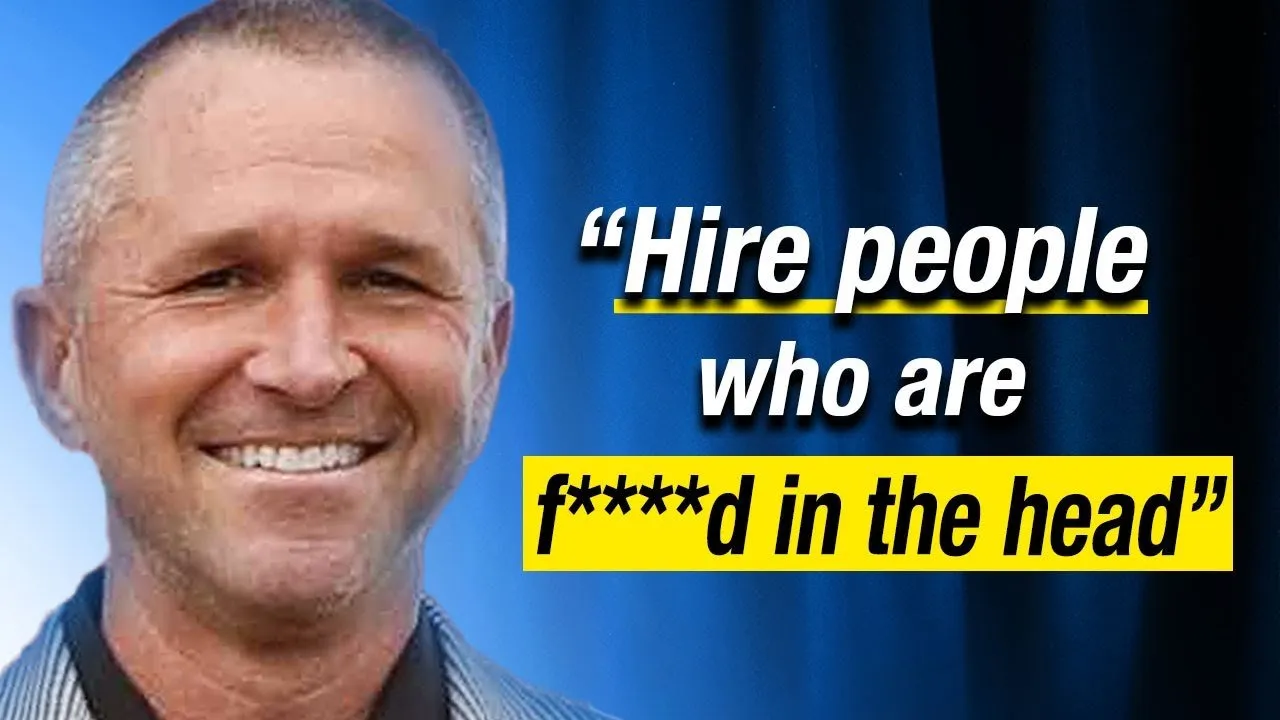
Chad Peets, a veteran executive recruiter and sales leader known for building world-class teams, argues that the conventional wisdom regarding hiring and firing is often what holds companies back. From the necessity of "obsessed" employees to the mathematical realities of attrition, the path to a dominant sales culture requires stripping away niceties and focusing on raw performance and grit.
Key Takeaways
- Hire for obsession, not just competence: The best sales representatives are driven by an intrinsic need to win and master their craft, not merely to fund a lifestyle.
- Prioritize grit over domain expertise: It is easier to teach a tenacious salesperson your technology than it is to teach an industry insider how to hunt for new business.
- Scrutinize the "Net New" track record: Avoid candidates who rely on upselling existing accounts; startups need hunters who have proven they can generate pipeline from nothing.
- Maintain healthy attrition: A high-performing culture requires routinely removing the bottom 10% of performers to protect and motivate your A-players.
- Avoid "Tomorrow" hires: Founders often hire executives suited for managing established $500M companies, rather than the builders needed to get the company off the ground today.
The Psychology of the Top 1%: Looking for "Obsession"
When evaluating potential hires, resumes often hide the most critical attribute of a top-tier salesperson: their psychological driver. The most effective representatives are not those who view sales as a 9-to-5 obligation, but those who are consumed by the process of winning.
Peets employs a specific line of questioning to separate those who work to live from those who live to win. The standard interview question—"What is your passion?"—is often a trap. If a candidate spends twenty minutes discussing their love for painting or hiking, and views their career solely as the funding mechanism for those hobbies, they likely lack the relentless drive required for a high-growth startup environment.
"I work because I want to be the best in the world at what I want to do... I want to win. You want that obsession about what they're doing for a living."
This does not dismiss the value of work-life balance for the general population, but for a sales organization aiming to be world-class, the requirement is different. Leaders should look for candidates who wake up thinking about strategy, who are bothered by losses, and who strive for mastery of their craft. When a rep answers that they are driven by "money," it is often a superficial answer. The deeper, more desirable answer revolves around impact, mastery, and competition.
Testing for Grit and the "New Logo" Hunter
In the startup ecosystem, a padded resume from a Fortune 500 company can be a false signal. A candidate might have exceeded their quota, but if that success came from farming existing accounts or relying on a massive brand name, their skills may not translate to a scrappy environment where no one knows who you are.
The "Net New" Litmus Test
The most critical metric for a startup sales hire is their ability to generate pipeline and close net new logos. During the interview process, you must dig deep into the numbers. If a candidate claims they hit 103% of their quota, you must ask:
- What was the average deal size?
- How many of those deals were net new business versus upsells?
- Did they inherit the accounts or hunt them?
If a candidate cannot recall the specific details of their biggest wins or where they ranked on the leaderboard, it is a red flag. A passionate salesperson knows their stats intimately. If they rely on "I'd have to check," they likely weren't driving the results themselves.
Adversity as a Credential
Peets argues that "grit" is not something that can be taught in onboarding. It is a character trait forged through adversity. Consequently, hiring managers should look for backgrounds that demonstrate resilience—military veterans, individuals who put themselves through college, or people who have navigated significant personal or professional failures.
Startups are effectively life-and-death scenarios for a company. A salesperson who has only known the safety of a large corporate infrastructure often lacks the emotional resilience to handle the rejection and ambiguity of a startup. You need individuals who have stared into the abyss of failure and kept moving forward.
The Myth of Domain Expertise
One of the most common mistakes founders make is overvaluing domain expertise. The logic seems sound: "If I hire a rep from my competitor, they already know the market and can ramp up faster." However, this strategy often leads to acquiring mediocrity.
If you recruit from a competitor, you are often getting their B or C players—the ones willing to leave or who aren't being retained. While they may know the acronyms and the customer base, if they lack the fundamental ability to hunt and close, their domain knowledge is useless.
What you can teach vs. what you can't:
- You CAN teach: Technology stacks, product features, competitive positioning, and deal structure.
- You CANNOT teach: Integrity, grit, obsession, and the instinct to close new business.
A world-class sales leader accepts a longer ramp time for a talented athlete who needs to learn the industry, rather than hiring a knowledgeable veteran who lacks the fire to win. In the long run, the "athlete" outperforms the "insider."
Defining "Good": Metrics Beyond the Quota
Measuring performance solely by "quota attainment" is a lazy management strategy. A representative can hit 130% of their number because a single "bluebird" deal fell into their lap, despite having poor habits and low activity. Conversely, a rep might miss quota while doing everything right, setting up massive future success.
To truly measure performance and efficiency, sales leaders must track leading indicators (inputs) rather than just lagging indicators (revenue). These include:
- New Customer Meetings: The raw fuel of the sales engine.
- Conversion Ratios: How effectively they move prospects from stage to stage.
- Pipeline Generation: Specifically self-sourced opportunities.
- Face Time: Travel and direct interaction with prospects.
When companies stop measuring these inputs, accountability vanishes. A rigorous sales culture demands that you inspect the work, not just the result.
The Brutal Math of Attrition and Culture
Perhaps the most controversial aspect of building a high-performance team is the approach to attrition. Many companies wear low attrition rates as a badge of honor, believing it signals a "great culture." In reality, low attrition often signals a lack of accountability.
"If you have A players in your company and they're surrounded by a bunch of B players and you're not holding those B players accountable, your A players will quit."
For a scaling company, a total attrition rate of approximately 25% is healthy and expected. This breaks down into three categories:
- Involuntary (Firing): Roughly 10% of the sales force—the bottom performers—should be let go annually.
- Promotions: High performers moving into management or different roles (technically "field attrition").
- Voluntary: Natural turnover where people leave for other opportunities.
If you are not actively managing out the bottom 10%, you are implicitly telling your top performers that mediocrity is acceptable. Top performers want to be on a winning team; they despise carrying the weight of colleagues who do not share their work ethic.
Firing Fast
The difference between an average manager and a great one is the speed at which they rectify hiring mistakes. Most managers know within the first few weeks if a hire is a mistake. However, out of ego or fear of conflict, they let the problem fester for months. A world-class leader owns the mistake immediately ("I hired wrong"), cuts ties, and moves on. This protects the culture and the pipeline.
Conclusion
Building a sales organization that dominates its market requires a departure from comfort. It demands that founders and sales leaders look past the polish of a resume to find the grit beneath. It requires hiring for the "now"—builders who can operate in chaos—rather than executives suited for the "tomorrow" of stable corporate governance.
By enforcing strict performance metrics, valuing character over domain knowledge, and having the courage to maintain high attrition among low performers, companies can build a team that doesn't just survive the startup journey, but thrives in it.