
Table of Contents
The economic model for supporting great writing on the internet has historically been flawed. For decades, the primary mechanism for monetization was the advertisement, which incentivized attention games over quality. However, a shift is occurring. Platforms are moving away from ad-supported aggregators toward direct writer-to-reader relationships, creating what many industry leaders are calling a "Golden Era" for online writing.
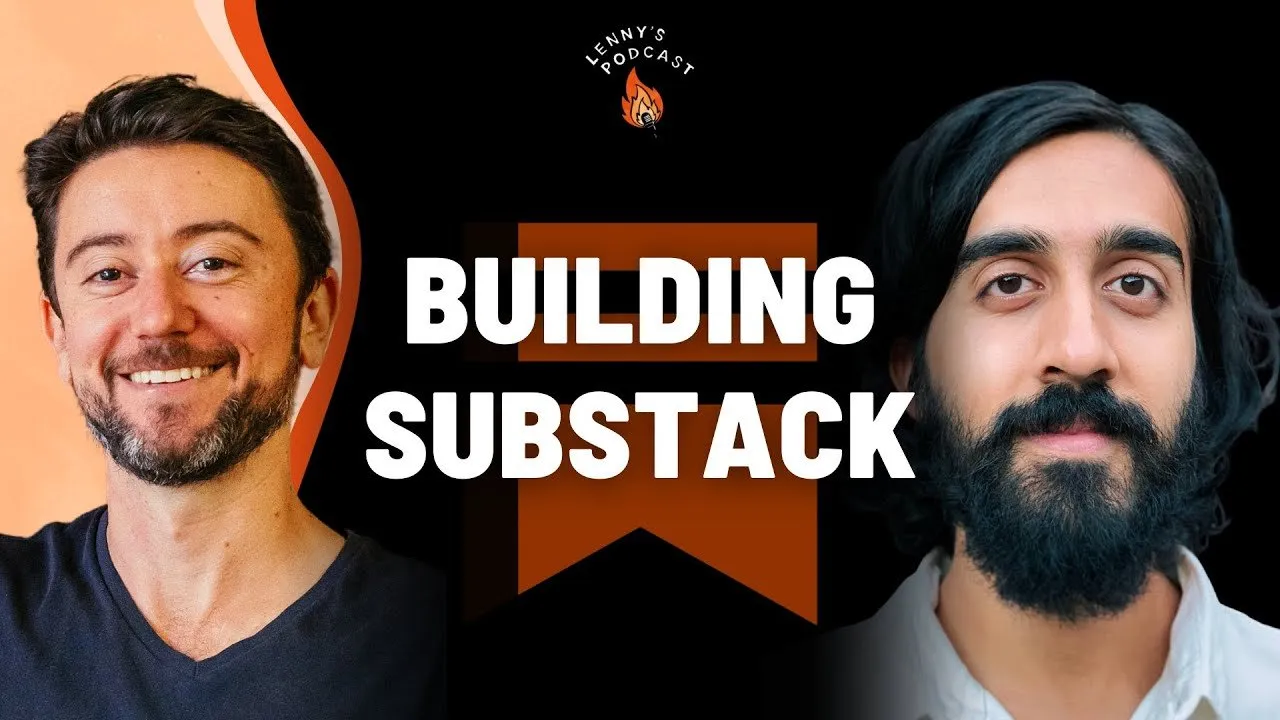
Sachin Monga, Head of Product at Substack, offers a unique vantage point on this transition. Having moved from leading teams at Facebook to building a startup, and finally landing at Substack, Monga has navigated the complexities of building digital spaces that prioritize user agency over algorithmic engagement. His insights reveal how product philosophy, strategic growth loops, and a commitment to "writer control" are reshaping the creator economy.
Key Takeaways
- The evolution from tool to network: Substack is transitioning from a simple SaaS tool for publishing into a robust network where supply drives demand and writers benefit from an ecosystem of discovery.
- Agency over algorithms: Unlike traditional social media, Substack prioritizes features that give writers and readers control, such as the human-curated Recommendations feature, rather than relying on black-box engagement algorithms.
- The "Facilitator" PM model: In high-growth startups with product-minded founders, the Product Manager's role often shifts from decision-maker to facilitator, ensuring the team executes the founder's vision while providing crucial feedback.
- The power of 1,000 true fans: The direct subscription model proves that creators do not need millions of views to sustain a living; a relatively small, high-intent audience is economically viable.
- Building digital cities: Product philosophy at Substack is influenced by urban planning, viewing digital platforms as spaces that should be built by and for the people who inhabit them, rather than by developers optimizing for extraction.
The Evolution from Tool to Network
Substack began its life primarily as a single-player tool—software that allowed a writer to publish and monetize via email. However, the platform is currently undergoing a significant transformation into a network. This shift is not about becoming a social media clone, but rather about leveraging the collective power of writers to solve the discovery problem.
Supply Driving Demand
In the early stages, growth was driven entirely by the supply side. Writers brought their existing audiences to the platform, effectively acting as the primary acquisition channel for Substack. As the density of high-quality writers increased, the platform reached an inflection point where it could begin cross-pollinating audiences.
- Network effects: The accumulation of writers created a critical mass that allowed for network-driven discovery, meaning writers now gain subscribers simply by being part of the ecosystem.
- Economic viability: Early adoption by established writers like Matt Taibbi proved the model worked for celebrities, but recent trends show that niche writers without massive prior followings are also generating significant income.
- Beyond newsletters: The definition of a "Substack" is expanding. It is no longer just text; it encompasses podcasts, video, and community discussions, serving as a comprehensive home base for creators.
- Community ownership: The platform aims to be the place where a creator’s most valuable audience lives—the audience they "own" via email lists, distinct from rented audiences on algorithmic social platforms.
We're just starting into this Golden Era of what it might mean to be a writer.
Operationalizing Product Management at a Startup
Transitioning from a massive organization like Facebook to a growth-stage company requires a fundamental shift in how product management operates. At Substack, the product culture is defined by small, autonomous teams and a unique relationship between product leaders and founders.
Structuring for Customers, Not Features
Rather than organizing teams around specific surface areas—such as an "App Team" or "Dashboard Team"—Substack aligns its product organization around customer personas. This ensures that the team solves timeless problems rather than optimizing ephemeral features.
- The Writer Team: Dedicated to building tools and services that help writers publish, grow, and monetize.
- The Reader Team: A newer focus area, ensuring that the consumption experience is high-quality and that readers have control over their inbox and app experience.
- The Growth Team: Focused on the mechanics of scaling the network and improving conversion.
- Core Systems: An engineering-focused group that maintains infrastructure and scalability without a dedicated product manager.
The PM as Facilitator
In an environment where the founders have a strong product vision, the Head of Product often acts less as the "CEO of the product" and more as a bridge. The goal is to synchronize the founder’s long-term vision with the team’s day-to-day execution.
- Building trust: Success relies on establishing a high-trust relationship where the PM can accurately model the founder’s thinking.
- Facilitation over decision-making: The PM ensures that the founder understands what the teams are doing and that the teams understand the founder's intent, preventing strategic drift.
- Navigating obsolescence: In a high-growth environment, processes become obsolete almost as soon as they are perfected. The role requires comfort with constant ambiguity and rapid evolution.
The Philosophy Behind the Recommendations Feature
One of the most impactful growth engines for Substack has been the Recommendations feature, which allows writers to suggest other newsletters to their subscribers. This feature drives a significant percentage of new subscriptions across the platform, yet its development required overcoming internal skepticism and adhering to strict philosophical constraints.
Solving Discovery Without Algorithms
The standard industry approach to discovery is "People You May Know" or "Recommended for You" algorithms based on behavioral data. Substack rejected this in favor of human curation.
- Writer agency: The feature was designed to keep the writer in control. Instead of the platform inserting ads or algorithmic suggestions, the writer explicitly chooses whom to endorse.
- The trust graph: Recommendations leverage the trust a reader has in a specific writer. If a reader trusts Writer A, they are likely to trust Writer A’s recommendation of Writer B.
- High-intent growth: Despite being a "growth hack," the subscribers generated through this feature tend to be high-quality because the endorsement comes from a trusted source, not a random feed.
- Viral goodwill: The feature created a positive feedback loop where writers recommend each other, generating goodwill and reciprocal growth throughout the network.
It creates this sort of Goodwill viral Loop which was really interesting to see play out.
The "Build with Writers" Methodology
The rollout of Recommendations exemplified Substack’s product development ethos. Rather than launching a feature to everyone simultaneously, the team utilized a "product lab" approach.
- Pilot programs: New features are tested with a small group of invited writers to gauge impact and sentiment.
- Feedback loops: The product team iterates based on direct writer feedback, ensuring the final release aligns with the community's values.
- Avoiding the "opt-out" trap: By making features optional and writer-driven, Substack avoids the backlash common on platforms that force UI/UX changes on their user base.
Navigating Trade-offs: Big Tech vs. Startups
Having spent seven years at Facebook, Monga highlights the distinct differences in decision-making frameworks between a mature tech giant and a scaling startup. While some principles translate, the nature of trade-offs differs dramatically.
The Constraint of Time
At a company the size of Facebook, prioritization is often about managing complex dependencies where doing one thing might negatively impact a metric elsewhere in the ecosystem. At a startup, the primary variable is time.
- Existential prioritization: At a startup, choosing to build Feature A often means Feature B cannot happen for a year. The opportunity cost is temporal, not just metric-based.
- One-way doors: Large companies often deal with "one-way doors"—decisions that are hard to reverse. Startups must identify which decisions are truly irreversible and move quickly on the rest.
- Sequencing matters: In a startup, the order of operations is critical. Building a specific tool today might unlock a network effect tomorrow that wouldn't be possible if the sequence were reversed.
- Zero-sum vs. Additive: At Facebook, a new notification might cannibalize engagement from the News Feed. At Substack, new features are generally additive, unlocking new value rather than fighting for a fixed pool of attention.
Time is the main variable. We can do this now and that means that we can't do this other thing.
The Creator's Playbook: Advice for Growth
For aspiring writers and creators, the barrier to entry can often feel psychological. There is a pervasive fear of being "too late" to the platform or worry that the market is oversaturated. Monga and the Substack team argue that we are still in the early innings of the internet's development.
Just Start
The most consistent advice for growth is to simply begin publishing. The friction to start is lower than ever, and the potential upside of finding a niche audience is high.
- Kevin Kelly’s "You Are Not Late": The internet is young. The opportunity to shape digital culture and build an audience is as potent today as it was a decade ago.
- The 1,000 True Fans reality: Creators do not need millions of casual observers. A thousand subscribers paying a monthly fee creates a sustainable, living wage.
- Overcoming "Ask" anxiety: Many writers hesitate to turn on payments or take vacations, fearing audience backlash. Data shows that high-intent subscribers are generally supportive and want the creator to succeed and remain healthy.
- The "Robin Hood" effect: Successful writers on the platform often use their recommendation slots to uplift smaller, newer voices, creating a meritocratic ladder for new talent.
The Future of Digital Spaces
Looking forward, Substack views its product development through the lens of architecture and urban planning. The goal is to build a digital city that feels good to inhabit, drawing inspiration from works like Christopher Alexander’s The Timeless Way of Building.
Building for Human Interaction
The future of the platform lies in creating spaces that facilitate genuine connection between the writer and the reader, and among readers themselves.
- The "Pub" concept: New features are being piloted to create community spaces—similar to a pub at the back of the newsletter—where subscribers can hang out, heavily moderated and curated by the writer.
- Guest posts and collaboration: Reducing the burden on the individual writer by making it easier to host guest content and collaborate, turning newsletters into broader media publications.
- A distinct "Third Place": The ambition is for Substack to become a destination app—a place where users go not to doom-scroll, but to intentionally consume culture and connect with communities they value.
Conclusion
Substack’s trajectory suggests a fundamental rewiring of the internet’s economic logic. by shifting the power dynamic from platforms to creators, and from advertisers to subscribers, the company is betting on a future where quality and trust outperform viral clickbait. For product leaders, the Substack story offers a blueprint for building user-centric networks: prioritize the supplier, respect the consumer's agency, and recognize that even in a digital age, the most enduring structures are those built on human connection.

)