Table of Contents
In a software landscape saturated with options, shipping a product that simply "works" is no longer a competitive advantage. The era of the Minimum Viable Product (MVP)—often interpreted as releasing the bare minimum to function—is giving way to a more nuanced, user-centric approach: the Minimum Lovable Product (MLP).
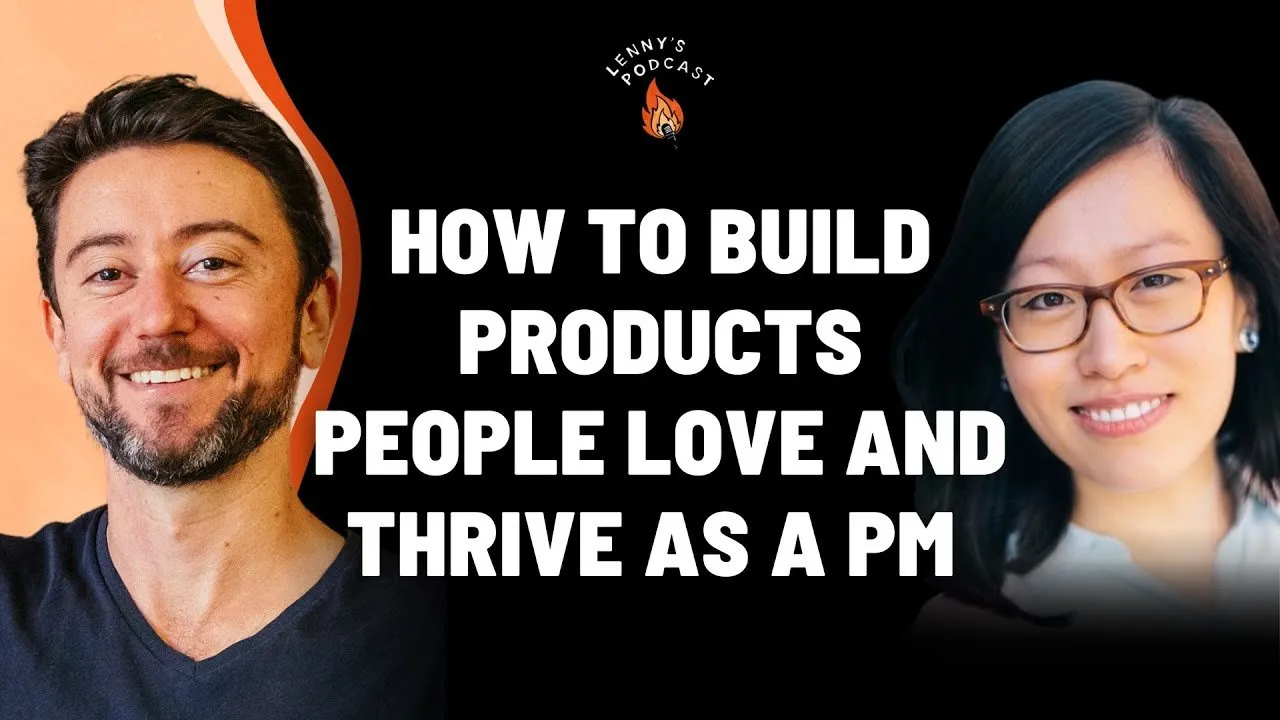
Jiaona "Jay-Z" Zhang, Senior Vice President of Product at Webflow and a lecturer at Stanford University, has spent her career defining what makes products not just functional, but delightful. With a resume that includes leadership roles at Airbnb, WeWork, Dropbox, and Pocket Gems, Jay-Z offers a masterclass in product strategy, from the mechanics of roadmapping to the psychology of leadership.
The following insights explore how product managers can elevate their craft, avoid costly strategic missteps, and build careers defined by excellence and empathy.
Key Takeaways
- Shift from MVP to MLP: In competitive markets, quality beats quantity. It is better to release five features with high polish and "pixie dust" than fifteen features that barely meet the bar.
- Roadmaps are stories, not spreadsheets: Effective roadmapping requires a narrative about themes and user value, rather than a rigid list of features and dates.
- Define "Crushing It" qualitatively: When setting OKRs, look beyond input metrics. articulate exactly what a successful outcome feels like for the user and the business.
- Specialize to accelerate: Early in your career, become known for a specific superpower—whether it's handling complex launches or deep data analytics—to attract more responsibility.
- Understand your "Alpha": Every company has a core reason users love them. Never dilute that core strength in pursuit of competitor features (e.g., Dropbox chasing chat instead of perfecting sync).
The Rise of the Minimum Lovable Product
For years, the industry standard for early-stage development was the MVP. However, Jay-Z argues that in a world full of high-quality alternatives, releasing a product that barely meets a quality bar is a recipe for churn. The "Minimum Lovable Product" focuses on depth over breadth.
The core philosophy of the MLP is narrowing the scope to ensure that whatever is shipped is executed with excellence. This often requires making hard trade-offs. A team might realize they can reach "viable" on fifteen features, but only reach "lovable" on five. The strategic move is to ship the five.
"Better to do five things instead of the 15 things in a really, really great way with a high degree of polish... versus trying to do everything and just doing a little bit of everything."
The "Pixie Dust" Factor
Lovability often comes from "pixie dust"—the small, delightful details that go beyond basic utility. At Airbnb, this meant moving beyond table stakes for the mobile app and introducing pre-populated templates that made hosting effortless. At Webflow, it can be as subtle as intuitive keyboard shortcuts for power users.
You cannot sprinkle pixie dust on everything; resources are finite. However, creating an emotional connection with users requires identifying specific moments in the user journey where extra polish will generate delight and loyalty.
Strategic Failures and the "Solution-First" Trap
One of the most common mistakes new Product Managers make is jumping straight to solutions. They enter a role wanting to build a specific feature or startup idea without first validating the user problem. This "solution-itis" can plague entire organizations, not just junior PMs.
The Lesson of Airbnb Plus
During Jay-Z’s tenure at Airbnb, the company launched Airbnb Plus, a tier of verified high-quality homes intended to compete with managed marketplaces and hotels. The solution was operationally heavy: sending inspectors to physically verify homes.
While the problem—guests wanting assurance of quality—was real, the solution ignored Airbnb’s strategic DNA. Airbnb is a platform, not an operations company. Building a heavy operational muscle to inspect inventory was costly and difficult to scale. A better approach would have leveraged the platform's existing strengths, such as using guest reviews or granular data inputs from hosts to verify quality without manual inspections.
The lesson for product leaders is to ensure your solution aligns with your company’s "Alpha"—the unique strength that makes you successful. If you are a technology platform, solve problems with technology, not by trying to become an operations company overnight.
Refining Product Operations: Roadmaps and OKRs
Operational rigour often becomes a box-checking exercise. Jay-Z advocates for humanizing these processes to make them effective tools for alignment.
Roadmaps as Storytelling
A roadmap should not be a spreadsheet filled with RICE scores (Reach, Impact, Confidence, Effort). A spreadsheet is a calculation; a roadmap is a narrative. It should tell the story of why the team is investing in specific themes and how those themes connect to the company's broader vision.
When presenting a roadmap, use a document to write out the prose. This forces clarity of thought. You can link to Jira or spreadsheets for the execution details, but the roadmap itself must articulate the strategic "why."
Qualitative OKRs
Objectives and Key Results (OKRs) often trap teams in a cycle of fear or sandbagging. Teams set low targets to ensure they hit "green," or they obsess over input metrics that don't actually move the needle for the business.
To fix this, leaders should ask: "What would make us say we crushed it?"
Before settling on a number, the team should write a qualitative description of success. What is the user feeling? How has the business perception changed? Once that vision is clear, the metrics serve the vision, rather than the vision serving the metrics. It is better to miss an ambitious "red" goal while learning valuable lessons than to comfortably hit a "green" goal that changes nothing.
Career Acceleration and Leadership
Thriving as a product manager requires a deliberate approach to reputation building and team management.
Find Your Superpower
To accelerate a career in product, you must be known for something specific. General competence is good, but specialized excellence attracts opportunity. This could be:
- Complex Execution: Being the person who can shepherd massive, cross-functional launches.
- Analytics: Being the person who can derive clear insights from messy data sets.
- Technical Fluency: Being the person who can bridge the gap with engineering on complex infrastructure problems.
"People tend to flock and give responsibility to the people that are known for being excellent at something."
The First 90 Days and the Trust Bank
When joining a new company, the priority is building context and trust. Jay-Z views trust as a bank account: you must make deposits before you can make withdrawals. "Withdrawals" in this context mean pushing for major changes or pivoting strategy.
To build this capital, spend the first 90 days speaking to people across all functions and levels—not just leadership. Talk to the engineers who have been there the longest to understand the technical debt. Talk to sales to understand the customer objections. Pushing for change before you have deposited enough trust creates friction and resistance.
Conclusion: The Courage to Ask for Help
Perhaps the most counterintuitive advice for leaders is the necessity of vulnerability. There is a temptation, especially when stepping into a senior role, to project omniscience—to feel as though the buck stops with you and you must have all the answers.
However, the most effective leaders are those who relentlessly ask for help. Whether it is admitting you aren't an expert on the latest AI developments or acknowledging you don't know the right path forward for a specific strategy, asking for help invites collaboration and usually leads to a superior outcome. Leadership is not about knowing the answer; it is about guiding the team to find the right one.