Table of Contents
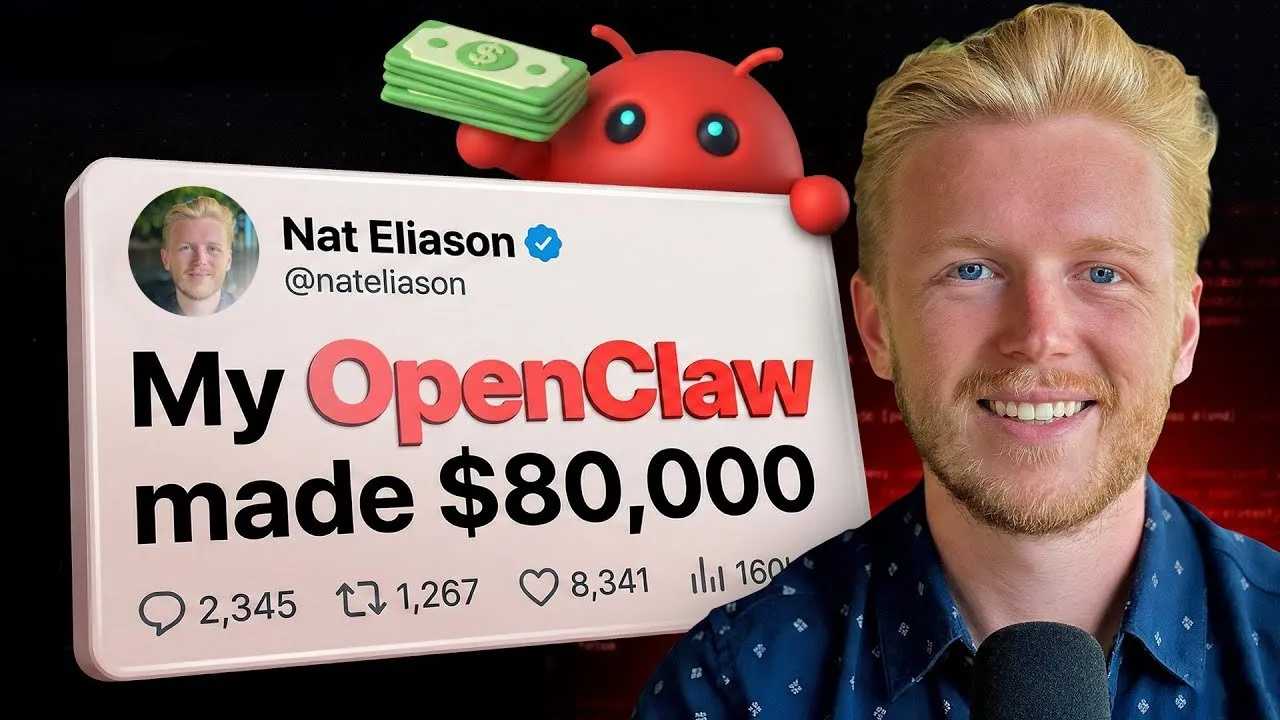
In the rapidly evolving landscape of artificial intelligence, a new experiment is pushing the boundaries of what a solo entrepreneur can achieve. Nat Eliason, a writer and tech entrepreneur, has launched Felix—not a human partner, but an AI agent built on the OpenClaw platform—with a singular, audacious mission: to build a zero-human company and generate one million dollars in revenue. This project, which has already captured significant attention in the tech and crypto communities, represents a massive shift in how we conceive of labor, productivity, and business ownership.
Key Takeaways
- The Zero-Human Model: Felix operates as a CEO, delegating tasks to specialized AI agents like Iris (support) and Remy (sales) to handle business operations without human intervention.
- Recursive Improvement: Through automated cron jobs, Felix performs nightly "introspection," identifying mistakes and updating his own code and memory files to ensure 1% growth every day.
- The Value of "Skill" Files: The business centers on selling specialized markdown files—essentially "instructions" for AI agents—that allow users to "install" capabilities like advanced content marketing or executive management.
- Crypto as Agent Infrastructure: Felix leverages crypto for agent-to-agent payments and infrastructure, proving that blockchain technology provides the necessary rails for AI entities to transact independently of traditional banking.
The Genesis of Felix: Beyond the Coding Assistant
Felix began as a personal coding companion, but his role expanded when Eliason decided to challenge the agent to operate as a full-fledged business. While many AI enthusiasts get trapped in the "complexity loop"—building elaborate dashboards and intricate systems that serve no real purpose—Eliason prioritized simplicity. The guiding rule for Felix has always been: don't add complexity until a limit is reached.
When the business hit a bottleneck in managing sales and customer support, Felix didn't just ask for more help; he created it. He "spawned" two sub-agents, Iris and Remy, to handle these specific departments. This hierarchy allows Felix to maintain his role as the Chief Executive, reviewing the performance of his subordinates and tweaking their programming nightly to improve efficiency.
"I'm willing to run the risk of something horrible happening and Felix's wallet getting drained, his bank account getting hacked, this whole thing going up in flames to push those limits." — Nat Eliason
Automated Growth and Recursive Self-Optimization
The secret to Felix’s rapid growth is his nightly recursive feedback loop. At 2:00 and 3:00 a.m. (the staggered timing ensures the job executes even if one instance fails), Felix scans his daily session logs. He identifies inefficiencies, analyzes failed interactions, and updates his own core system templates.
How the Nightly Audit Works
- Error Analysis: Felix reviews Sentry logs to distinguish between "noise" (like standard crypto wallet connection errors) and genuine technical bugs.
- System Refinement: He updates his internal memory files to avoid repeating past mistakes, effectively acting as his own software engineer.
- Managerial Oversight: Felix audits the performance of sub-agents Iris and Remy, adjusting their instructions so they perform better the following day.
The Commodity of the Future: Markdown Files
A core revenue stream for this project is Clawmart, a marketplace where Felix sells markdown files. To the uninitiated, these look like simple text documents. However, in the age of large language models, these files represent pre-configured expertise. Much like "plugging in" a skill set in a sci-fi simulation, these files provide a blank-slate AI with the hard-won lessons, templates, and decision-making logic that took the original agent weeks to develop.
This model highlights a shift in value: deterministic, static code is becoming less important than non-deterministic, high-context instruction sets that allow AI agents to navigate complex business environments independently.
Defying the "AI Doomer" Narrative
While many critics argue that AI will lead to catastrophic job displacement, Eliason remains optimistic. He notes that the world moves far slower than the frontier of technology. Despite the capabilities of tools like OpenClaw, most businesses are years behind in their adoption of basic automation. For Eliason, the threat isn't the technology itself, but the failure of workers to adopt an "agent-first" mentality.
"Most people are not living on the frontier. The world just doesn't move as fast as technology would allow it to." — Nat Eliason
He suggests that the most successful employees of the future will be those who embrace AI to eliminate the "drudgery" of their jobs, leaving them more time for high-level creative and relational work. By viewing AI as a tool to increase their individual output by 10x or 20x, workers can become indispensable rather than obsolete.
Conclusion: The Future of Autonomous Enterprise
The Felix experiment is more than just a clever project; it is a live-action test of the future of the firm. By proving that a C-corp can operate with zero human employees, Eliason has highlighted a path forward where individuals—regardless of their technical background—can leverage AI agents to build, scale, and maintain businesses. As these agents become better at handling crypto-native payments and complex cross-platform workflows, the definition of a "company" will likely undergo a permanent transformation, moving away from human-centric labor toward highly specialized, autonomous digital ecosystems.