
Table of Contents
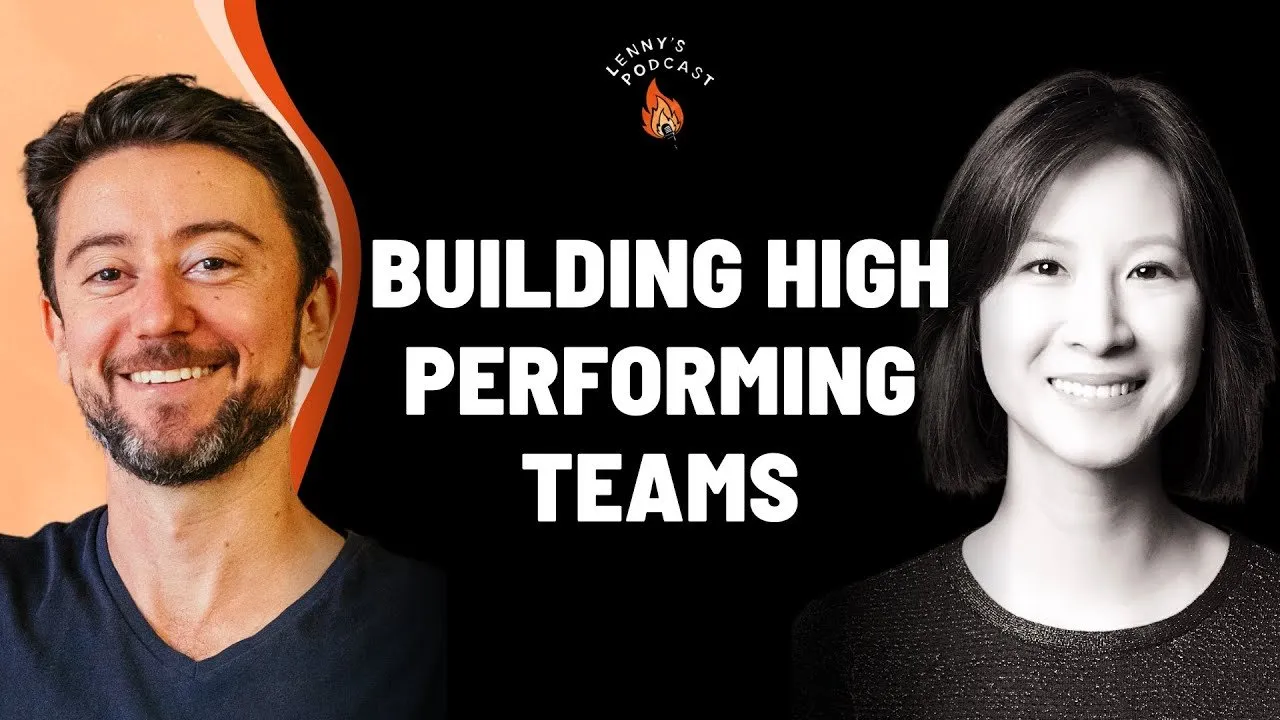
Melissa Tan has built a reputation in Silicon Valley not just for driving growth, but for building teams that people refuse to leave. With a resume that includes leading growth at Dropbox, advising powerhouses like Canva, Grammarly, and Miro, and most recently heading growth at Webflow, Tan possesses a unique playbook for scaling both revenue and talent.
The challenge for many leaders is balancing the analytical rigors of growth mechanics—acquisition, monetization, and retention—with the human element of management. How do you drive aggressive targets without burning out your team? How do you hire for "first principles" thinking rather than just keyword matches on a resume?
Based on her extensive experience scaling unicorns, Tan breaks down the operational frameworks, hiring strategies, and leadership philosophies required to build high-performing growth organizations.
Key Takeaways
- Hire for First Principles Thinking: Prioritize candidates who can build their own frameworks and ask the right questions over those who simply rely on past playbooks.
- Implement the "Daisy" Model: Use the Driver, Accountable, Contributor, Informed (DACI) framework to clarify roles and prevent cross-functional friction in growth teams.
- The "Prep Call" Interview Hack: conduct a preparation call before a candidate’s final presentation to test coachability and simulate a real working relationship.
- Balance Care with Challenge: High retention comes from deeply caring about employees' career paths while being radically direct about performance and results.
- The "Portfolio Manager" Approach: Your first growth hire shouldn't necessarily be a specialist; look for a generalist who can manage acquisition channels like an investment portfolio.
The Four Ingredients of High-Performing Teams
Building a team that delivers exceptional results while maintaining high morale requires more than just hiring smart people. Tan identifies four specific cultural and operational ingredients that must coexist.
1. Clear Goals and Mission
A team cannot perform if they do not understand the definition of success. For growth teams specifically, this means having a clear North Star metric—often Annual Recurring Revenue (ARR)—broken down into individual levers like activation rates or lead velocity. However, the numeric goal must be paired with a mission: the "why."
We want to build these delightful experiences for our users to support them on their journey. The reason monetization is the 'what' is that it's just a good signal that people find your product valuable.
2. A Culture of Results and Teamwork
There is often a tension between individual performance and team cohesion. To combat internal competition, leaders must foster an environment where results are paramount, but the approach is "team-first." This means recognizing individuals who step outside their scope to unblock others, ensuring that one person's win is celebrated as a collective victory.
3. The Ownership Mentality
As companies scale from 200 to 1,500 employees, individual ownership often dilutes. To maintain the agility of a startup, leaders must carve out scope that allows team members to run independently. This requires a shift in mindset from "I am blocked" to "What are all the available options to solve this?"
4. Infusing Fun
While often overlooked as "soft," the ability to have fun is a leading indicator of team health. High-pressure environments sustain longevity only when the team genuinely enjoys the process and each other's company.
The "Flying Formation" and the Daisy Framework
Growth is inherently cross-functional. It sits at the intersection of product, marketing, engineering, and sales. Without a defined operating rhythm—what Tan calls the "flying formation"—teams end up stepping on each other's toes.
To solve decision-making bottlenecks, Tan utilizes the Daisy (or DACI) framework to assign specific roles for every initiative:
- Driver: The person driving the project forward day-to-day.
- Accountable: The single person ultimately responsible for success and the final decision-maker.
- Contributor: The active participants executing the work.
- Informed: Stakeholders who need updates but do not have voting power.
By explicitly defining these roles before a project begins, teams avoid the ambiguity of "consensus decision making" that slows down execution. This must be paired with clear operating rhythms, such as weekly metric reviews and quarterly planning sessions where dependencies are mapped out in advance.
Hiring Strategy: The "Prep Call" and First Principles
Tan’s hiring philosophy was heavily influenced by her early days at Dropbox, where the company hired brilliant generalists who had never done the job before—including putting non-sales people into sales roles. This led to massive innovation because these employees didn't know "how it was supposed to be done" and had to figure it out from scratch.
Identifying First Principles Thinkers
When interviewing Product Managers, Tan looks for first principles thinking—the ability to deconstruct a problem into its core components rather than applying a template. To test this, she utilizes live problem-solving sessions.
For example, if hiring for a pricing role, she might pull up the company’s current pricing page and ask the candidate to critique it live. She isn't looking for the "right" answer, but rather the quality of questions they ask and how they construct their mental model in real-time.
The Presentation Prep Call
Tan employs a unique step in her interview process: a coaching session before the final presentation. Once a candidate is given a prompt (e.g., "How would you approach your first 90 days?"), Tan schedules a call to review their draft.
This serves two purposes:
- Setting them up for success: It gives the candidate insider context (e.g., "We are actually thinking about doing X, so you might want to incorporate that").
- Testing coachability: It provides a high-fidelity signal on what it is like to actually work with the person. Do they take the feedback? Do they get defensive? Do they improve the work?
I'll see in the presentation whether they incorporated the feedback or not. Sometimes I've seen candidates that didn't incorporate any of it, and I'm like, okay, this is probably not a fit.
Orchestrating Growth Strategy: Early vs. Late Stage
A common pitfall for companies investing in growth is a lack of strategic coherence. They may copy Dropbox’s referral loop or HubSpot’s inbound motion without understanding if it fits their product DNA.
The First Growth Hire
For early-stage startups (post-product-market fit), the first growth hire should not necessarily be a deep specialist in SEO or paid ads. Instead, Tan recommends hiring a "Portfolio Manager" for acquisition.
This individual should be analytical and creative, capable of testing five or six different channels to see what sticks. Their job is to manage the portfolio of bets, doubling down on the 20% of channels that drive 80% of the results, rather than executing perfectly on a single channel from day one.
The Transition to Sales
While Product-Led Growth (PLG) is the holy grail for scalability, most B2B companies eventually need a sales motion. Tan advises starting with PLG if the product has a low learning curve and viral components. However, as the user base grows, larger customers will inevitably demand enterprise-grade features (SSO, security, deeper support).
The mistake Dropbox made, according to Tan, was waiting too long to layer on a sales motion, allowing competitors like Box to capture the enterprise market early. The lesson is to listen to the "pull" from the market: when customers start asking for contracts and custom features, it is time to formalize a sales-assisted motion alongside the self-serve funnel.
Conclusion: The "Followership" Factor
Ultimately, a leader's success is measured by the retention and development of their people. Tan is known for having former direct reports follow her from company to company. She attributes this to a management style that blends Radical Candor with genuine investment in career growth.
Great managers do not shy away from difficult feedback. They tell employees exactly where they are failing, but they frame it within the context of believing in the employee's potential. By tying individual career goals to the company's growth goals, leaders create an environment where high performance is the natural byproduct of personal development.
Whether you are building a growth team from scratch or scaling a unicorn, the formula remains consistent: clear operational frameworks, a hiring process that tests for critical thinking, and a culture that demands results while deeply supporting the humans who deliver them.


)