
Table of Contents
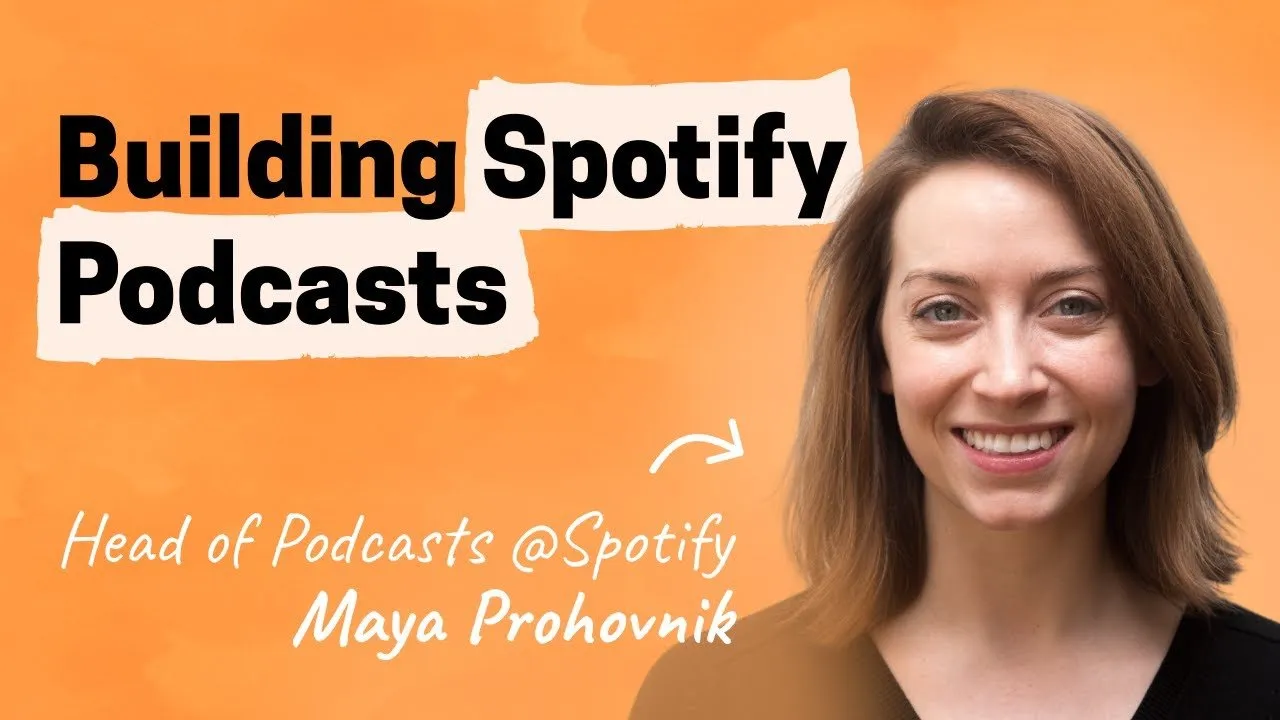
Maya Prohovnik, Spotify’s Head of Podcast Product and employee number one at Anchor, occupies a unique space in the audio landscape. She doesn’t just build tools for creators; she obsessively uses them. As the leader behind the platform that now powers over 75% of all new podcasts created globally, Prohovnik’s approach to product management blends deep user empathy with aggressive friction reduction.
Her journey from early-stage startup chaos to navigating the complexities of a public tech giant offers a masterclass in product leadership. Whether discussing the "unscalable" hacks that put Anchor on the map or the emotional reality of post-acquisition life, Prohovnik provides a candid look at what it takes to democratize an entire medium.
Key Takeaways
- Dogfooding is non-negotiable: To build effective creative tools, product leaders must become creators themselves to truly understand user friction and emotional barriers.
- Intuition is a valid data point: Over-reliance on quantitative data can stifle innovation. "Gut instinct" is often just internalized experience that allows leaders to see where a market is heading before the numbers prove it.
- Do things that don't scale: Anchor’s massive market share began with interns manually creating Apple IDs for users—a behind-the-scenes grind that created a "magical" user experience.
- Kill your darlings: Success in one niche (like Anchor 1.0’s social audio) can be a trap. Scaling often requires abandoning features that a vocal minority loves to pursue a broader mission.
- Reframe anxiety: Whether in public speaking or high-stakes leadership, physiological stress responses should be viewed as adrenaline designed to help you perform, not hinder you.
The Obsessive Art of Dogfooding
Many product leaders preach the value of using their own products, but Prohovnik takes "dogfooding" to an extreme. She currently maintains four different podcasts, ranging from deep dives into Stephen King novels to a raw, unedited show about parenting. For her, this isn’t a hobby; it is a critical component of her professional toolkit.
Building tools for creators is distinct from building B2B enterprise software or passive consumer apps. It requires understanding the vulnerability of putting one’s voice into the world. Prohovnik argues that looking at a list of feature requests is fundamentally different from feeling the frustration of a bug at 9:00 PM when you are trying to publish an episode.
It’s a means to an end for me. I’m making my podcast, but I’m really doing it so that I can learn about our product and get in the mindset of a creator.
The "Make a Podcast" Mandate
This philosophy permeates her management style. Prohovnik actively encourages—and sometimes relentlessly nags—her product teams to launch their own shows. The result is a shift in perspective. Engineers and designers who previously relied on user interviews or dashboards suddenly "get it" once they face the friction of editing, the confusion of RSS feeds, or the anxiety of low listener numbers.
By immersing herself in the tool, she identifies bugs and UX flaws that data scientists might miss. This hands-on usage empowers her to advocate for fixes that improve the emotional quality of the user experience, rather than just the functional metrics.
Balancing Data with "Gut" Instinct
In an era where product management has become increasingly scientific and framework-heavy, Prohovnik defends the role of intuition. She views "gut feeling" not as the opposite of data, but as a specific type of data accumulated through experience and deep user empathy.
The Anchor Pivots
Anchor’s history is defined by two massive, gut-driven pivots that defied immediate user feedback:
- From Social Audio to Creation Tools: Anchor 1.0 was a social audio app similar to Clubhouse. Users loved it, retention was high, and the community was vibrant. However, leadership realized this niche would never achieve their mission of democratizing audio for the masses. They pivoted to creation tools (Anchor 2.0), alienating their vocal early adopters to chase a much larger market.
- Embracing RSS: Initially, Anchor resisted the term "podcast," trying to invent a new format called "waves." Despite internal resistance, they eventually realized that users wanted standard distribution. They pivoted again, building the infrastructure to export to Apple and Spotify. This decision triggered their "hockey stick" growth curve.
These decisions highlight a difficult truth in product leadership: users often do not know what they need to solve their ultimate problems. A leader’s job is to look past the noisy 20% of power users to build for the 80% who haven't arrived yet.
Friction Reduction and Unscalable Hacks
One of the most revealing stories from Anchor’s early days involves the "magical" one-button distribution feature. Before Anchor, submitting a podcast to Apple was a technical nightmare involving RSS validation, Apple IDs, and waiting periods. Anchor promised users that they could handle this with a single click.
The backend reality, however, was entirely manual.
We hired a couple of college interns... people are going to push this magical one button in the Anchor app... and your job is going to be to do all that same manual stuff manually but to them it's going to feel magical.
This approach—doing things that don't scale—allowed Anchor to offer a value proposition that no competitor could match. While competitors offered hosting, Anchor offered automation. By absorbing the complexity manually (via interns creating Apple accounts and submitting feeds), they removed the single biggest barrier to entry for new podcasters.
This strategy secured their market share dominance before they ever built the automated tech to support it properly. It serves as a reminder that "tech" companies are often built on human effort until the software catches up.
Navigating Acquisition and Startup Culture
Anchor’s acquisition by Spotify is often cited as a rare success story in tech M&A. Five years later, the team remains influential, and the product is core to Spotify’s strategy. Prohovnik attributes this to a shared vision and a specific mandate from Spotify CEO Daniel Ek.
The "Teach Us Speed" Mandate
Upon acquisition, Ek didn’t just ask Anchor to integrate; he asked them to help Spotify remember how to move fast. He instructed the Anchor team to say "no" to meetings and unnecessary bureaucracy for the first year. While this protected their velocity, it eventually led to a cultural divide where the Anchor team felt isolated.
Prohovnik learned that successful integration requires a phased approach: maintain autonomy early on to preserve momentum, but eventually, you must embed deeply to leverage the resources of the parent company. Today, her team balances the "move fast" DNA of a startup with the strategic patience required at a public company.
The Post-Exit Blues
Prohovnik also touches on a rarely discussed aspect of successful exits: the post-acquisition existential crisis. Founders and early employees often derive their identity from the fight for survival. When that survival is guaranteed by a large parent company, high-performers can experience a surprising depression.
Acknowledging this transition—from fighting for existence to fighting for strategic alignment—is crucial for retaining startup talent in a large organization.
Tactical Leadership and Productivity
Managing a product organization within a company the size of Spotify requires rigorous personal operating systems. Prohovnik relies on a few core frameworks to maintain clarity and speed.
Radical Candor
Prohovnik is a devout practitioner of Kim Scott’s Radical Candor framework. The core tenet is simple: you must care personally while you challenge directly. If you challenge without caring, you are just being aggressive. If you care without challenging, you are engaging in "ruinous empathy."
She frames performance issues not as character flaws, but as role mismatches. This perspective allows her to give tough feedback while maintaining a supportive relationship, often helping team members find better-fitting roles elsewhere if necessary.
The Eisenhower Matrix
To handle the deluge of tasks, Prohovnik uses the "4 Ds" method to process her to-do list at the end of every day:
- Do: Tasks that need immediate attention.
- Defer: Tasks that can be scheduled for later.
- Delegate: Tasks that someone else is better suited to handle.
- Delete: Tasks that simply do not need to be done.
Her productivity "secret" is cognitive offloading. She writes everything down immediately to clear her working memory for complex problem-solving. By reviewing and sorting this list daily, nothing slips through the cracks.
Public Speaking as Performance
Known for her polished presentations at Spotify’s "Stream On" events, Prohovnik reframes public speaking anxiety as a biological tool. She views the adrenaline rush not as fear, but as energy provided by the body to enhance performance.
Her tactical advice for speakers includes:
- Reframe the physical response: Let the adrenaline wash over you; don't fight it.
- Practice 10x: Rehearse until you can ad-lib half your notes. This allows you to make eye contact and connect with the audience rather than reading a script.
- Care about the topic: The ultimate hack is genuine passion. If you care deeply about the subject, the audience will forgive minor technical flaws.
Conclusion
Maya Prohovnik’s career is a testament to the power of intuition and empathy in product development. From hiring interns to manually distribute podcasts to challenging her team to become creators themselves, she prioritizes the human experience over the sterile efficiency of standard operating procedures.
Whether she is raising backyard chickens to stay grounded or pivoting a product strategy to chase a massive market, her philosophy remains consistent: reduce friction, care personally, and don't be afraid to do the unscalable work required to make something feel magical.




)