Table of Contents
Northwood, the space infrastructure startup co-founded and led by CEO Bridgit Mendler, has secured $100 million in Series B funding to accelerate the deployment of its rapid-response ground station technology. Announced less than a year after the company’s Series A, the capital injection coincides with a $49 million contract with the U.S. Space Force, signalling strong government validation of Northwood’s "end-to-end" connectivity model. The funding will be utilized to scale production capabilities and expand the company's global network of phased array antennas to support the growing density of commercial and defense space missions.
Key Points
- Series B Funding: Northwood raised $100 million to meet surging demand for ground infrastructure, following a rapid capital raising schedule.
- Government Contract: The company revealed a $49 million contract with the U.S. Space Force, achieving a three-month turnaround from kickoff to live field links.
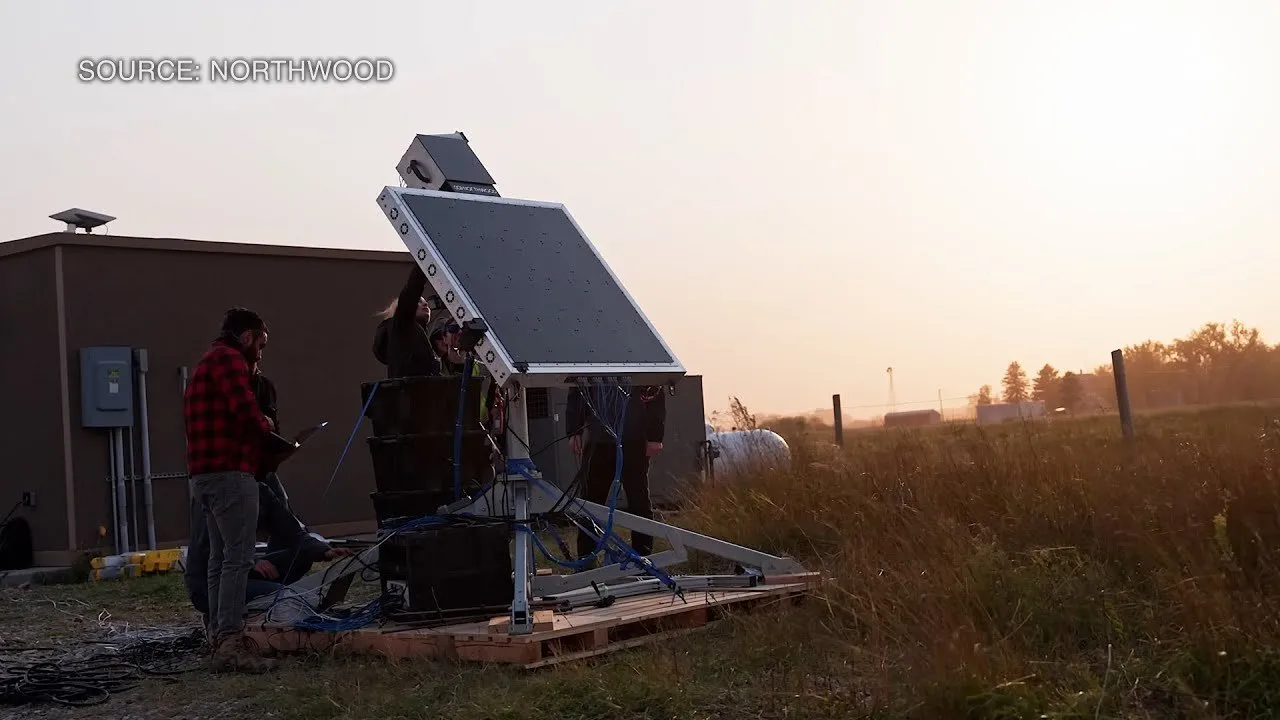
- Technology Focus: Northwood provides a proprietary "Portal" product and phased array technology that connects Low Earth Orbit (LEO) and Geostationary Orbit (GEO) within a single system.
- Expansion Plans: Currently operating with nearly 70 employees, the company plans to deploy 18 sites across five continents in the coming year.
Accelerating Space Infrastructure
The rapid succession of funding rounds highlights the urgency within the space sector to solve "ground" bottlenecks—the infrastructure required to receive data from satellites. While satellite launch costs have plummeted and orbital capabilities have expanded, ground segment logistics often delay missions. Mendler emphasized that the new capital is necessary to align ground capabilities with the speed of orbital innovation.
"For us, it's really about taking space missions further faster... Oftentimes there winds up being more friction in taking those space missions live due to the ground. And that's something that has to change. We have to be able to push the boundaries on capabilities and we have to be able to do that on a rapid timescale."
The company views itself as a comprehensive partner rather than just a hardware vendor. This approach addresses the entire value chain, from initial mission concepts to live data streaming.
Defense Contracts and Rapid Deployment
A central driver of Northwood's recent momentum is its traction with the U.S. Space Force. The newly announced $49 million contract is not merely a future commitment but an active operation. According to Mendler, Northwood achieved a turnaround time of just three months from the contract's execution to having active links in the field. The funding will allow Northwood to scale this operational model, deploying a global network of its "Portal" product. This technology facilitates dynamic links accessible from both LEO and GEO, a critical capability for maintaining continuous contact with assets in an increasingly crowded space domain.
"What the funding represents for us is let's scale that model. Let's do it more. Let's demonstrate how we're able to deploy a global network of this portal product that supports the dynamic links between low Earth orbit and geostationary orbit but also serve up more space capabilities that we're getting a lot of appetite for."
Differentiation in a Crowded Market
While other defense contractors and technology firms, such as Blue Halo, produce phased array hardware, Northwood aims to differentiate itself through vertical integration. Mendler noted that traditional space providers often effectively run two companies: one focused on the space mission and another attempting to stitch together a fragmented supply chain of ground hardware, real estate, logistics, and software. Northwood’s value proposition lies in removing that friction by managing the full scope of ground operations. This includes site acquisition, global shipping logistics, hardware manufacturing, and the network backbone. Investors, including Washington Harbor Partners, have backed this approach, viewing it as the only viable method to scale ground station capacity at the pace required by the modern space economy.
Operational Footprint and Future Outlook
Since its founding in late 2022, Northwood has grown rapidly. The company now employs approximately 70 people and maintains a full production facility capable of manufacturing its phased arrays alongside two complementary hardware product lines. Currently, the company operates sites across two continents, but the Series B capital will fuel a significant geographical expansion. Mendler outlined plans to commission 18 new sites across five continents within the year, positioning Northwood as a critical infrastructure backbone for both commercial satellite constellations and government defense initiatives. As the space industry continues to focus on heavyweights like SpaceX, Northwood is positioning itself as the essential terrestrial link that makes those orbital ambitions viable.