
Table of Contents
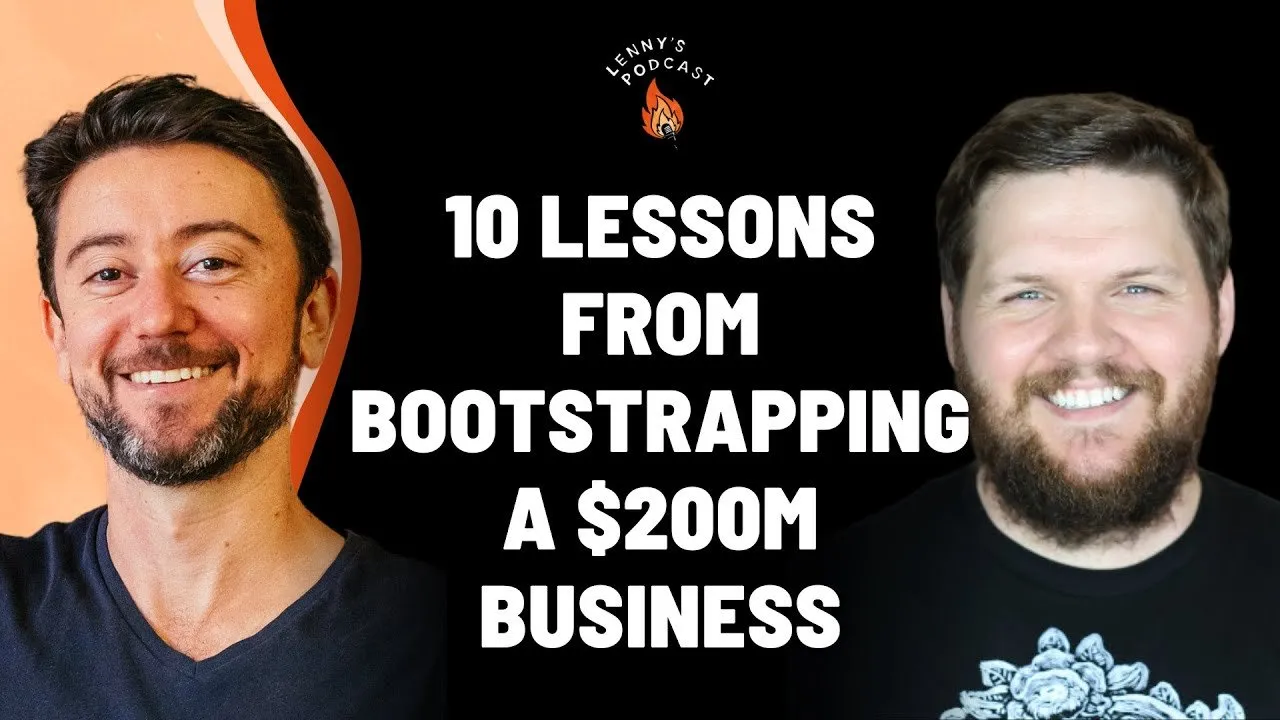
Patrick Campbell is a rarity in the world of SaaS. As the founder and CEO of ProfitWell, he bootstrapped the company to a massive exit of over $200 million without taking a single dollar of venture capital funding. While Campbell is widely recognized as one of the industry's foremost experts on pricing and retention, his operational expertise extends far beyond monetization.
In a wide-ranging conversation with Lenny Rachitsky, Campbell unpacked the hard-won lessons from building a high-efficiency business in a crowded market. From controversial takes on team building and the necessity of "shipping tempo" to the specific mechanics of reducing churn, his insights offer a blueprint for founders who want to build sustainable, high-growth companies. Whether you are bootstrapping or venture-backed, these principles challenge conventional wisdom and prioritize leverage, efficiency, and deep market understanding.
Key Takeaways
- The Venture Scale Litmus Test: If you cannot visualize a path to $1 billion in annual revenue, you likely should not raise venture capital; bootstrapping offers a viable path to significant exits ($50M–$200M) without the pressure of the "VC treadmill."
- Tempo Over Org Design: The frequency at which a team ships is a better predictor of success than the perfection of the organizational chart.
- Tactical Retention is Undervalued: While product leaders focus on strategic retention (features), 25–40% of churn is tactical (payment failures and cancellation flows) and can be solved with systems rather than roadmaps.
- Pricing Requires a Value Metric: Pound for pound, the most effective pricing lever is charging based on a value metric (e.g., per user, per video) rather than flat tiers, as it naturally aligns revenue with customer growth.
- Middle of the Funnel Dominance: With customer acquisition costs (CAC) skyrocketing, the biggest opportunity lies in building a "river of demand" through media and freemium models where prospects engage before they are ready to buy.
The Bootstrapper’s Philosophy and Team Dynamics
Building a company that sells for nine figures without external funding requires a fundamentally different approach to resource management and culture. It starts with an honest assessment of the business model and extends to how the team communicates during conflict.
The Case Against Raising Capital
There is a prevalent misconception that funding is a prerequisite for success. However, funding is specifically designed for companies aiming to generate billions in revenue. When founders raise capital for businesses that are naturally destined to be $10 million or $50 million businesses, they often trap themselves in a model that demands growth their market cannot support.
If you are going to be that large company you need to get to a billion in Revenue per year. It doesn't have to be overnight... but if I don't feel like there's a clear path to that it doesn't mean I don't raise money it just means that I take a step back.
Founders should embrace the freedom of bootstrapping. A business generating $10 million in cash flow is an incredible outcome that provides wealth and autonomy. By avoiding the dilution of equity early on—specifically in the first 18 to 24 months—founders retain control during the critical ideation phase.
Building a Culture of "Most Charitable Interpretation"
One of the greatest inefficiencies in team building is internal friction caused by miscommunication. ProfitWell tackled this by codifying a cultural value known as the "Most Charitable Interpretation."
This principle dictates that when a conflict arises or a colleague’s tone seems off, the recipient must assume the best possible intent. Instead of reacting with defensiveness or running to HR, the team member is expected to pause and interpret the action through a lens of benevolence. This eliminates the emotional tax of petty squabbles and keeps the team focused on execution. Crucially, this value serves as a filter: if a hire cannot assume positive intent, they are likely not a fit for the organization.
Mastering Monetization and Retention
Patrick Campbell built his reputation on pricing data, and his approach strips away the mystery often associated with monetization. Success in this area is not about guessing the perfect number, but about rigorous, incremental improvement.
The Value Metric and Quarterly Audits
Most companies treat pricing as a "set it and forget it" activity, often going years without adjustment. A high-performing company should address pricing once per quarter. This doesn't always mean changing the price tag; it can involve adjusting packaging, discounting strategies, or localization.
The single most impactful lever is the value metric—how you charge (e.g., per seat, per thousand visits). When you align your pricing with the value the customer receives, you achieve two things:
- Automatic Segmentation: Small startups pay small amounts; enterprises pay enterprise amounts.
- Built-in Expansion Revenue: You don't have to upsell a customer to get more revenue. As they grow and use the product more, they automatically move to higher tiers.
Tactical vs. Strategic Retention
Product leaders often view retention exclusively through the lens of product value: "If we build better features, they will stay." This is strategic retention. However, this view ignores tactical retention, which accounts for up to 40% of churn.
Tactical retention involves the unsexy mechanics of running a subscription business: credit card failures, dunning flows, and cancellation screens. For example, optimizing a cancellation flow can save significant revenue. When a user hits "cancel," companies have roughly 18 to 30 seconds to change their mind. Data shows that asking "What did you like about the product?" triggers a nostalgia effect that can pause the cancellation train, opening the door for a salvage offer or a pause plan.
Operational Tempo and First Principles
In a bootstrapped environment, speed and clarity of thought are the primary competitive advantages. Campbell argues that organizational structure is secondary to the sheer rhythm of output.
The Primacy of Shipping Tempo
High-performing professionals ship work at a high frequency. Often, when leadership believes a team is underperforming, the issue isn't a lack of talent but a misalignment on what "good" looks like regarding speed. Establishing a "Tempo Framework" is more critical than redrawing the org chart.
Real professional ship and they ship it a pretty high frequency for whatever they're doing in my opinion your Tempo framework is more important than your org design.
Leaders must define expectations explicitly. For marketing, does "good" mean one blog post a week or one major campaign a month? Once the tempo is set, leadership becomes a series of conversations about closing the gap between actual output and the agreed-upon tempo.
Problem-Cause-Solution Framework
To solve complex operational issues, Campbell utilizes a specific flavor of first-principles thinking derived from debate: Problem-Cause-Solution. While many people use the "Five Whys," this framework is more actionable for business strategy.
- Problem: Identify the symptom (e.g., "Growth has stalled").
- Causes: Brainstorm and rank every potential cause (e.g., "Market saturation," "Pricing is too high," "Onboarding friction").
- Solution: Map solutions directly to the highest-magnitude causes.
This method prevents teams from jumping straight to solutions that may not address the root drivers of the problem.
Navigating a Saturated Market
The SaaS landscape has changed dramatically. Over the last decade, the number of competitors for any given idea has multiplied by roughly 16x. Customer Acquisition Cost (CAC) is up over 100%. In this environment, relying solely on traditional inbound marketing and ignoring competitors is a recipe for failure.
The "River of Demand"
With top-of-funnel efficiency plummeting, the middle of the funnel has become the most critical battleground. Companies need to create a holding tank for prospects who are aware of the brand but not yet ready to buy.
This requires a media-first approach—podcasts, video series, and freemium products—that keeps the brand top-of-mind. Campbell refers to this as inbound media. By providing immense value without asking for a sale, you build a pool of leads. When the timing becomes right for the customer, your brand is the obvious choice. The goal is to move beyond transactional lead generation to relational audience building.
Competitive Intelligence and Local Strategy
The advice "don't focus on your competitors" is outdated. In a dense market, you must understand your position relative to the field. This doesn't mean obsessing over their feature roadmaps, but it does mean having a clear strategy for how you differentiate. Using third-party surveys to understand competitor customer sentiment can reveal weaknesses you can exploit.
Furthermore, in a digital-first world, physical presence has become a high-leverage anomaly. Campbell’s data indicates that prospects who meet a team member in person—even for a coffee or at a casual meetup—have a 10–30% higher willingness to pay and significantly lower churn rates. Local strategies, such as hosting low-budget breakfast meetups rather than expensive dinners, allow founders to build deep trust that Zoom calls simply cannot replicate.
Conclusion
Patrick Campbell’s journey with ProfitWell demonstrates that the constraints of bootstrapping often lead to superior operational habits. By obsessing over value metrics, enforcing a high shipping tempo, and focusing on tactical retention, businesses can generate massive enterprise value without relying on outside capital.
Whether you are managing a product team or leading a company, the core lesson is one of intentionality. It is about understanding the math of your business, being honest about your market position, and executing with a speed and precision that renders competitors irrelevant.



)