Table of Contents
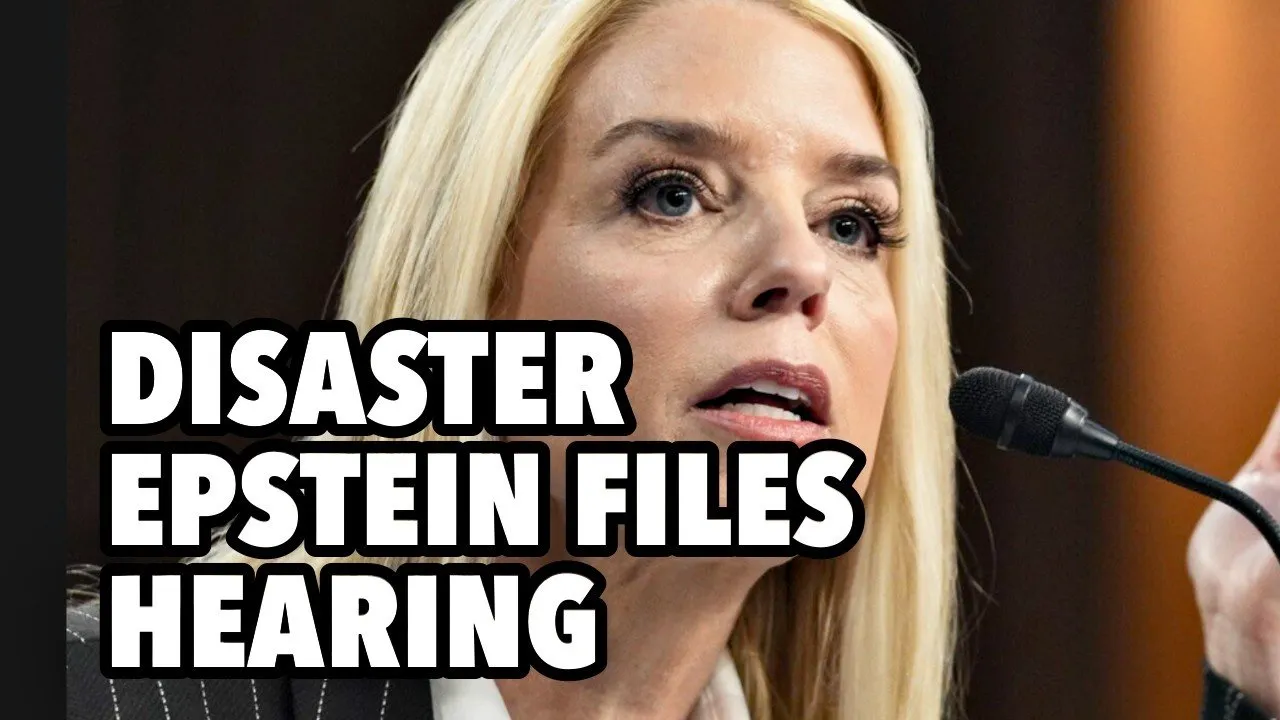
The recent congressional hearing regarding the Jeffrey Epstein files, spearheaded by Pam Bondi, has ignited a firestorm of criticism rather than extinguishing public doubt. What was billed as a step toward transparency has been characterized by observers as a bureaucratic "car crash"—a bungled display of evasion that has only deepened the mystery surrounding the case. Despite Donald Trump’s public support of Bondi’s performance, the hearing highlighted a stark disconnect between campaign promises of disclosure and the reality of executive stonewalling. The implications of this hearing go far beyond political theater; they suggest a deliberate strategy to keep the darkest corners of this scandal, specifically the intelligence connections and financial flows, permanently in the dark.
Key Takeaways
- Strategic Malpractice: Bondi’s refusal to disclose virtually anything has paradoxically invited more scrutiny than a selective "limited hangout" strategy would have.
- The Financial Black Hole: Forensic analysis suggests Epstein’s financial outflows dwarfed his known assets, hinting at a billion-dollar money laundering operation.
- Intelligence Complicity: The scale of Epstein’s operation and high-profile network makes it statistically impossible that Western intelligence agencies were unaware of his activities.
- Political Fallout: The Trump administration’s pivot from transparency to obfuscation risks alienating the voter base and damaging the party’s prospects in the midterms.
The Strategic Failure of Total Denial
From a crisis management perspective, the approach taken by the Department of Justice appears fundamentally flawed. Historically, a cynical but effective Attorney General—akin to Nixon’s John Mitchell—would arguably have pursued a strategy of selective prosecution. By sacrificing a few mid-level players or releasing a curated selection of damaging documents, the state can often satisfy public bloodlust while effectively quarantining the most sensitive information.
Instead, the current strategy is one of absolute denial. By insisting there is "nothing to see" amidst a mountain of 3 million documents, videos, and witness testimonies, the authorities are engaging in a form of gaslighting that defies logic. This total refusal to discuss the evidence does not quell suspicion; it amplifies it. It demands that independent investigators and the public dig deeper, turning what could have been a managed scandal into an open wound.
"What Bondi is doing is preventing [a proper investigation] from happening... If you go through all of these papers... you see all of these things and you go out and you actually have a proper investigation."
The evidence, according to those who have reviewed the available documents, is littered with indications of malpractice and criminal activity. While a watertight case might not exist on the surface of every page, the standard for an investigation is probable cause, not immediate conviction. The refusal to interview key associates or follow obvious leads suggests a deliberate obstruction of justice.
Follow the Money: The Billion-Dollar Question
While the salacious details of the Epstein case often dominate the headlines, the most incriminating evidence likely lies in the ledger books. There remains no coherent explanation for the source of Jeffrey Epstein’s immense wealth or the mechanics of his financial operations. The official narrative fails to account for massive discrepancies between his accumulated assets and his operational expenditures.
The Discrepancy in Cash Flow
Forensic scrutiny reveals anomalies that cannot be explained by standard wealth management fees. Notably, there is a recorded transfer of $150 million to Epstein that even the FBI has admitted lacks an adequate justification. Furthermore, some analysts estimate that the money flowing out of Epstein’s accounts was on an exponentially larger scale than what was coming in from legitimate sources.
Rough calculations suggest a churn of over $1 billion over a single year. This magnitude of cash flow implies an industrial-scale operation, potentially involving money laundering or funding for off-book intelligence operations. A competent Department of Justice audit could track these flows through the SWIFT system and bank records relatively easily. The refusal to conduct this basic forensic accounting is perhaps the most telling admission of guilt by the establishment.
The Intelligence Nexus
The prevailing theory among independent analysts is that Epstein was not merely a rogue financier but an asset working at the fringes—or perhaps the center—of Western intelligence. The sheer scope of his network, which included heads of state, royalty, and top-tier scientists, required a level of logistical support and protection that exceeds the capabilities of a private individual.
It is highly probable that Epstein functioned as an interface for multiple intelligence agencies, including American, British, French, and Israeli services. His residence in Paris and interactions with French high society, alongside his deep ties to US officials, support this multinational hypothesis.
"It is inconceivable that the intelligence agencies didn't have an eye on him. It is impossible."
Consider the logistics: Epstein hosted former presidents like Bill Clinton (accompanied by Secret Service details), former cabinet members, and foreign diplomats. These individuals are under constant surveillance. For the intelligence community to claim ignorance of Epstein’s operations is not just unlikely; it is an impossibility. If meetings occurred, records exist. The silence of the intelligence agencies is not a lack of knowledge, but a refusal to declassify.
The Political Trap: Transparency vs. The Deep State
Donald Trump campaigned on a platform of total transparency, promising to release the Epstein files and drain the swamp. However, the post-election reality paints a different picture. The administration’s alignment with Bondi’s stonewalling suggests that the intelligence agencies have successfully exerted pressure on the executive branch.
There is a growing perception that the "Deep State" views Trump as the ideal vessel to bury this scandal. Because he commands a fiercely loyal base, he possesses the political capital to ignore these demands for transparency in a way that a conventional politician could not. His supporters are less likely to abandon him over this single issue, allowing the intelligence community to keep their secrets hidden behind the MAGA shield.
However, this is a dangerous gamble. By supporting Bondi and effectively ending the pursuit of truth, the administration risks a severe backlash in the midterms. Voters who were promised accountability are witnessing a continuation of the cover-up, which could lead to disillusionment and a crumbling of political support when it is needed most.
Conclusion
The Bondi hearing has signaled the effective end of any official quest for truth regarding the Epstein network. The strategy is clear: deny, obfuscate, and stonewall until the public moves on. While independent investigators and a few members of Congress may continue to push for answers, the executive branch and the intelligence agencies have locked ranks. The money trail will remain unaudited, and the intelligence connections unacknowledged. Unless there is a seismic shift in political will, the full story of Jeffrey Epstein will remain buried under a mountain of redacted paperwork.