Table of Contents
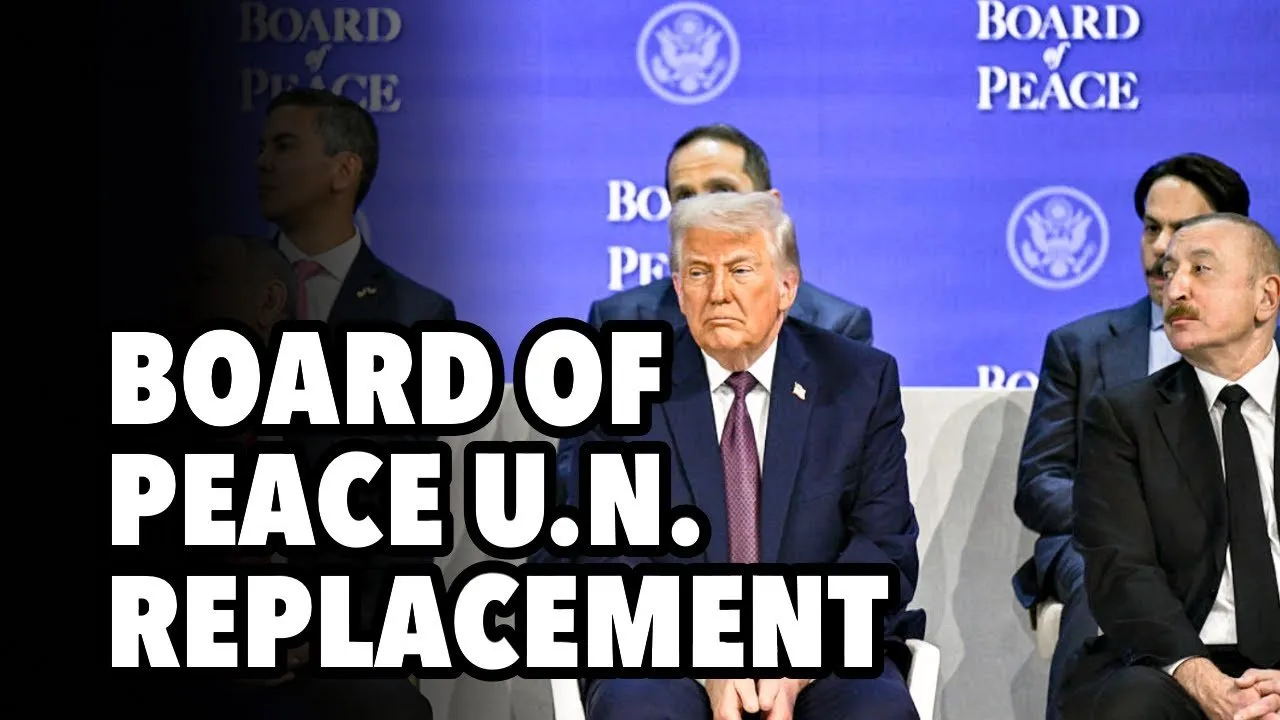
The geopolitical landscape is witnessing one of the most unconventional diplomatic proposals in recent history: the creation of a "Board of Peace." Spearheaded by Donald Trump, this initiative is ostensibly designed to address the crisis in Gaza, but closer inspection reveals a much broader ambition. With a reported $1 billion entry fee and an indefinite chairmanship for Trump, critics argue this body is intended to function as an alternative to the United Nations—one where the United States faces no veto power and exercises total control.
The reception has been mixed, characterized by European rejection and a sophisticated, strategic counter-move from the Russian Federation. As the details of this "pay-to-play" diplomatic club emerge, questions regarding international law, the future of the UN Security Council, and the coherence of US foreign policy are coming to the forefront.
Key Takeaways
- The "Board of Peace" Proposal: A US-led initiative ostensibly tied to the Gaza peace plan, requiring a $1 billion entry fee from member nations, viewed by analysts as a potential replacement for the UN.
- Russia’s Strategic "Yes": Vladimir Putin accepted the invitation in principle but proposed paying the entry fee using frozen Russian assets, legally trapping the US into acknowledging Russian ownership of those funds.
- Bypassing the Security Council: The primary geopolitical motive appears to be sidelining the UN Security Council, where Russia and China hold veto power, in favor of a body wholly controlled by Washington.
- European Rejection: Major European powers, including the UK, France, and Germany, have signaled they will not participate, citing concerns over the organization's structure and the monetization of diplomacy.
- Policy Improvisation: Critics argue this move exemplifies a "reckless" and improvisational US foreign policy style that risks further isolating Washington from global consensus.
The Structure and Financial Implications of the Board
At the heart of the controversy is the structure of the proposed Board of Peace. Unlike traditional diplomatic alliances based on treaty obligations or shared values, this initiative introduces a transactional element rarely seen in high-level geopolitics. The entry fee is reportedly set at $1 billion, with ambiguity surrounding whether this is a one-time payment or a recurring fee every three years.
Furthermore, the destination of these funds remains opaque. It is unclear whether the money would be directed toward Gaza reconstruction, the administrative costs of the Board, or other US-controlled coffers. This monetization of international relations has led to accusations that the initiative resembles a "shakedown" rather than a serious diplomatic endeavor.
"It doesn't just look like a sordid setup to create an alternative UN; it also looks like a shakedown. It is increasingly obvious that it's not really about Gaza... It's more about setting up a club of countries all friendly to the United States."
The leadership structure is equally controversial, with Donald Trump slated to serve as the indefinite chairman of the board, potentially extending his influence well beyond standard political terms. This centralization of power suggests a departure from the democratic, albeit flawed, processes of existing international institutions.
Geopolitical Ambitions: Replacing the United Nations
While the crisis in Gaza serves as the stated catalyst for the Board's creation, geopolitical analysts suggest the true objective is structural change in global governance. The United States currently exerts immense influence over the United Nations, hosting its headquarters in New York and heavily swaying the Secretariat and General Assembly. However, US power is not absolute.
The Problem of the Veto
The primary obstacle to total US hegemony within the UN system is the Security Council. Here, the veto rights held by Russia and China serve as a check on American unilateralism. The Board of Peace appears designed to circumvent this constraint.
By establishing a parallel organization populated exclusively by allies and "paying members," the US could effectively create a rubber-stamp body. In this new "club," dissent would be minimized, and there would be no veto power to block US initiatives. This represents a shift from seeking consensus within established international law to creating a new framework where the US acts as the sole arbiter.
Comparisons have been drawn to Joe Biden’s "League of Democracies," a previous attempt to create a coalition outside the UN. However, where Biden’s effort was largely virtual and rhetorical, the Board of Peace attempts to institutionalize this separation through significant financial commitments, making the stakes considerably higher.
Russia’s Calculated Diplomatic Maneuver
One of the most intriguing developments in this saga is the invitation extended to the Russian Federation and Vladimir Putin’s subsequent response. Rather than rejecting the proposal outright—which would risk alienating Trump and losing a potential avenue for dialogue—Moscow adopted a sophisticated legal and diplomatic stance.
Putin accepted the invitation to join the Board and agreed to the $1 billion fee. However, the caveat he introduced effectively turned the proposal into a "poison pill" for the United States. Russia proposed that the entry fee be paid directly from Russian sovereign assets currently frozen by the US and European nations.
The Legal Trap of Frozen Assets
This counter-offer places Washington in a bind. To accept the payment, the US must legally unfreeze or authorize the transfer of specific Russian funds. In doing so, the US would be:
- Formally acknowledging that the assets belong to Russia.
- Admitting that Russia alone has the right to dispose of them.
- Undermining the legal arguments currently being used by European nations to justify the potential confiscation of these assets.
If the US agrees to this payment method, the legal case for asset seizure in Europe would likely collapse. Moscow has effectively used the invitation to defend its property rights while appearing cooperative on the international stage.
Global Backlash and the Future of the Initiative
Despite the ambitious rollout, the Board of Peace faces significant headwinds. The response from traditional US allies in Europe has been overwhelmingly negative. The United Kingdom, France, Germany, and Norway have all signaled their refusal to join, rejecting both the financial demands and the underlying attempt to subvert the UN system.
Without the participation of key global powers—including China, which is unlikely to join a US-dominated body, and the major European economies—the Board risks becoming irrelevant before it even begins. A global "Board of Peace" lacking the participation of the BRICS nations and the EU cannot effectively claim to represent the international community.
Furthermore, the initiative is criticized for leveraging the humanitarian catastrophe in Gaza as a pretext for power consolidation. Critics argue that linking a pay-to-play scheme to the suffering in the Middle East is unethical and distracts from genuine efforts to achieve a ceasefire and long-term stability.
Conclusion
The proposal for a Board of Peace highlights a growing trend in US foreign policy toward improvisation and a disregard for established international law. By attempting to monetize diplomacy and bypass the United Nations, the initiative risks isolating the United States further, portraying it not as a global leader, but as a "rogue elephant" operating outside agreed-upon norms.
While the Board acts as a diversion, the United Nations—for all its flaws—remains the only body where all major powers, including adversaries, maintain a seat at the table. Russia’s astute maneuvering regarding the entry fee demonstrates that other nations are finding ways to navigate and neutralize these unilateral US strategies. Ultimately, without broad international buy-in, the Board of Peace is likely to join the list of failed diplomatic experiments, leaving the difficult work of real geopolitics to the institutions designed to handle it.