Table of Contents
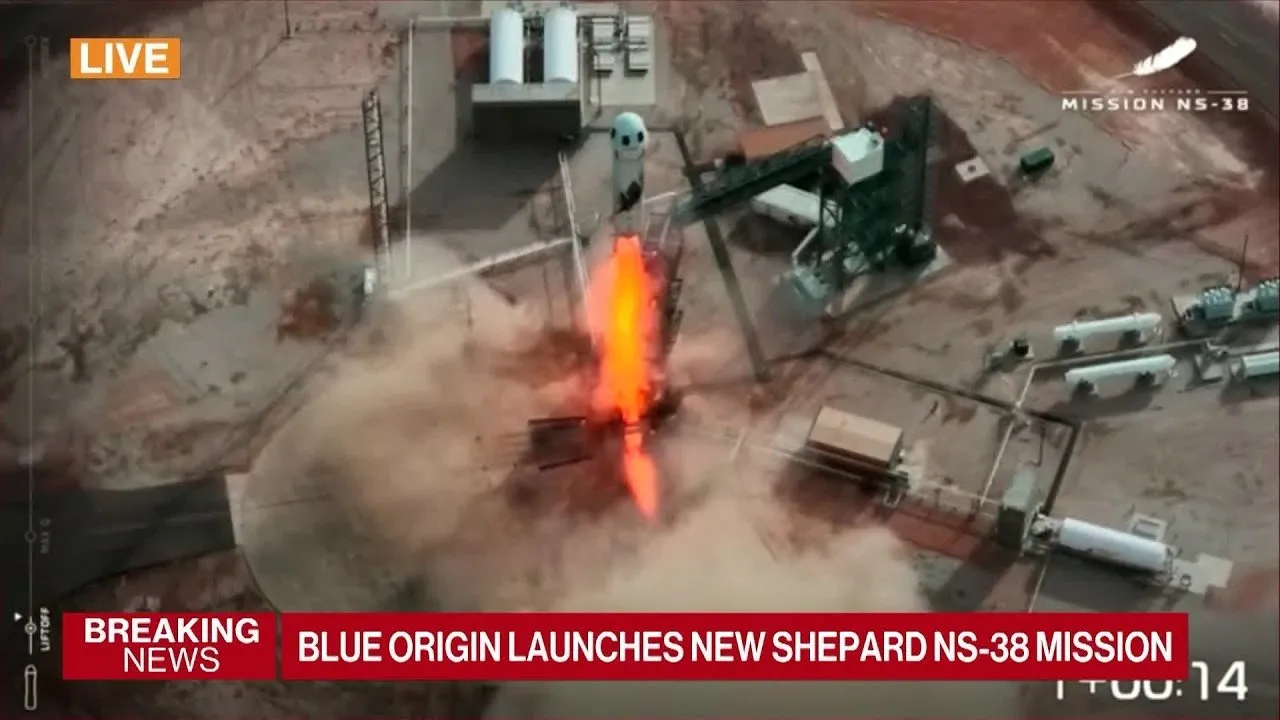
Blue Origin successfully completed its NS-38 mission on Tuesday, launching six commercial astronauts from its facility in Van Horn, West Texas, and safely returning them to Earth. The mission marks a significant operational milestone for the Jeff Bezos-backed aerospace company, pushing its total passenger count past 90 individuals flown above the Kármán line as the firm accelerates its cadence in the commercial space race.
Key Points
- Mission Success: The New Shepard vehicle (NS-38) successfully carried six passengers to space and returned both the capsule and booster to West Texas.
- Growing Roster: With this flight, Blue Origin has now flown over 90 humans above the internationally recognized boundary of space.
- Strategic Expansion: The company is simultaneously developing a Starlink competitor and preparing its heavy-lift rocket, New Glenn, for future orbital missions.
- Competitive Landscape: The launch comes as rival SpaceX targets full reusability for its Starship vehicle by the end of the year.
Operational Details and Flight Profile
The NS-38 mission followed a standard flight profile for the reusable New Shepard system. Lifting off from the West Texas desert, the vehicle quickly reached "Max Q," the point of maximum aerodynamic pressure. Powered by the company's proprietary BE-3 engine—which utilizes a clean-burning mixture of liquid hydrogen and oxygen—the rocket propelled the crew capsule past the 330,000-foot altitude mark.
Passengers on board included entrepreneurs and medical professionals, such as Tim Drexler and Linda Edwards. While specific ticket prices remain undisclosed, customers typically pay significant sums for approximately 60 seconds of weightlessness and views of Earth through what Blue Origin markets as the largest windows in spaceflight.
The mission experienced a brief hold prior to liftoff due to a range safety issue. Ground control reported unauthorized personnel within the safety exclusion zone, a standard risk in terrestrial launch operations requiring strict airspace and ground clearance. following the delay, the flight proceeded without incident.
Recovery and Reusability
A critical component of Blue Origin's business model is hardware reusability. Following stage separation, the booster executed a controlled descent, deploying air brakes and restarting its engine to perform a vertical landing at the launch site. Minutes later, the crew capsule descended under parachutes, decelerating to approximately 6 mph before touching down in the desert.
"This is becoming regular... we're starting to see the cadence build up. And where does that push Blue Origin in terms of its next steps of commercialization?"
This routine success signals maturity in the New Shepard program, allowing the company to shift focus and resources toward more ambitious orbital projects.
Strategic Shift: Beyond Tourism
While space tourism generates headlines, Blue Origin is aggressively diversifying its revenue streams to reduce reliance on Jeff Bezos’s personal funding. The company is advancing its heavy-lift orbital rocket, New Glenn, designed to deploy satellites and compete directly for lucrative government and commercial contracts.
Additionally, reports indicate the company is developing a satellite-based connectivity constellation intended to compete with SpaceX’s Starlink. This multi-faceted approach aims to transition the company into a profitable, self-sustaining aerospace giant.
"Blue Origin is by far a very big passion of Jeff Bezos... Obviously, the goal is to move away from that system, to have more and more customers and to eventually become a profitable business. Whether that's through satellite contracts, launch contracts... they have a lot of different revenue streams coming in."
Market Context and Future Outlook
The launch occurs against a backdrop of intense industry competition. SpaceX CEO Elon Musk, speaking recently at the World Economic Forum in Davos, indicated that his company aims to achieve full reusability for the massive Starship rocket by the end of the year. Musk also highlighted the potential for space-based data centers powered by solar energy to support the growing energy demands of artificial intelligence.
As Blue Origin normalizes suborbital human spaceflight, the industry’s focus is rapidly shifting toward orbital logistics and infrastructure. With the New Shepard platform proving reliable, the market now awaits the debut of New Glenn, which will be essential for Blue Origin to challenge SpaceX’s dominance in orbital launch services.