Table of Contents
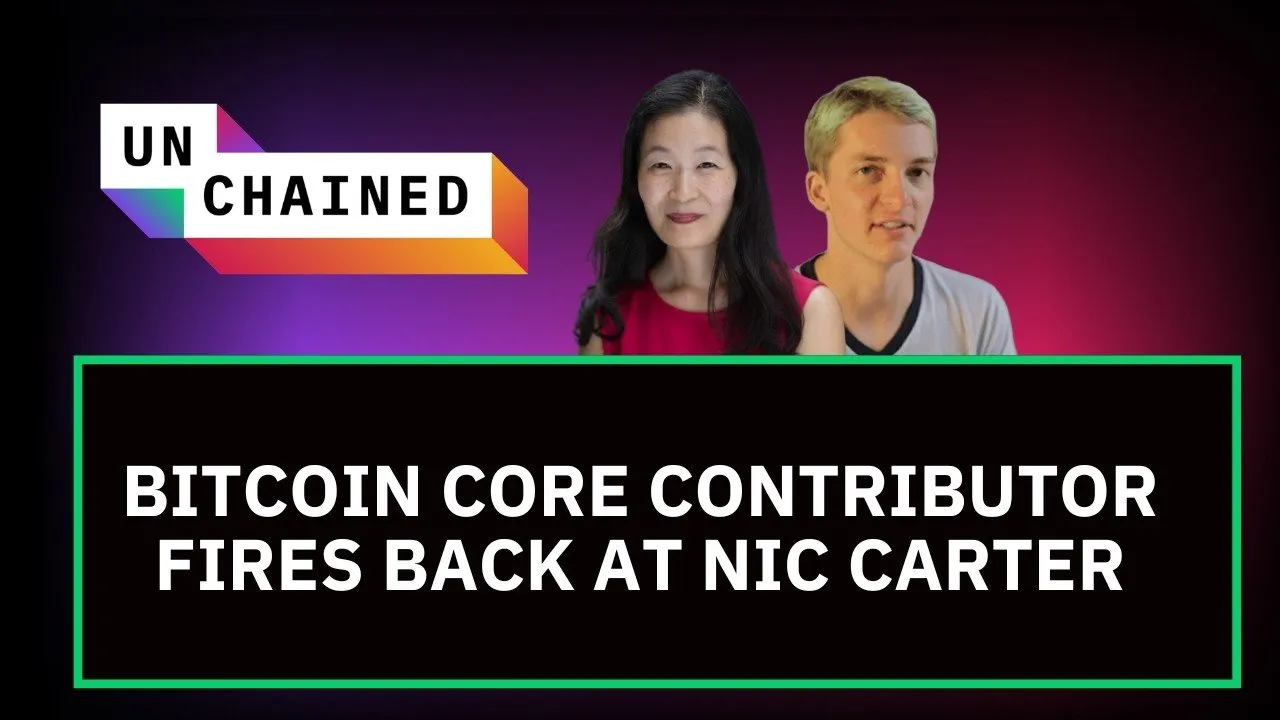
The threat of quantum computing has long loomed over the cryptocurrency industry, with critics often pointing to Bitcoin as the most vulnerable target. Recently, the debate intensified when venture capitalist Nick Carter argued that Bitcoin developers are "sleepwalking towards collapse" by failing to prioritize post-quantum security. However, Matt Corallo, a prominent open-source engineer at Spiral and long-time Bitcoin Core contributor, argues that this narrative is largely fueled by "FUD" (Fear, Uncertainty, and Doubt). In a recent discussion, Corallo revealed that substantial work is already happening behind the scenes to ensure Bitcoin remains resilient in a post-quantum world.
Key Takeaways
- Seed Phrases are Quantum-Safe: Most modern Bitcoin wallets use derivation schemes that are inherently resistant to quantum attacks, providing a vital fallback for proving ownership.
- A Two-Stage Roadmap: Developers are focused on a transition that begins with "silent" commitments to post-quantum keys, allowing for a zero-cost upgrade path before a threat becomes imminent.
- The Market Will Decide: In the event of a "Q-Day" threat, the economic majority will likely favor a fork that disables vulnerable addresses, even if it means effectively burning lost or abandoned coins.
- Active Research is Underway: Contrary to claims of stagnation, specific proposals like BIP 360 and new cryptographic schemes like "Shrinks" are being actively developed by researchers at Blockstream and Chaincode Labs.
The Misconception of Developer Apathy
The primary point of contention between critics and developers lies in the perception of urgency. While Nick Carter and others argue that Bitcoin is uniquely exposed, Corallo points out that the developer community's quiet approach is often mistaken for inaction. He notes that a significant portion of the Bitcoin development mailing list—up to 40% of recent posts—is dedicated to discussing post-quantum strategies. This research is spearheaded by established organizations such as Chaincode Labs, Blockstream Research, and Spiral.
Corallo emphasizes that Bitcoin development does not operate through grand public manifestos or centralized committees. Instead, it moves through evidence-based consensus. Notably, he challenges the idea that a lack of public noise equates to a lack of progress.
"People are working on this. I can point to many people working on this... people are working."
By looking at the funding and focus of major research hubs, Corallo argues that the "sleepwalking" narrative falls apart. Researchers like Jonas Nick and Tim Ruffing are already formalizing the quantum security of current structures like Taproot while exploring future-proof alternatives.
Bitcoin’s Hidden Defense: The Quantum-Safe Seed Phrase
One of the most critical, yet overlooked, aspects of Bitcoin's security is the way private keys are generated. Most users rely on a seed phrase (12 or 24 words). Corallo explains that the mathematical path from those words to a private key is already quantum-safe. While a quantum computer could derive a private key from a public key revealed on the blockchain, it cannot work backward to the original seed phrase.
This technical nuance provides Bitcoin with a "break glass in case of emergency" solution. If a cryptographically relevant quantum computer were to appear, Bitcoin could implement a soft fork requiring a "proof of seed phrase" to move funds. This would allow users to verify their ownership through a quantum-secure method without needing to have migrated their coins years in advance.
The Role of BIP 360
A key part of the current technical discussion involves BIP 360, a proposal for a new address format. This format would allow users to commit to post-quantum public keys today without actually using them yet. This "silent commitment" avoids the high data costs and fees associated with current post-quantum signatures while ensuring that the infrastructure is ready to flip the switch when necessary.
The Two-Stage Transition Strategy
Preparing Bitcoin for a post-quantum world involves balancing efficiency with security. Corallo outlines a pragmatic two-stage roadmap that avoids unnecessary burdens on the network in the short term. The goal is to make the transition "free" for users until the threat is tangible.
Stage 1: Silent Commitments
In this phase, wallets would begin embedding post-quantum public keys into transactions. Because these keys are hidden within existing structures, they don't increase transaction sizes or fees. This allows the network to build a repository of quantum-ready addresses while the risk of quantum computing remains a decade or more away.
Stage 2: Flipping the Switch
Once a quantum threat becomes urgent, the community would activate a soft fork. At this point, the network would stop accepting old elliptic curve signatures and require the post-quantum signatures that were previously committed. Corallo argues this is far more efficient than forcing users to pay high fees for bulky signatures today for a threat that may not materialize for 20 years.
"You really want an upgrade path that is free for now, until a quantum computer becomes a more urgent threat."
Addressing the "Burn" and Lost Coins
The most controversial aspect of the quantum transition is what happens to "zombie" coins—bitcoins that haven't moved in years, including the roughly 1.1 million BTC attributed to Satoshi Nakamoto. Because these coins sit in old address types, they would be vulnerable to theft by a quantum computer. To protect the network's value, the community may have to choose between letting a quantum attacker steal the coins or disabling those addresses entirely.
Corallo is direct about the likely outcome: the market will choose the fork that preserves scarcity. If one version of Bitcoin allows an attacker to dump millions of "found" coins onto the market while another version "burns" those vulnerable addresses to maintain the 21-million supply cap, investors will naturally flock to the latter.
This market-driven approach bypasses the need for a central authority to decide the fate of Satoshi's coins. As Corallo notes, while some may "scream" about the loss of these coins, the economic majority will prioritize the survival of the system over the preservation of abandoned private keys.
Institutional Pressure and the Future of Governance
With the entry of fiduciaries like BlackRock through Bitcoin ETFs, the stakes for Bitcoin's roadmap have changed. Critics suggest that institutional giants might "fire" developers if they don't move fast enough. Corallo dismisses this as a misunderstanding of open-source development but acknowledges that institutions are now major stakeholders.
BlackRock and other ETF providers are market participants. Their influence will be felt most during a fork, where they must decide which chain to support. However, Corallo insists that the core principles of Bitcoin—censorship resistance and trustlessness—remain the primary focus of the developers. The goal is not to "pump the price" in the short term but to ensure the system functions without the need for third-party trust, even in the face of radical technological shifts like AI-driven cryptography breakthroughs or quantum supremacy.
Conclusion
Bitcoin's approach to the quantum threat is a reflection of its broader philosophy: avoid unnecessary changes, prioritize efficiency, and let the market settle disputes of value. While Ethereum and other chains may set public deadlines and committees, Bitcoin’s decentralized nature means its progress is often quiet but methodical. By leveraging the quantum-resistant nature of seed phrases and preparing a low-cost commitment path, developers are building a defensive shell that can be hardened the moment the threat moves from theoretical to practical. The "sleepwalking" narrative may make for compelling headlines, but the technical reality suggests Bitcoin is wider awake than its critics realize.