
Table of Contents
Key Takeaways
- Programmable Biology: Biotechnology is entering a "Waymo moment" where autonomous systems—rather than manual labor—will drive the next generation of scientific discovery.
- The Automation Gap: Most modern research is hindered by manual, human-intensive lab work. Transitioning to autonomous, AI-driven labs allows for 24/7 experimentation and vastly improved data gathering.
- Redefining Research Costs: Currently, up to 95% of research budgets are consumed by indirect costs and overhead. Shifting to autonomous models prioritizes high-value reagent consumption and lowers the barrier to entry for innovation.
- Democratizing Science: By leveraging AI to handle experimental design and cloud-based infrastructure to execute tests, the future of science could shift from an exclusive, gatekept field to a accessible pursuit for anyone with a question to answer.
The Shift Toward Autonomous Biotechnology
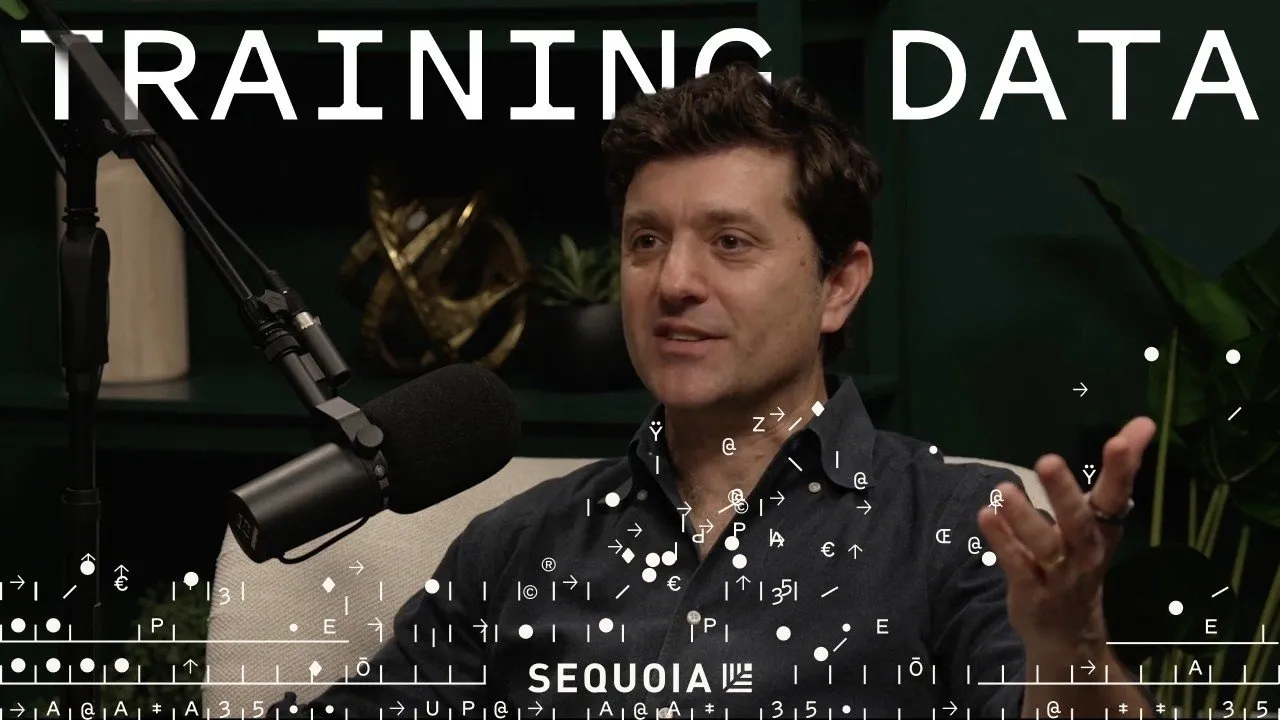
For decades, the biotechnology industry has operated in a silo, largely untouched by the rapid innovation cycles seen in software and internet technology. While other sectors leveraged computing to distribute information, life sciences remained stuck in the era of manual, human-driven laboratory work. Jason Kelly, founder and CEO of Ginkgo Bioworks, argues that we are finally reaching a pivotal shift—biology’s own "Waymo moment"—where automation and artificial intelligence will fundamentally rewrite the rules of scientific research.
The core concept is simple yet transformative: cells are programmable, much like computers. However, while computers process information, cells move atoms, allowing for physical molecular assembly. The bottleneck has never been the potential of biology itself, but rather our inability to program it efficiently. Kelly notes that the process of "compiling and debugging" DNA code is inherently physical, requiring costly, time-consuming cycles of design, test, and iteration that have historically relied on manual labor.
This is actually going to change the fundamentals of how we do science and our big science industries like biopharma are going to get disrupted. I really believe that and that's not been true for the last 30 years of tech.
The Efficiency of the Autonomous Lab
Why has automation been so difficult to implement in the lab? Kelly identifies the problem as "high-mix, low-volume" work. Unlike an assembly line producing millions of identical parts, scientific research requires constant variability. For years, automated lab solutions functioned like subways—efficient but rigid, capable of performing only specific tasks. What the field lacked was the "autonomous" equivalent of a car: a system that offers the speed and precision of high-end automation with the flexibility to handle a wide range of unique experimental requests.
Solving the Labor Bottleneck
The vision for the future is to move scientists away from the bench and toward the computer. Currently, high-level researchers spend years of their careers performing the physical, repetitive tasks of liquid handling. By integrating AI-driven robotic platforms, these tasks can be offloaded. More importantly, this allows for a new paradigm of collaboration: imagine a hundred AI agents each pursuing a different hypothesis for a disease like Alzheimer’s, sharing their daily successes and failures in real-time. This level of information exchange is currently impossible, as it would require thousands of human hours and years of publishing cycles.
Data-Driven Discovery and the Reagent-First Model
A major structural failure in modern science is how we allocate funding. Currently, an overwhelming majority of research budgets—often 90% or more—is spent on overhead, personnel, and physical laboratory space. Kelly argues that we should be budgeting research programs based on the cost of reagents, as these represent the true "usage-based" pricing of scientific experimentation. By moving toward autonomous, cloud-based labs, institutions can drastically reduce the cost of space and equipment, allowing for a 10x increase in the amount of data generated per dollar spent.
Closing the Loop with AI
The most exciting prospect is the potential to feed experimental results directly back into the AI models. When an autonomous lab runs an experiment, the resulting data is not just an answer to a question—it is a training set that informs the next hypothesis. As models become better at predicting outcomes, they can design even more sophisticated experiments, creating a virtuous cycle of discovery that accelerates scientific progress far beyond current human-led capabilities.
The Future of Bio-Application
If the cost of experimentation drops significantly, the applications for biotechnology will likely expand beyond traditional therapeutics. While drugs currently account for the vast majority of biotech ROI, future opportunities in consumer wellness—such as personalized longevity, muscle growth, and metabolic optimization—are enormous. We are moving from a "disease industry" to a "health optimization industry," where individuals may one day monitor their molecular health as easily as they currently track their steps on a wearable device.
As these tools become more accessible, science will move away from being a "precious, genius-only" profession and toward a broader form of human curiosity. Just as the personal computer revolution took technology out of the hands of mainframe-bound corporations and into the hands of individuals, the democratization of lab access could lead to a massive surge in original research. We are entering a phase where the "vacuum tube" era of biology is ending, and the era of sophisticated, programmable, and accessible science is only just beginning.
Conclusion
The transition toward autonomous biology is not just about making science faster; it is about fundamentally redefining the limits of human knowledge. By removing the manual, high-cost barriers that have constrained the field, we are opening the door to a new era of breakthroughs in materials, medicine, and beyond. As these AI models and robotic labs scale, we can expect to see a rapid acceleration in discovery, fulfilling the promise that the most significant scientific revolutions are not behind us, but rather lying ahead in the code of the life that surrounds us.


![Trump Market Manipulation Will Trap You! [This Happens Next]](/content/images/size/w1304/format/webp/2026/03/trump-market-manipulation-volatility-warning.jpg)
