Table of Contents
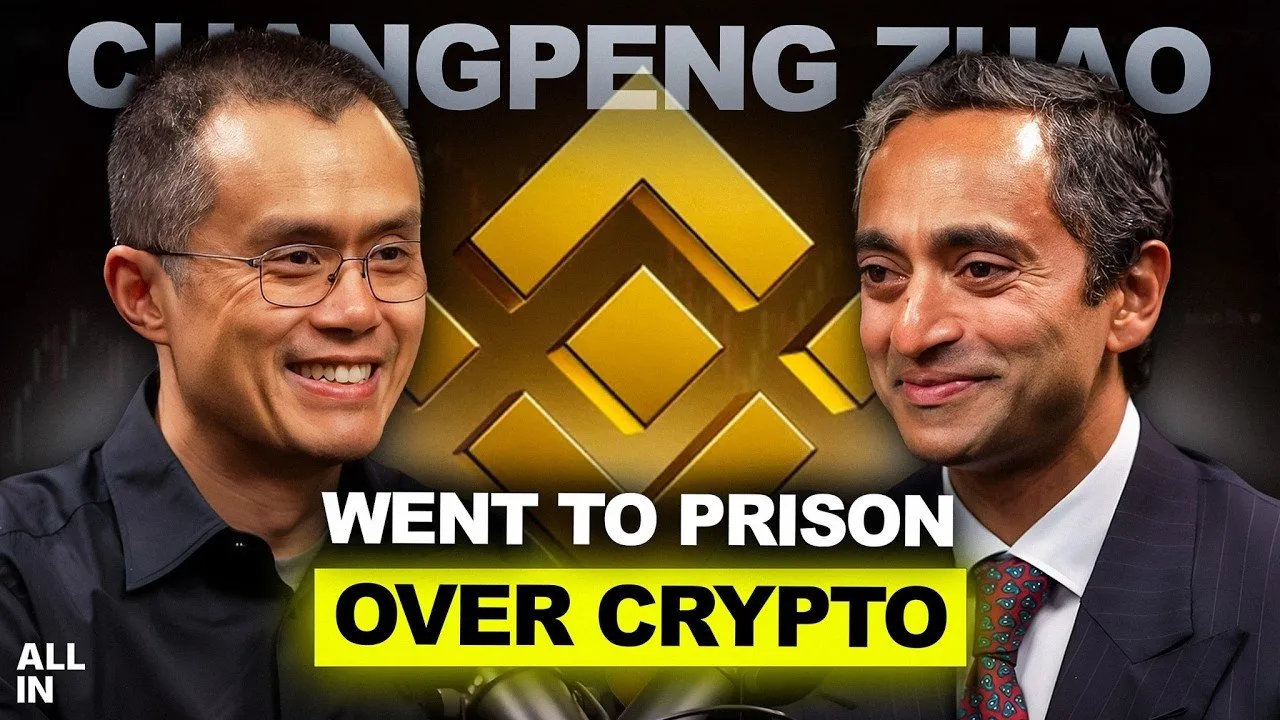
In the world of cryptocurrency, few figures loom as large—or have experienced as dramatic a trajectory—as Changpeng Zhao, known globally as CZ. From flipping burgers at McDonald’s to building the world’s largest crypto exchange, and subsequently serving time in a U.S. federal prison, CZ’s journey is a masterclass in resilience, technical scaling, and the high stakes of global finance.
In a rare and candid conversation following his release, the Binance founder opened up about his immigrant roots, the chaotic early days of the 2017 ICO boom, the collapse of FTX, and the mental fortitude required to negotiate a plea deal with the U.S. Department of Justice. His story offers a unique glimpse into the mechanics of building a financial empire and the personal cost of regulatory battles.
Key Takeaways
- The Immigrant Hustle: CZ’s work ethic was forged early, earning $4.50 an hour at McDonald’s in Vancouver after his family emigrated from China in the late 1980s.
- Strategic Pivots: Binance wasn't an overnight success; it was the result of years of "salaryman" work, failed startups, and a timely pivot from building exchange systems for others to launching a proprietary crypto-to-crypto platform.
- Escaping the FTX Contagion: Binance divested its equity in FTX a year and a half before Sam Bankman-Fried’s collapse, a move CZ attributes to intuition and differing values rather than forensic foresight.
- Legal accountability: CZ emphasizes that his prison sentence was for Bank Secrecy Act (BSA) violations—a regulatory failure to register—rather than fraud or misappropriation of user funds.
- Prison Reality: Despite fears of extortion, CZ found a structured, segregated environment in federal prison where he relied on calmness and stoicism to survive a four-month sentence.
- Post-CEO Life: Now barred from running Binance, CZ is focusing on "Giggle Academy," a philanthropic, gamified education platform designed to serve the 1.2 billion uneducated people globally.
From McDonald’s to High-Frequency Trading
Long before he was a billionaire, CZ was a teenager navigating a new life in Vancouver. His family emigrated from China shortly after the Tiananmen Square protests, a move that required years of waiting for passports and visas. This transition shaped his worldview, instilling a deep appreciation for stability and efficiency.
His professional journey began far from the glamorous world of fintech. At 14, he worked at McDonald’s earning sub-minimum wage ($4.50/hour) and took shifts at a gas station. However, his aptitude for technology eventually led him to computer science at McGill University. Unlike the "college dropout" archetype common in Silicon Valley lore, CZ was a dedicated student who transitioned into a stable career as a coder.
He cut his teeth developing order execution systems in Tokyo and New York, working for companies that demanded extreme precision.
"I’m an efficiency kind of driven guy... everything is about efficiency, making it go as fast as possible, process as low latency as possible."
This obsession with speed and system architecture became the foundation of his career. He spent years as a "salaryman" at Bloomberg in New York, managing teams and optimizing tradebook futures, before the entrepreneurial bug truly bit him. It wasn't until a poker game in Shanghai in 2013 that he first heard about Bitcoin, leading him to sell his apartment to go "all in" on the technology.
The Birth of Binance and the 2017 ICO
Binance’s origin story is often romanticized, but the reality was a grind of trial and error. After leaving Bloomberg, CZ co-founded a company in Shanghai attempting to service Chinese brokers, only to be shut out by regulations prohibiting foreign ownership. He then served as CTO at OKCoin, but left due to cultural clashes and ethical disagreements regarding how promotions were run.
In 2015, he launched a company in Tokyo providing "Exchange-as-a-Service," licensing trading software to other platforms. This business was profitable and stable until the Chinese government cracked down on the exchanges using his software in early 2017. Faced with a dying revenue stream, the team decided to launch their own exchange.
The Lightning Launch
- The ICO Boom: Inspired by a local project that raised $15 million in ten days with just a whitepaper, CZ decided to launch the BNB token to fund the new exchange.
- Fast Execution: The team went from idea to ICO in roughly two weeks in June 2017, raising $15 million by selling 60% of the token supply.
- Regulatory Evasion: Shortly after launch, China banned crypto exchanges. Binance immediately relocated its team to Tokyo, preserving its global user base while cutting off the Chinese market.
- Product-Market Fit: Binance succeeded where others failed because of superior architecture. While competitors like Poloniex and Bittrex lagged, Binance offered a user experience that was visibly faster.
- The Wealth Shock: Within six months, Forbes put CZ on the cover. He went from financial stability to immense paper wealth so quickly that he barely had time to process the shift in lifestyle.
Navigating Rivalries and the Fall of FTX
As Binance grew, it inevitably crossed paths with other rising stars, including Sam Bankman-Fried (SBF) of FTX. Initially, the relationship was collaborative; Alameda Research was a VIP market maker on Binance. In 2019, Binance even invested in FTX, acquiring a 20% equity stake.
However, the relationship soured quickly. CZ noted that as soon as the investment was made, he began hearing reports of SBF bad-mouthing Binance in Washington D.C. circles. Furthermore, FTX began aggressively poaching Binance personnel with offers of 5x salary increases. Recognizing the misalignment in values and the potential for regulatory blowback, CZ decided to divest.
In July 2021—a full 18 months before FTX collapsed—Binance sold its equity stake back to FTX. This decision, driven by a desire to exit a toxic partnership rather than financial foresight, ironically saved Binance from being dragged into the bankruptcy proceedings as an equity holder.
The DOJ Settlement and Stepping Down
By 2023, the regulatory pressure on Binance had reached a boiling point. The U.S. Department of Justice (DOJ) launched an aggressive investigation, culminating in a historic settlement. CZ emphasizes the importance of distinguishing between the charges he faced and those leveled against other crypto figures.
The core of the government’s case was a violation of the Bank Secrecy Act (BSA)—specifically, a failure to register as a financial services company in the U.S. and inadequate KYC/AML (Know Your Customer/Anti-Money Laundering) protocols.
The settlement terms were severe:
- $4 Billion Fine: A massive financial penalty levied against the company.
- Personal Plea: CZ agreed to plead guilty to the failure to register, a felony that had never previously resulted in jail time for a CEO.
- Resignation: He was forced to step down as CEO and is barred from managing the company for three years.
- Dismissed Enhancements: The government attempted to add "enhancements" to the sentencing, alleging CZ personally facilitated illicit transactions. These were rejected by the court due to a lack of evidence.
The negotiation process was grueling, involving daily calls with dozens of lawyers for over a year. The DOJ employed psychological tactics, including weeks of silence, to pressure a deal. Ultimately, CZ accepted the terms to close the chapter, hoping to spare the company further turmoil.
Inside the Federal Prison System
Sentenced to four months, CZ entered a low-security federal prison, an experience he describes as both surreal and grounding. Despite being a billionaire, inside the facility, he was just another inmate. Before entering, prison consultants warned him of extortion attempts and violence, advising him to keep his head down and transfer money to no one.
Life on the inside:
- Strict Segregation: CZ observed that prison politics are strictly organized by race and ethnicity to minimize conflict. As an Asian inmate, he was grouped with "Chinos"—a subgroup that included other Asians and, surprisingly, Pacific Islanders.
- The "Union Rep" System: Conflicts between inmates of different races were handled by group representatives who negotiated resolutions to prevent violence.
- Physical Conditions: Inmates lived in units of 200, with communal showers and limited food options. CZ noted a distinct lack of fresh fruits and vegetables, with the diet consisting mostly of high-carb, processed foods.
- Mental Resilience: He spent his time exercising, writing, and maintaining a low profile. He realized early on that the best way to survive was to be respectful but distant, avoiding gang affiliations or debts.
"The minute I walked into the prison gate, the guard says, 'Well, you’re going to need some protection here... I hear the Pacific Islanders are hiring.'"
Upon his release, the simple luxuries—a private shower without touching the walls and a piece of fresh fruit—felt monumental.
The Next Chapter: Giggle Academy and AI
Now a free man but separated from the company he built, CZ has pivoted toward philanthropy and future technologies. He holds no resentment regarding his forced resignation, viewing it as an opportunity to reclaim his time and focus on passion projects.
Giggle Academy
His primary focus is Giggle Academy, a non-profit educational platform aiming to digitize schooling for the developing world. The app targets the 700-800 million illiterate adults and 500 million out-of-school children globally.
- No Token: Contrary to crypto industry habits, CZ refuses to launch a token for the project to prevent speculation and "farming."
- Gamification: The platform uses game mechanics to make learning addictive and accessible on low-end Android devices.
- Self-Funding: CZ is funding the project entirely out of pocket, treating it as a legacy project rather than a business.
The Future of Crypto and AI
CZ views Artificial Intelligence as the third major technological wave of his life (after the internet and Bitcoin). He predicts a convergence of crypto and AI, specifically regarding AI Agents.
He argues that as AI agents begin to perform tasks—booking hotels, buying software, executing trades—they will require a payment rail. Traditional banking systems, with their slow settlement times and KYC requirements, cannot support AI commerce. Cryptocurrency, being native to the digital realm, is the only viable currency for the machine economy.
Conclusion
Changpeng Zhao’s story is far from over. From the frenetic energy of the 2017 bull run to the solitude of a prison cell, he has navigated the highest peaks and lowest valleys of the crypto industry. While he acknowledges the mistakes made regarding regulatory compliance, his focus has shifted from empire-building to impact.
His journey serves as a reminder that success is rarely a straight line. It involves grit, luck, and the ability to endure profound instability. As he steps into this new phase of life, CZ appears less concerned with net worth and more focused on legacy, health, and freedom.
"Money is only one thread... Once you have enough, having more doesn't help you. There's health, family, and positive impact. Those are the things that keep you happy."