Table of Contents
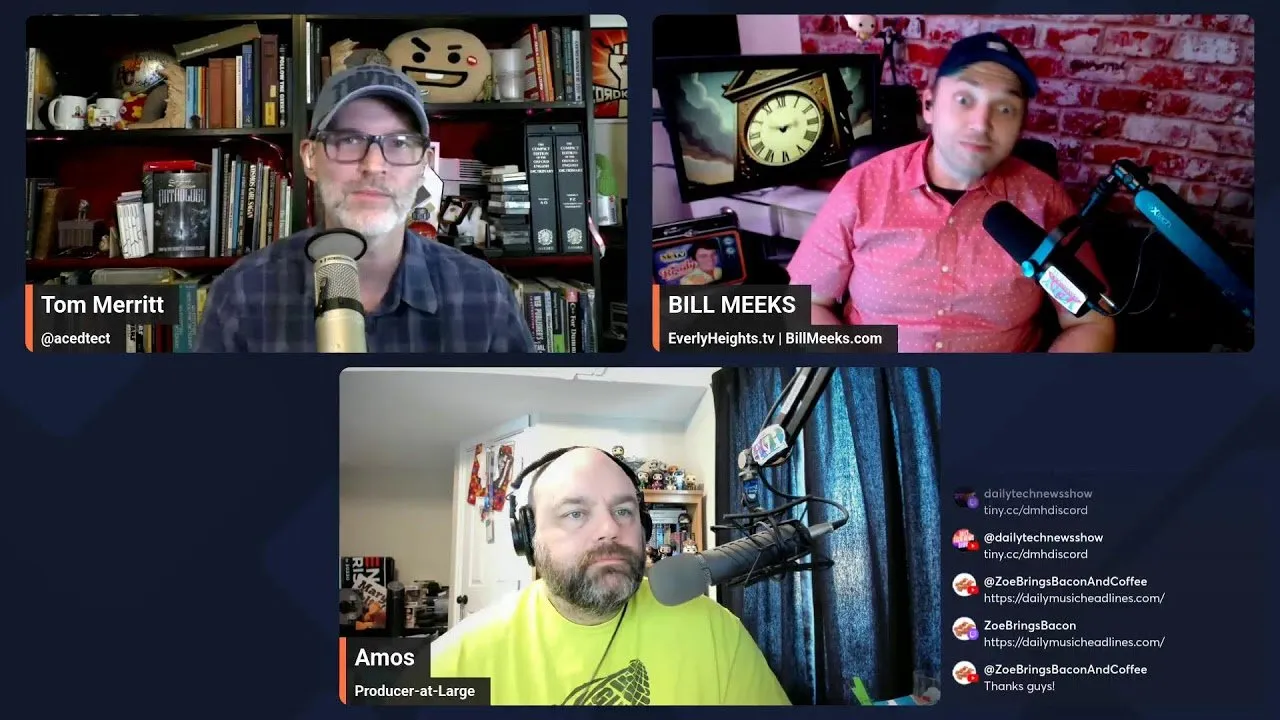
Bill Meeks, creator of the multimedia fiction universe Everly Heights, has revealed a significant strategic pivot in his production workflow for the newly released second season of his audio drama, moving away from generative AI for visual assets while deepening its integration for audio synthesis. During a recent appearance on the Daily Tech News Show, Meeks detailed how shifting public sentiment regarding "AI slop" influenced his decision to return to hand-drawn artwork, even as he employs advanced voice and music modeling tools to enhance production efficiency and preserve artistic legacy.
Key Points
- Strategic Pivot: Everly Heights has moved from AI-generated visual assets to human-created art for Season 2 due to negative audience perceptions of low-effort content.
- Voice Synthesis: Meeks utilizes ElevenLabs to clone his own voice for specific character sustainment, allowing him to perform vocal ranges that would otherwise be physically taxing.
- Musical Tribute: The production uses the AI music platform Suno to replicate the style of Meeks’ deceased bandmate, allowing for new compositions that honor the artist's legacy.
- Efficiency vs. Replacement: The creator emphasizes using AI as a "Vocaloid" or instrument for iteration rather than a tool to replace human creativity.
Navigating the AI Backlash
The development of Everly Heights began heavily intertwined with the rise of generative image tools. Meeks, a graphic artist and video producer, spent nearly two years training custom models on Stable Diffusion 1.5. He developed specific tools—such as "Everly Heights Character Maker" and "Talk Mouth"—to generate consistent character T-poses and phonemes for animation.
However, despite the technical success of these custom models, Meeks encountered a shift in the cultural and financial landscape. A planned financing deal with an AI company collapsed, and broader public sentiment turned against AI-generated imagery, often categorizing it as low-quality or ethically dubious.
"I just... the climate and the tide changed on AI a little bit, especially in creative spaces. And people saw it as a threat," Meeks said. "I hated that people weren't checking out the stories because of the AI association."
Consequently, for the release of Everly Heights Tales Season 2, Meeks abandoned the AI visual models he spent years refining. The promotional artwork and assets for the new season are hand-drawn, a move designed to distance the project from the reputation of low-effort algorithmic content.
Targeted Audio Integration
While stepping back from AI visuals, the production has embraced generative audio to solve specific logistical challenges. Meeks utilizes ElevenLabs to perform the character "Ricky Special," a role based on a high-energy Michael J. Fox impression. Because maintaining the specific vocal inflection for long recording sessions is physically difficult, Meeks records a dataset of the impression and uses the AI model to process his performance.
Meeks likens this process to using an instrument or a "Vocaloid," noting that the technology is used for consistency rather than creation from scratch. The workflow involves iterative training: recording a performance, training a model, generating lines, and then using the cleanest output to train a final, perfected model.
Preserving Musical Legacy via Suno
Perhaps the most distinct application of generative technology in the production is its use in music composition. Meeks is using Suno, an AI music generation platform, to recreate the sonic signature of his former band, Classic Tragic Hero.
Following the passing of his bandmate and keyboardist, Steve, who was slated to work on the project, Meeks uploaded their previous discography into Suno as a style reference. This "Classic Tragic Voice" persona allows Meeks to generate backing tracks that align with his late friend's artistic style. Meeks then records his own vocals and guitar over these tracks.
"I could have abandoned that connection... or I could adapt," Meeks explained. "I'm taking real life things... and I'm smoothing out the edges to an artistic point. I'm doing it to make a bust of Caesar and not to make a weird misshapen head with three ears."
Implications for Independent Creators
Meeks' experience highlights a growing divide in the creator economy. While tools like Stable Diffusion and Midjourney offer independent artists the ability to scale production, the "AI slop" stigma—associated with mass-produced, low-quality content—poses a reputational risk. Creators are now tasked with finding a balance: leveraging these tools for backend efficiency while ensuring the public-facing product retains a distinctly human touch.
The approach mirrors recent industry moves, such as Liza Minnelli’s reported use of generative tools to assist with musical arrangement for her upcoming album. These use cases suggest a future where AI operates as an assistive accessibility tool for artists limited by physical constraints or budget, rather than a replacement for the creative spark.
What's Next for Everly Heights
The second season of Everly Heights Tales is currently underway, featuring an anthology format where characters and themes intersect across different episodes. The production continues to expand its "Meeks Multiverse," with plans to integrate characters from Meeks' previous works, such as The Fakist.
Listeners can access the new episodes via EverlyHeights.tv, Apple Podcasts, and Spotify, with video companions and behind-the-scenes breakdowns of the production process available on the project's YouTube channel.