Table of Contents
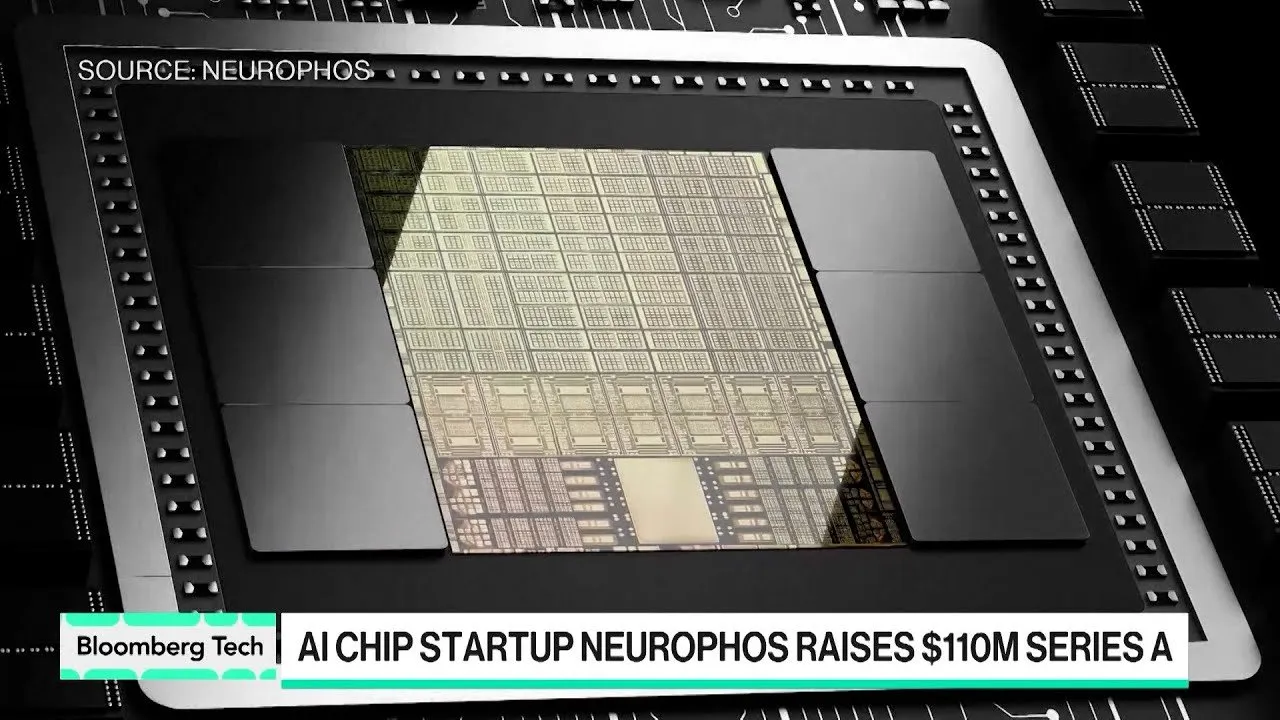
A venture capital fund backed by Bill Gates has led a $110 million funding round for Neurophos, a semiconductor startup aiming to revolutionize artificial intelligence computing through photonics. The investment underscores a growing industry pivot toward optical computing—using light instead of electrons—to solve the critical energy and performance bottlenecks plaguing modern data centers.
Key Points
- Significant Capital Injection: Neurophos secured $110 million to accelerate the development of its optical AI inference chips.
- Technological Leap: The company claims its technology offers 50 to 100 times greater speed and energy efficiency compared to current CPUs and GPUs.
- Inference Focus: The hardware is designed specifically for AI inference (running models) rather than training, targeting the largest growth area in AI deployment.
- De-risked Development: Investors noted the technology has moved beyond theoretical science to "hard engineering," with verified silicon already tested in labs.
Physics at the Speed of Light
The core of Neurophos’s innovation lies in its departure from traditional electronic computing. By utilizing light to transmit and process data, the company addresses the fundamental physical limitations of silicon-based hardware. As artificial intelligence models grow exponentially in size, the energy required to run them—known as inference—has become a primary constraint for data center operators.
According to the company’s leadership, their optical solution is designed as a "drop-in replacement" for standard processors but offers a dramatic leap in performance.
"It runs 50 to 100 times both faster and with 50 to 100 times higher raw energy efficiency in the inference use case," stated Patrick, a representative for Neurophos. "Hardware is fundamentally power limited... We're solving that problem at the fundamental physics level."
This efficiency is critical as the tech industry grapples with the power demands of generative AI. While some visionaries have proposed extreme solutions, such as orbiting data centers, Neurophos argues that the solution lies in changing the physics of the chip itself rather than its location.
From Science Experiments to Hard Engineering
The investment thesis for the Gates-backed fund relies heavily on the maturity of the technology. While optical computing has long been a theoretical ambition, investors indicated that Neurophos has bridged the gap between academic research and commercial viability. The firm’s due diligence process involved verifying the technology on testbeds and oscilloscopes, confirming that the chips work physically and are not merely simulations.
"We’ve de-risked the fundamental physics," explained Patrick. "Unlike quantum computing, where you still need some more physics miracles to make it happen, there are no more physics miracles in our roadmap from here. It is hard engineering, but it is just engineering to get to market."
Michael, representing the investment fund, noted that the decision to underwrite the deal was based on seeing demonstrable benefits to energy efficiency that could "change the game" for the industry at large, including major players like Microsoft.
Disrupting a GPU-Dominated Market
The semiconductor landscape is currently dominated by Nvidia, whose GPUs are the standard for AI workloads. However, the industry is showing signs of shifting toward "heterogeneous compute"—a model where specialized hardware handles specific tasks like inference more efficiently than general-purpose GPUs.
The investors pointed to a recent breakthrough in industry acceptance, noting that major chip leaders are increasingly willing to integrate new, disruptive hardware into their existing architectures. This shift paves the way for specialized platforms like Neurophos to enter the server bill of materials without requiring a complete overhaul of data center infrastructure.
With the "science risk" largely mitigated, the company’s focus now shifts entirely to execution. The capital injection will be used to adhere to a strict engineering schedule, with the pressure now on the startup to deliver a commercially viable product that can meet the exploding demand for energy-efficient AI compute.


![Bitcoin: An Unfortunate Pattern [Update]](/content/images/size/w1304/format/webp/2026/03/bitcoin-unfortunate-pattern-update.jpg)