Table of Contents
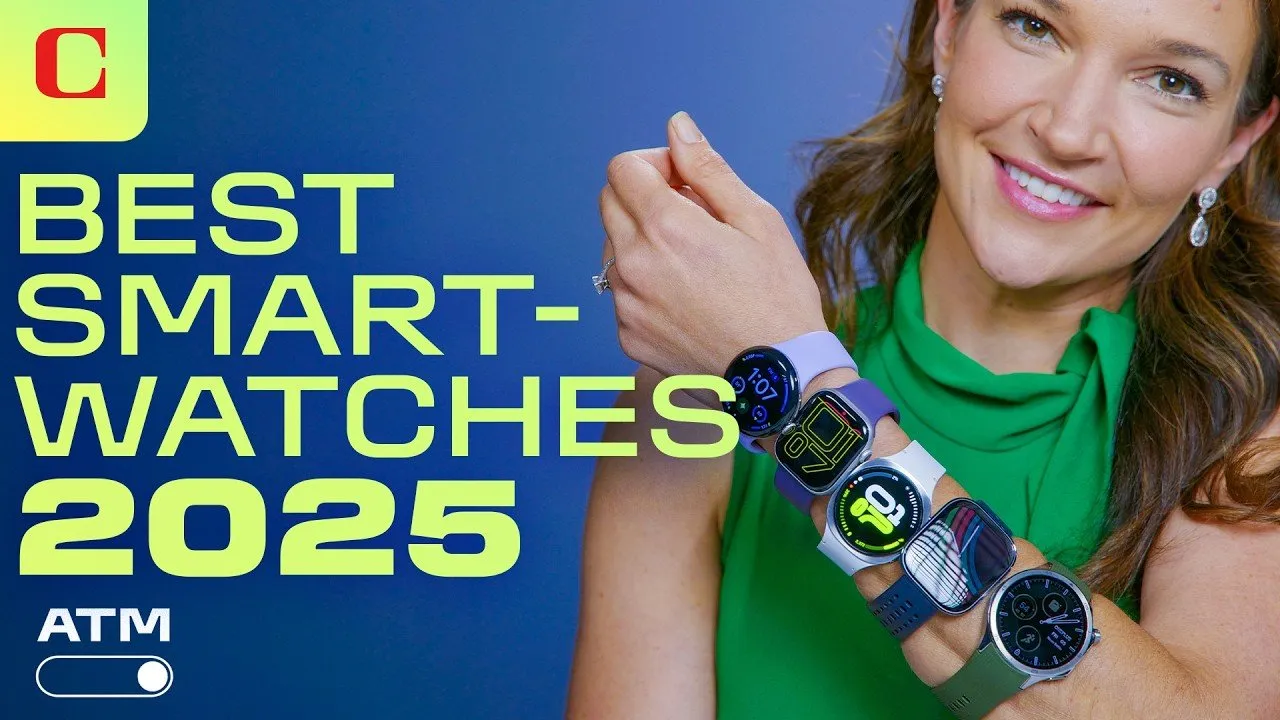
All Things Mobile has released its comprehensive 2025 smartwatch buyer's guide, highlighting seven top picks across different price points and platforms. The lineup features significant improvements in battery life, health monitoring capabilities, and design refinements, with standout models including the Apple Watch Series 11 for iPhone users and the Google Pixel Watch 4 for Android enthusiasts.
Key Points
- Apple Watch Series 11 delivers 6-hour battery improvement, reaching 30 hours for the 42mm model, plus new hypertension monitoring
- Google Pixel Watch 4 offers 30-40 hour battery life depending on size, with emergency satellite connectivity and enhanced Fitbit integration
- Samsung Galaxy Watch 8 introduces AI-powered coaching features and innovative antioxidant tracking through skin analysis
- OnePlus Watch 3 leads in battery performance with nearly three days of standard use, extendable to five days in smart mode
- Amazfit Bip 6 emerges as the budget champion at $80, delivering comprehensive health tracking without major compromises
Apple Watch Series 11 Sets New Standards
The Apple Watch Series 11 represents Apple's most significant battery advancement in years, according to the review. The 42mm model now achieves approximately 30 hours of battery life, marking a substantial 6-hour improvement over previous generations. Beyond endurance, the device introduces hypertension notifications that alert users to potential high blood pressure indicators.
The Series 11 also addresses durability concerns with enhanced scratch resistance. After four months of testing, reviewers report no visible screen damage, a notable improvement that could reduce the need for protective accessories. The device includes 5G connectivity and improved overall reliability across wireless connections.
For budget-conscious iPhone users, the Apple Watch SE3 emerges as the standout value proposition. While sacrificing ECG functionality, hypertension alerts, and the extended battery life, the SE3 maintains the same processor as the Series 11 at a significantly lower price point.
Android Competition Heats Up
The Google Pixel Watch 4 leads Android recommendations at $350, featuring what reviewers describe as one of the most versatile designs available. The distinctive bubble screen enhances readability from multiple angles, though it increases scratch susceptibility compared to flat displays.
Battery performance varies by size, with the smaller version delivering 30 hours and the larger model reaching 40 hours per charge. Charging speed proves exceptional, with zero-to-full charging completed in approximately 40 minutes. The cellular variant includes an emergency satellite feature for off-grid communication, expanding safety capabilities beyond traditional cellular coverage.
If your main priority is fitness tracking, then this one is topnotch. Everything from the workout insights to sleep tracking and daily health summaries is just delivered right to your wrist in a way that's easy to understand, which is half the battle.
The Samsung Galaxy Watch 8 matches the Pixel Watch 4's $350 price while targeting Samsung ecosystem users. The redesigned form factor prioritizes comfort, with reviewers noting minimal awareness during sleep tracking sessions. Samsung's approach emphasizes free AI-powered features, including a marathon training coach and detailed sleep coaching, contrasting with Fitbit's premium subscription model.
A standout innovation is the antioxidant index feature, which analyzes skin to estimate fruit and vegetable consumption without requiring food logging or blood samples. This technology provides dietary insights through non-invasive monitoring.
Battery Leadership and Budget Excellence
The OnePlus Watch 3 dominates battery performance, achieving nearly three full days of standard operation. Users can extend this to five days by enabling smart mode, which disables the always-on display. While the health ecosystem lacks the depth of Fitbit or Samsung offerings, it covers essential metrics including SpO2 and temperature tracking with reported accuracy in heart rate and biometric measurements.
The device features Gemini Voice Assistant, representing a significant advancement over traditional Google Assistant capabilities for handling complex tasks and queries.
In the budget category, the Amazfit Bip 6 at $80 challenges the notion that affordable smartwatches require major compromises. Despite less refined interfaces and occasional lag, the device delivers accurate fitness tracking, customizable training tools, and comprehensive health features including SpO2, temperature monitoring, and heart rate alerts. Cross-platform compatibility with both iOS and Android makes it an accessible entry point for smartwatch newcomers.
The 2025 smartwatch landscape reflects maturation across price segments, with meaningful improvements in battery life and health monitoring becoming standard rather than premium features. These developments suggest consumers can expect reliable, feature-rich devices regardless of their budget constraints or platform preferences.