Table of Contents
The 2026 Consumer Electronics Show (CES) in Las Vegas concluded last week, marking a distinct shift in the technology sector’s focus from abstract artificial intelligence software back to tangible, innovative hardware. From resurrected smartwatch brands to rollable laptop displays and next-generation foldables, the event highlighted a renewed industry commitment to form factor utility and consumer-focused industrial design.
Key Points
- Motorola unveiled the Razer Fold, the only non-Samsung book-style foldable slated for the North American market, launching Summer 2026.
- Lenovo and Asus introduced expanding display technologies, including a rollable OLED laptop concept and a refined dual-screen ZenBook Pro Duo.
- Pebble made a surprise return to the wearable market with the Pebble Time 2 and Pebble Round 2, focusing on battery life and minimalist interfaces.
- LEGO debuted a "smart play brick" developed over eight years, integrating sensors and wireless charging to bridge physical and digital play.
- Subtle Computing demonstrated breakthrough noise-cancellation algorithms capable of completely isolating voice in high-decibel environments.
The Return of Specialized Hardware
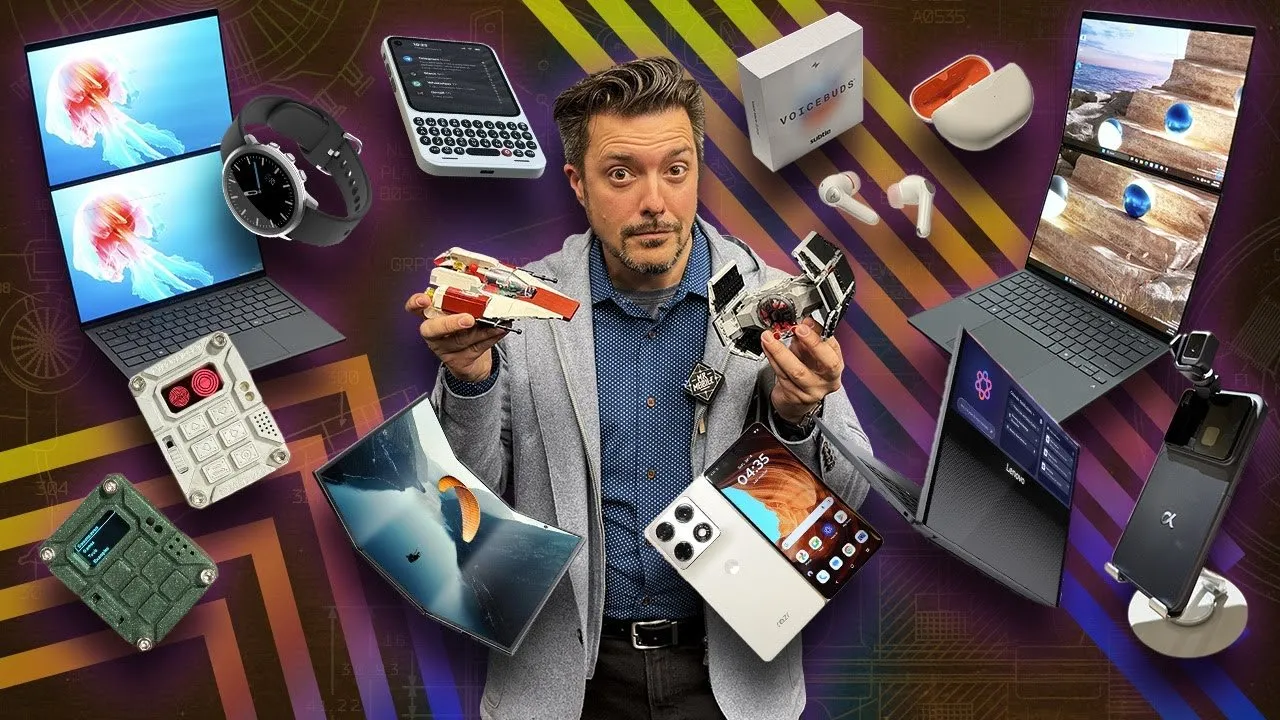
While recent years at CES were dominated by AI integration, 2026 signaled a resurgence of "gadgets"—physical devices prioritizing distinct mechanical engineering and user experience. Leading this charge in the mobile sector was Motorola with the announcement of the Motorola Razer Fold.
Scheduled for a Summer 2026 release, the Razer Fold targets the North American market as a direct competitor to Samsung’s dominance. The device features a thinner, lighter chassis composed of curved glass and polished rails. Notably, Motorola has integrated stylus support on both the internal and external displays, though the device lacks an internal silo for the accessory. The camera system includes three 50-megapixel sensors, capped by a 3x telephoto lens.
In the wearables sector, the defunct pioneer Pebble has re-emerged under new management. The company showcased the Pebble Time 2 and Pebble Round 2, maintaining the brand’s signature e-paper displays and high-efficiency operating system. Unlike modern smartwatches aiming to replicate smartphone functionality, these devices promise 10 to 30 days of battery life and focus strictly on notification delivery and readability.
"It's not trying to be all the things modern wearables need to be to achieve mass market success. It's trying to give you relevant information on your wrist while staying readable in all lighting conditions."
Evolution of Mobile Computing Displays
Laptop manufacturers utilized CES 2026 to push the boundaries of screen real estate through flexible OLED technology. Lenovo showcased the ThinkPad Rollable XD, a device that transforms from a standard 13.3-inch laptop into a 16-inch vertical workstation via a motorized rolling screen. This form factor addresses the demand for vertical screen space, particularly useful for coding and document review.
Concurrently, Asus introduced the 2026 model of the ZenBook Pro Duo. The manufacturer has refined the dual-screen laptop with a "hideaway hinge" that reduces the visual gap between the two displays. Despite maintaining the same footprint as its predecessor, the new model boasts a 32% increase in battery capacity, addressing one of the primary criticisms of dual-screen portables.
Samsung's Trifold Entry
Samsung also maintained a presence with its Galaxy Trifold, a device capable of expanding into a 10-inch tablet-class display. Early hands-on testing suggests the device is aiming to bridge the gap between smartphones and ultra-portable laptops, supporting varied keyboard configurations for productivity tasks.
Innovations in Audio and Interactive Tech
Beyond traditional computing, the show floor highlighted significant advancements in component-level technology. Subtle Computing demonstrated a new software-based noise-cancellation solution. Unlike hardware-dependent solutions, Subtle’s algorithm reportedly eliminates background noise entirely while preserving voice fidelity, a potential target for licensing by major audio manufacturers.
In the toy sector, LEGO introduced a high-tech "smart brick" after an eight-year development cycle. The component includes sensors for motion, orientation, and color, along with wireless charging capabilities. The technology allows physical LEGO sets to react to gameplay context—such as orientation changes or interactions with other bricks—without requiring a screen-based interface.
"LEGO found the perfect way to add a little dimension to a classic experience without stepping over a line."
Market Implications
The trends observed at CES 2026 suggest a market correction. After several years of aggressive AI software integration, hardware manufacturers are refocusing on ergonomics, battery efficiency, and mechanical utility. The revival of brands like Pebble and the continued experimentation with form factors by Lenovo and Motorola indicate that consumer demand for specialized, tactile electronics remains strong despite the industry's pivot toward software services.
Furthermore, the presence of concepts like Honor's gimbal-camera phone and open-source projects like the "Cyber Fidget" suggests a healthy undercurrent of experimental hardware design that may influence mainstream devices in late 2026 and 2027.
Consumers can expect the Motorola Razer Fold to hit shelves this summer, with pricing to be announced. The new computing form factors from Lenovo and Asus are expected to follow, targeting enterprise and prosumer markets seeking productivity gains through expanded display technologies.