Table of Contents
CES 2026 has reaffirmed its status as the automotive industry's premier innovation hub, showcasing a distinct shift toward practical autonomy, accessible mobility, and next-generation energy storage. While legacy technology giants like Sony moved to expand their electric vehicle portfolios, the event’s most significant developments emerged from component manufacturers delivering market-ready solid-state batteries and startups utilizing artificial intelligence to redefine personal transportation.
Key Takeaways from CES 2026
- Donut Lab debuted commercial solid-state battery technology, launching first in the Verge Motorcycles TS Pro 2 with 150 kW charging capabilities.
- Sony Afeela, operating as an independent brand, unveiled the Afeela Prototype 2026, an electric SUV scheduled for a 2028 release.
- Tensor introduced a consumer-focused Level 4 autonomous vehicle featuring retractable steering controls and extensive LIDAR integration.
- The Strut EV1 mobility scooter earned top honors for applying AI and robotics to medical-grade accessibility devices.
The Shift in Autonomous Mobility
While autonomous driving technology has traditionally focused on robotaxi fleets, Tensor aims to bring Level 4 autonomy to private driveways. The company’s new "robo car" is designed for individual ownership, allowing the vehicle to handle all driving tasks under specific conditions.
The vehicle’s design prioritizes function, featuring a prominent roof-mounted hump housing a large LIDAR sensor and dozens of perimeter cameras. Inside, the cabin reflects its dual nature: when Level 4 mode is engaged, the steering wheel retracts and a display screen slides in front of the driver’s seat. However, industry analysts note that the aesthetic similarity to existing Waymo fleets may present a hurdle for consumer adoption in the private luxury market.
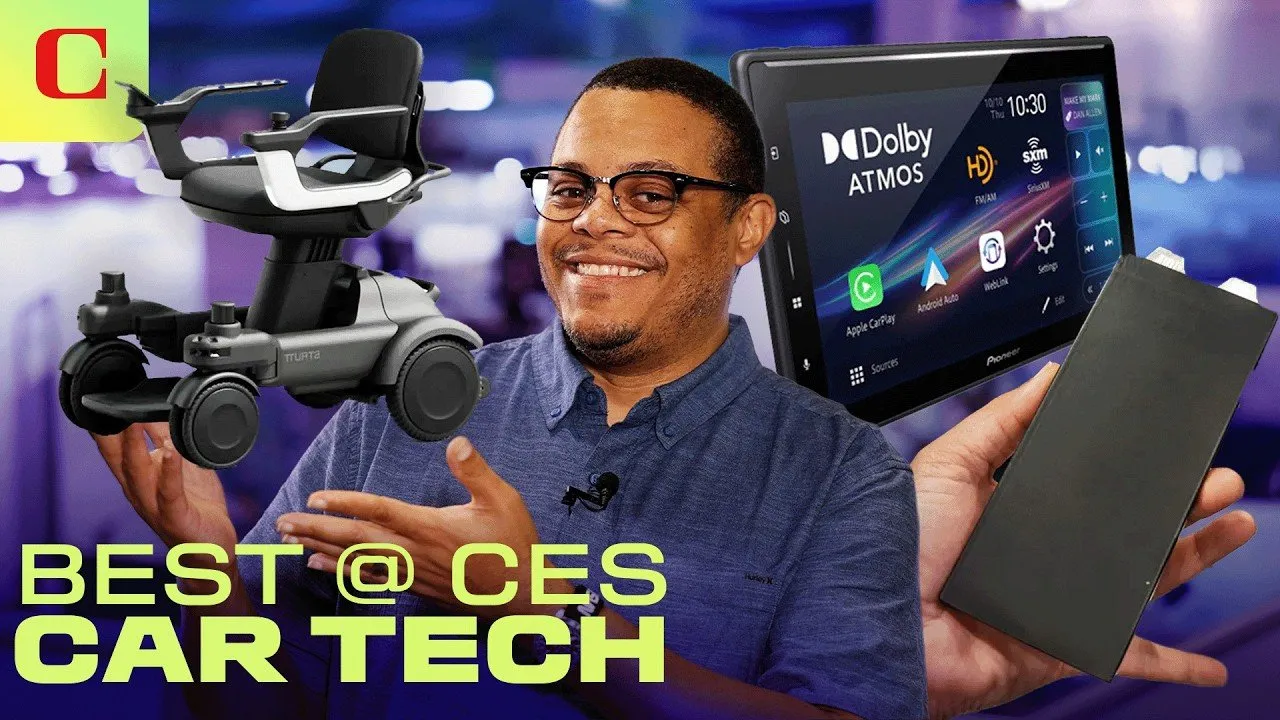
In the realm of accessible transportation, the Strut EV1 garnered significant praise as the event's standout innovation. This semi-autonomous, AI-powered scooter bridges the gap between medical devices and advanced robotics.
"This semi-autonomous AI-powered electric scooter will allow people with limited mobility to get around a lot easier. It can autonomously come to you when you need to hop into it... We really like that this is an intersection of all the things that are great about transportation tech: AI, robotics, [and] mobility."
The EV1 features voice command integration and automatic collision avoidance, offering a high-tech solution at an affordable price point for users requiring mobility assistance.
Solid-State Batteries Hit the Road
Donut Lab claimed a major milestone at the show, positioning itself as the first to market with solid-state battery technology. These cells, which are lighter and more stable than traditional lithium-ion batteries, address critical safety concerns regarding combustion while allowing for higher energy density.
The technology is debuting in the Verge Motorcycles TS Pro 2. Due to the stability of the solid-state cells, the motorcycle supports charging speeds of 150 kW—a figure comparable to full-size electric passenger cars. Donut Lab is aggressively expanding its ecosystem through strategic partnerships:
- Longbow: A British EV brand developing electric speedsters and roadsters projected to retail between £89,000 and £100,000.
- Watt: A collaboration to build a scalable EV platform utilizing solid-state batteries and hubless "donut" motors for commercial trucks and vans.
Sony Expands and Aftermarket Audio Upgrades
Sony’s Afeela brand, now presenting outside its parent company's direct shadow, introduced the Afeela Prototype 2026. This all-electric SUV incorporates the same sensor suites and entertainment technologies found in the Afeela 1 sedan. While the prototype demonstrates production-ready aesthetics, the SUV is not expected to reach consumers until 2028.
For consumers unwilling to purchase a new vehicle to access modern tech, Pioneer unveiled a retrofit solution. Their new 10.1-inch multimedia receiver enables Dolby Atmos and spatial audio in existing vehicles via Apple CarPlay. The system utilizes proprietary auto-tuning software to optimize standard car speakers, democratizing high-fidelity automotive audio without requiring complex hardware installations.
As CES 2026 concludes, the focus shifts to the implementation of these technologies. Regulatory approval will remain a primary hurdle for Tensor's Level 4 consumer vehicles, while the automotive industry watches closely to see if Donut Lab can scale solid-state manufacturing to meet the demands of the broader electric vehicle market.