Table of Contents
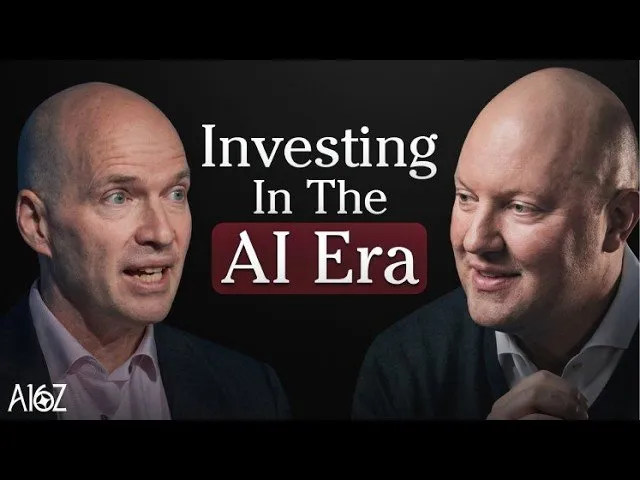
When technology fundamentally reinvents the supply side of an equation, the resulting market demand is rarely linear—it is exponential. This is the core thesis discussed by Andreessen Horowitz (a16z) co-founders Ben Horowitz and Marc Andreessen, joined by Packy McCormack. In a wide-ranging conversation covering the evolution of media, the transformative power of AI, and the mechanics of venture capital, the trio explores why traditional market sizing fails to capture the magnitude of the current technological wave.
From the "liberation" of the media landscape to the pragmatic optimism of Gen Z, the discussion paints a picture of a future that isn't just different, but significantly larger and more complex than the past. Below is a deep dive into why we may be underestimating the scale of what is coming next.
Key Takeaways
- Supply-driven markets create their own demand: Just as the iPhone unlocked mobile usage no one predicted, platforms like Substack and AI technologies are unlocking high-quality supply that generates massive, previously invisible demand.
- The "10x" phenomenon is structural: Cloud companies became 10x larger than their on-premise predecessors. AI suggests a similar trajectory, solving problems previously deemed impossible.
- AI reverses the "Mythical Man-Month": Unlike traditional software engineering, where adding more people slows progress, AI allows capital and compute to directly accelerate problem-solving.
- Reputation is a compounding asset: In a noisy, low-trust world, a firm’s reputation acts as a "slingshot" for founders, helping them navigate a messy real world that tech alone cannot solve.
- Generational shifts fuel optimism: A distinct shift is observed in "Zoomer" (Gen Z) founders, who are characterized by pragmatism, AI-nativity, and a rejection of recent cultural cynicism.
The Shift to Supply-Driven Media
The media landscape has undergone a radical transformation over the last decade, shifting from a controlled environment to one that Marc Andreessen describes as "uncontrolled" or "liberated." This shift helps explain the rapid rise of platforms like Substack, which a16z backed early despite skepticism about the market for paid newsletters.
The Substack Thesis
The investment in Substack was predicated on the concept of a supply-driven market. In traditional consumer marketing, the assumption is often that demand is fixed. However, breakthrough products demonstrate that consumers often do not know what they want until it is available. By providing the modernization capability for writers to monetize directly, Substack brought into existence content that otherwise would never have been written.
"If you provide the modernization capability, then you're going to bring into existence writers and content that don't exist today, and that is going to create new demand that's not visible today."
This dynamic mirrors the "barbell" effect seen in media consumption. While there is a massive market for short-form entertainment (the "cat videos" of the internet), there is an equally massive, latent demand for high-quality, deep intellectual content. The success of long-form podcasting and paid newsletters proves that when the supply is unlocked, the audience follows.
Why Markets Are Getting 10x Bigger
A recurring error in venture capital and economic forecasting is the tendency to size new markets based on their legacy counterparts. Investors often assume the market for Uber is simply the market for taxis, or the market for cloud software is the same as on-premise servers. History suggests this view is consistently too conservative.
The Cloud vs. On-Premise Analog
Ben Horowitz notes that when comparing on-premise software leaders to their cloud successors (e.g., PeopleSoft vs. Workday, or Siebel vs. Salesforce), the cloud versions consistently grew to be 10 times larger. This logic applied to Databricks, which was underestimated by its own founders because they were comparing it to the legacy market size of Oracle.
When technology removes friction and increases capability, the addressable market telescopes outward. This is why attempting to validate market size with math at the early stage of a paradigm shift is often futile; it requires a qualitative leap of faith regarding the value of the new supply.
AI: Reinventing the Computer
If cloud computing offered a 10x expansion, Artificial Intelligence represents a fundamental reinvention of the computer itself. The current technological shift is not merely an upgrade; it is the creation of a new machine that is vastly superior to the architecture used for the last 50 years.
Solving the Unsolvable
The defining characteristic of this AI era is its ability to address problems that were previously intractable for software. From curing diseases to managing complex fraud detection, AI changes the scope of what is computable. This leads to a unique economic inversion regarding the "Mythical Man-Month"—the famous software engineering adage that adding more people to a late project only makes it later.
"The thing that we never thought would ever, ever, ever go away is a mythical man month... Well, with AI you can. You can throw money at somebody's technological lead."
With AI, capital and compute can be directly converted into velocity and capability. This allows companies to catch up to competitors rapidly, a dynamic that was impossible in the era of pure human-written code.
The "Messy" Real World
Despite the power of AI to write code or design products, the bridge between invention and a successful company remains fraught with difficulty. Founders who are "super geniuses" at technology often face a rude awakening when entering the global market.
"What virtually everybody finds, including Elon Musk, is the real world is just really, really big and really, really messy."
The role of the modern venture firm has shifted to helping these technical founders navigate a world of 8 billion people, complex regulations, and entrenched interests that often reject new ideas.
Reputation and the Long Game
In an environment where technology is accelerating but trust is scarce, reputation becomes a compounding competitive advantage. Horowitz and Andreessen emphasize that their firm is designed to act as a "power boost" for inventors, allowing them to borrow the firm's credibility during critical growth phases.
This strategy relies on a culture of "dream building" rather than "dream killing." The venture model relies on outliers—ideas that often look wrong or impossible initially (like Columbus sailing West or the Pilgrims funding the Mayflower). Consequently, a firm's internal culture must aggressively protect optimism and original thinking, rejecting the cynicism that often passes for intelligence in financial circles.
Conclusion: The Optimism of the "Zoomers"
Looking toward the future, Andreessen expresses profound optimism regarding "Zoomers" (Gen Z). He observes a generational reaction against the cynicism and "moral panic" that characterized the 2015–2024 era. This new generation of founders is described as AI-native, pragmatic, and unapologetically ambitious.
Unlike previous generations that may have felt conflicted about success or bogged down by social pressures, the incoming wave of entrepreneurs is focused on competence and building. They are leveraging tools their predecessors didn't have to solve problems their predecessors couldn't fix. If the pattern of history holds—where better tools lead to exponentially larger outcomes—the next decade of technology will likely eclipse the last.