Table of Contents
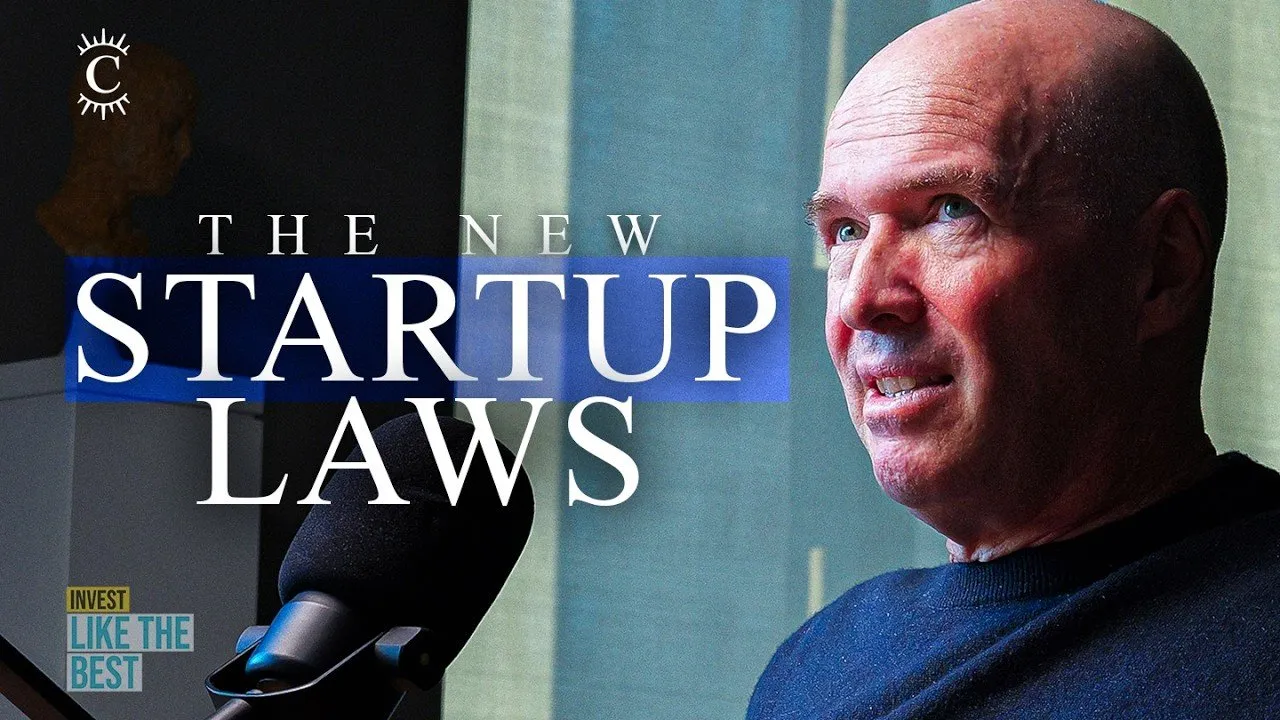
The landscape of venture capital and technology has shifted dramatically since Ben Horowitz and Marc Andreessen founded their eponymous firm. Once a cottage industry operating in a quiet corner of the economy, venture capital has become a central engine of American innovation. In a wide-ranging discussion on the state of the nation, the evolution of artificial intelligence, and the mechanics of company building, Horowitz argues that the fundamental "laws of physics" for startups have changed.
From the democratization of super-intelligence to the specific ways technology is revitalizing public safety in cities like Las Vegas, the playbook for the next decade is being rewritten. This post explores how capital, culture, and computation are converging to reshape the American experiment.
Key Takeaways
- The capital equation has flipped: Historically, throwing money at software development caused delays (Brooks’ Law). In the AI era, massive capital deployment into GPUs and data can successfully accelerate development.
- Talent scarcity drives valuation: The "alchemy" required to build frontier AI models means individual researchers are now commanding valuations previously reserved for entire companies.
- Culture is behavior, not intent: Borrowing from Samurai philosophy, Horowitz defines corporate culture strictly by actions—such as how quickly emails are returned—rather than aspirational values.
- Technology outperforms policy: Empirical data from the Las Vegas Police Department suggests that implementing advanced technology is more effective at reducing crime and police misconduct than policy mandates.
- The US maintains a structural advantage: Despite regulatory headwinds, the US retains a dominant position in entrepreneurship and talent, provided policy does not stifle the rollout of AI infrastructure.
The New Laws of Startup Physics
For decades, the software industry operated under a set of immutable constraints. The most famous of these was Brooks’ Law, which stated that adding manpower to a late software project makes it later. You could not simply buy your way to a better product.
According to Horowitz, artificial intelligence has fundamentally altered this reality. The constraint is no longer just human coordination; it is compute power and data availability.
The one thing you knew if you'd ever built a software company is you cannot throw money at the problem... Now, if you have the data and you have enough GPUs, you can solve damn near anything.
The Return of Capital Dominance
This shift has profound implications for competitive moats. In the previous era, a small, agile team could outmaneuver a giant corporation because the incumbent could not simply hire 2,000 engineers to catch up. Today, if a large incumbent or a well-funded competitor—like xAI—decides to deploy massive capital into data center design and GPUs, they can close the gap rapidly. This changes the risk profile for startups, as execution speed and capital efficiency are no longer the only determinants of survival.
The Billion-Dollar Researcher
The talent market has also seen a bifurcation. Building Large Language Models (LLMs) is currently described as "alchemistic"—it is as much art as it is science, and it cannot yet be learned purely through academic study. This scarcity has led to a market where acquiring a single researcher or a small team can cost hundreds of millions of dollars. To the outside world, these numbers seem irrational. However, if there are only 40 people globally who can build a model that underpins a trillion-dollar enterprise, the math justifies the expense.
Inequality, Opportunity, and the AI Tutor
Horowitz addresses the growing concern that AI will exacerbate inequality. While he acknowledges that technology acts as a leverage multiplier—allowing the "LeBron James of coding" to generate exponentially more value than before—he argues that the net effect is a radical democratization of opportunity.
We are entering an era where every person with a smartphone has access to:
- A super-intelligent tutor for education.
- Top-tier legal and medical advice.
- Creative tools that lower the barrier to entry for artists and filmmakers.
The narrative that AI will create a permanent underclass by eliminating labor is, in Horowitz’s view, historically illiterate. Automation has consistently eliminated drudgery while creating categories of work that were previously unimaginable. The "doom loop" narrative ignores the historical resilience of the labor market and the explosive potential for new creative economies.
American Dynamism: A Case Study in Public Safety
A core thesis of Andreessen Horowitz’s recent strategy is "American Dynamism"—investing in companies that support the national interest. Horowitz highlights his work with the Las Vegas Police Department (LVPD) as a prime example of how technology solves problems that politics cannot.
The LVPD, which operates independently of the mayor’s office, avoided the "defund the police" movement and instead leaned into community policing and technology. By deploying drones, ShotSpotter technology, and AI-integrated cameras, the department achieved significant results:
- Higher Clearance Rates: Las Vegas boasts a 94% murder clearance rate, compared to a national average below 60%.
- Reduced Use of Force: Officer-involved shootings dropped by nearly 75%.
- Precise Intelligence: AI cameras eliminate the ambiguity of eyewitness descriptions (e.g., "blue car" vs. "green car"), ensuring police apprehend the correct suspects without unnecessary confrontation.
Policy solutions is very hard to make anything work... But if you build a technology, a really safe nuclear efficient or nuclear fusion facility, that would have a big effect.
This success has created a flywheel effect where high standards and advanced tools have restored pride in the profession, leading to a surplus of qualified recruits in Las Vegas, contrary to the recruitment crises facing other major cities.
Culture as a Set of Actions
Drawing from his experience scaling a16z and the lessons from his mentor, Intel’s Andy Grove, Horowitz offers a precise definition of culture. He rejects the notion of culture as a list of abstract values like "integrity" or "honesty." Instead, he defines it strictly through behavior.
To establish a culture that respected entrepreneurs, a16z implemented strict behavioral protocols in its early days:
- The Late Fine: Partners were fined $10 per minute for being late to meetings with founders.
- The "No" Requirement: Investors were required to provide a clear "no" with specific reasons, rather than leaving entrepreneurs in limbo.
- Dream Builders, Not Killers: Public disparagement of founders or competitors was grounds for termination.
This approach stems from the belief that you cannot program a mindset, but you can program habits. By enforcing specific actions, the desired mindset eventually follows.
Conclusion
The "laws of physics" for building companies may have changed, but the fundamental requirement for leadership has not. Whether it is navigating the capital intensity of the AI revolution or revitalizing public institutions, success depends on the willingness to embrace new tools and the discipline to maintain high cultural standards.
Horowitz remains bullish on the United States, noting that despite regulatory friction, the combination of talent, university infrastructure, and an entrepreneurial spirit provides a competitive advantage that Europe and other regions struggle to replicate. As AI infrastructure rolls out over the next 12 to 24 months, the gap between those who adopt these new laws of physics and those who ignore them will only widen.