Table of Contents
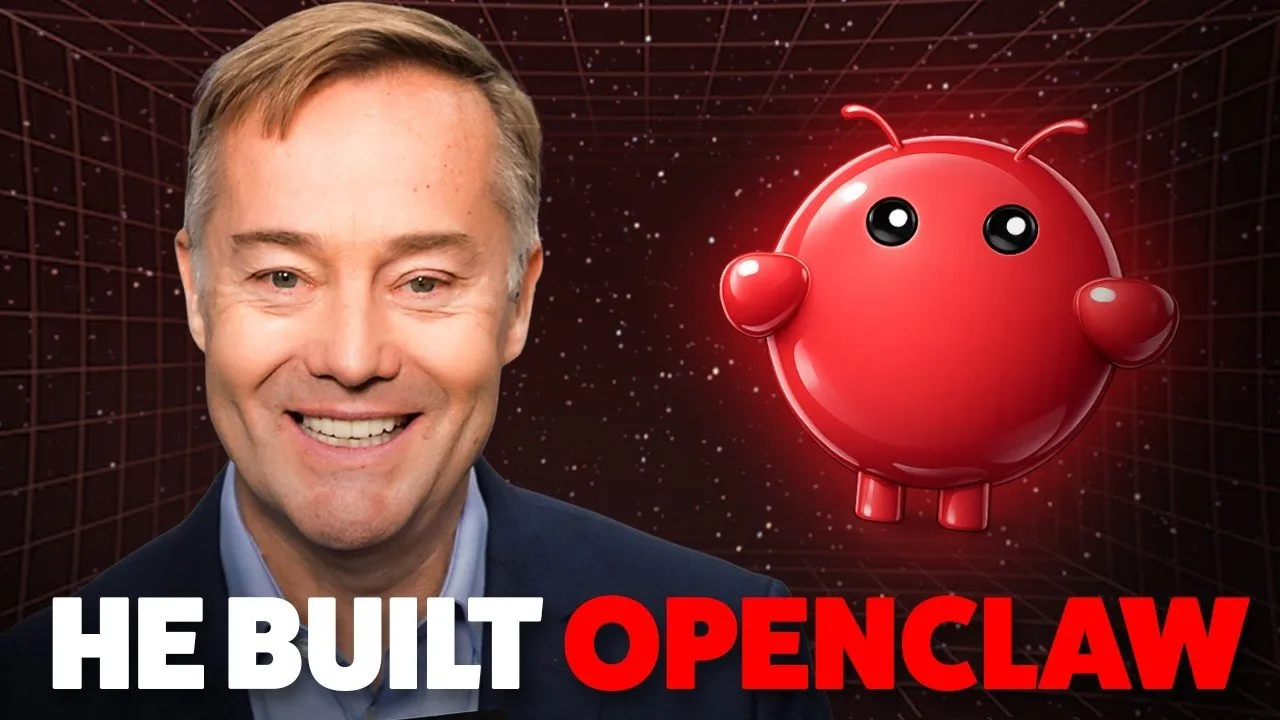
The landscape of artificial intelligence reached a fever pitch in early 2026, marking what many industry insiders call the era of "After OpenClaw." Just thirty-one days after the release of this transformative open-source software, the way humans interact with technology has shifted from simple question-and-answer exchanges to a world of autonomous replicants. These AI agents are no longer just chatbots; they are digital employees capable of managing 20% of a human's workload, reconciling complex financial accounts, and even integrating natively with proprietary messaging systems like iMessage.
Key Takeaways
- Agentic Evolution: The shift from reasoning models to "agentic" behavior allows AI to perform long-running, multi-step tasks without constant human intervention.
- Economic Disruption: "Vibe coding"—the ability to create software via natural language prompts—is causing massive compression in the SaaS market and threatening the traditional IT outsourcing model.
- The Local Frontier: Privacy concerns and the need for lower latency are driving a move toward running models locally on dedicated hardware like Mac Minis and Raspberry Pis.
- Ethical Standouts: A growing tension exists between AI developers and the military over "guardrails," specifically regarding mass surveillance and autonomous "murder bots."
The OpenClaw Movement and the Rise of Replicants
OpenClaw has emerged as the definitive open-source framework for building AI agents, or "replicants." Unlike previous iterations of AI that required constant prompting, these agents operate within a non-corporate, community-driven governance structure. On platforms like GitHub, the project has seen an unprecedented explosion in activity, rivaling established giants like React in terms of developer engagement. Contributors like Tyler Yust, a 22-year-old developer, highlight how these agents can be programmed to "learn" new skills by writing their own code to interface with various APIs.
From Chatbots to Digital Employees
The primary differentiator for current models, such as Claude 4.6 Opus, is the ability to handle long-running tasks. In the past, reasoning models were designed to provide the best answer to a single question. Today, models are post-trained for "tool calling," allowing them to interact with the web, manage calendars, and update databases autonomously. This has led to a workforce ratio shift, with some startups reporting a 10:1 ratio of AI replicants to human employees.
"Reasoning models were mind-blowing, but agentic behavior is what does way more valuable work than just single Q&A."
Local Hosting and Privacy
As agents gain access to sensitive data—such as Mercury bank accounts, QuickBooks, and personal emails—the demand for local execution has spiked. Running OpenClaw on a Mac Mini or Mac Studio provides a "sandboxed" environment that keeps personal data out of the cloud. This trend is expected to accelerate as Apple and other hardware manufacturers release silicon designed specifically to run large language models natively, offering a snappier and more reliable experience than virtual machines.
The Standoff: Anthropic vs. The Pentagon
A significant philosophical and legal battle has emerged between AI lab Anthropic and the U.S. Department of Defense. At the heart of the conflict is a $200 million contract and a demand from the Pentagon to remove safety constraints on AI models. Defense Secretary Pete Hegseth has pushed for the removal of guardrails to allow the military to use the technology in any "legal fashion," raising concerns about the potential for autonomous weapons and mass surveillance.
The Moral Responsibility of Technologists
Anthropic's leadership has resisted these demands, specifically citing concerns over "non-human in the loop" systems that could facilitate autonomous lethal force. The government, however, has threatened to use the Defense Production Act of 1950 to seize control of the technology or blacklist the company as a supply chain risk. This situation creates a classic "prisoner's dilemma" for AI labs: if one company refuses to bend, a competitor may simply take the contract, making the adoption of ungoverned AI seemingly inevitable.
Market Compression and the Death of "CRUD" SaaS
The public markets are already reacting to the "vibe coding" phenomenon. Traditional IT service providers and simple SaaS applications—specifically those categorized as "CRUD" (Create, Read, Update, Delete) apps—are seeing their valuations erode. When an engineer can "vibe code" a bespoke integration in an afternoon that would previously have cost $50,000 in annual licensing fees, the "land and expand" model of enterprise software begins to collapse.
The Erosion of the Per-Seat Model
For years, SaaS companies relied on growing their revenue by adding more human users. However, as AI agents become more efficient, team sizes may stay static even as productivity increases. This "SaaS compression" is forcing companies to reconsider their moats. While complex tools like Figma remain difficult to replicate through simple prompting, niche tools and simple database wrappers are being replaced by internally developed, AI-generated alternatives.
"We just vibecoded that 50k integration... it’s not one of those janky things that don’t last. It just works."
The Future of IT Outsourcing
The Indian IT services market has already seen billions in market value eroded as investors realize that AI can perform the structured tech labor once handled by hundreds of thousands of offshore employees. While these firms are currently benefiting from AI consulting, the long-term outlook is uncertain. The barrier to entry for IT administration is falling so low that the competitive advantage of large-scale human labor pools is rapidly vanishing.
Innovative Interfaces and Hardware Demos
As the software evolves, the way humans communicate with these agents is also changing. Developers are moving beyond the text box to explore voice-first and even non-invasive brain-computer interfaces (BCIs). The goal is "high-bandwidth" information flow, allowing users to dump their thoughts into an agent that then organizes and executes tasks in the background.
Unbrowse and the Agentic Internet
One of the most promising new tools is Unbrowse, which functions as a "Google for agents." Instead of an agent pretending to be a human by clicking through a website's user interface, Unbrowse allows agents to communicate directly with servers via "unwrapped" APIs. This method is significantly cheaper and faster, as it reduces the token consumption required for web scraping.
Physical Agents and Education
On the hardware side, developers are creating dedicated devices for AI agents using Raspberry Pi and other open-source components. These devices, often featuring a "soul" or personality file, are being positioned as ideal tools for homeschooling and personalized tutoring. Unlike a phone, which is a source of distraction, a dedicated AI communicator can act as a persistent mentor for children, helping them with everything from multiplication tables to history presentations.
Conclusion
The "After OpenClaw" world is one of radical decentralization and rapid innovation. As agentic AI becomes more integrated into our daily workflows, the distinction between "software" and "employee" continues to blur. Whether it is through local hardware for privacy, the disruption of the billion-dollar SaaS industry, or the ethical debates surrounding military use, the path forward requires a balance of technical prowess and moral clarity. The era of the digital replicant has arrived, and it is reshaping the economy and society in real-time.