Table of Contents
Major digital platforms are fundamentally reshaping their relationship with artificial intelligence and content distribution, marking a pivotal shift in the technology sector this week. From Bandcamp’s aggressive ban on AI-generated music to Apple’s reported reliance on Google for its upcoming intelligence features, the industry is moving rapidly from experimental implementation to establishing strict boundaries and monetization strategies.
Key Points
- Bandcamp Bans AI Music: The platform has updated its terms to prohibit music generated "wholly or in substantial part" by AI, prioritizing human artistry.
- OpenAI Explores Advertising: Reports suggest the AI giant is considering integrating advertisements into ChatGPT, signaling a shift toward sustainable monetization.
- Apple Partners with Google: New reports indicate Apple will utilize Google’s Gemini models to power backend features of Apple Intelligence, potentially rebranding Siri’s capabilities.
- Substack targets the Living Room: The newsletter platform launched beta apps for Apple TV and Google TV, directly challenging YouTube’s dominance in the "lean-back" video market.
The Pushback Against Generative AI in Creative Spaces
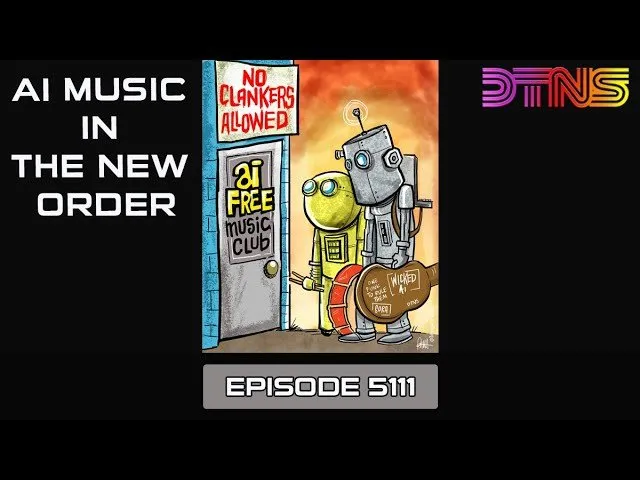
In a decisive move to protect human creativity, online music store Bandcamp has officially banned AI-generated content from its platform. The policy change, announced via the company's subreddit, explicitly targets audio created "wholly or in substantial part" by artificial intelligence. This decision reflects a growing sentiment in the creative community to distinguish between human-led art and algorithmic generation.
The new regulations also prohibit the use of AI tools to impersonate other artists or mimic specific styles, addressing deepfake concerns that have plagued the music industry over the last year. This stance aligns with similar restrictions seen elsewhere, such as San Diego Comic-Con’s recent ban on the sale of AI-generated artwork.
This development highlights a fracturing in the market: while some platforms embrace generative tools to lower the barrier to entry, others like Bandcamp are doubling down on "authenticity" as a premium value proposition. The challenge moving forward will be enforcement, as distinguishing between AI-assisted production and fully AI-generated tracks becomes increasingly difficult.
Monetization and Maturation: OpenAI and Apple
While creative platforms restrict AI, tech giants are focusing on how to make the technology profitable and functional. OpenAI is reportedly exploring the introduction of advertisements within ChatGPT. This potential pivot suggests that subscription models alone may not suffice to cover the estimated $15 million daily operating costs associated with running massive language models.
Simultaneously, Apple appears to be adjusting its AI strategy by leaning on established competitors. Reports indicate that Apple has officially teamed up with Google to use Gemini to power aspects of Apple Intelligence. This partnership suggests Apple is prioritizing functionality over proprietary foundation models in the short term.
"Apple has really missed the mark on AI... I don't know that Apple, without spending tremendous resources, could actually catch up in this space. It makes sense for them to amplify someone else's stack... They're doing more following than leading in the AI space."
Industry analysts suggest this move allows Apple to maintain its privacy-focused branding while outsourcing the heavy lifting of generative processing. The integration is expected to result in a "Siri AI" experience—a smarter, more conversational assistant that leverages Gemini’s capabilities without exposing the user to the complexities of the underlying model.
Substack Enters the Video Streaming Wars
Beyond AI, the battle for viewer attention is shifting to the living room. Substack has introduced beta applications for Apple TV and Google TV, allowing subscribers to consume creator videos and livestreams on television screens. This move positions the platform as a direct competitor to YouTube, attempting to capture the "lean-back" audience.
The strategy is designed to keep users within the Substack ecosystem. By removing the friction of watching long-form content on mobile devices or desktops, Substack aims to increase engagement times and add value to its subscription tiers. This follows a broader industry trend where platforms like TikTok and Instagram are also optimizing for larger screens, acknowledging that premium engagement often happens away from the smartphone.
Expert Perspectives
The conversation around AI integration often centers on the user experience versus the underlying technology. Experts argue that the average consumer is less concerned with which large language model (LLM) is processing their request and more concerned with the utility of the result.
"I think we're going to start to see a sunsetting of [the branding] 'Apple Intelligence'... I think it's going to be more conversational. It's just going to supercharge Siri... They are finding a way to leverage that chatbot-like feature but integrate it into Apple so that it gives the functionality they weren't able to create themselves."
Implications and Next Steps
The dichotomy between banning AI in creative spaces and integrating it deeply into operating systems sets the stage for a fragmented internet. Consumers will likely see a clear divide: premium platforms that market "human-made" content as a luxury good, and utility-based platforms where AI is the invisible engine driving daily tasks.
As 2026 progresses, the industry expects to see stricter enforcement mechanisms for AI content labeling, the normalization of ad-supported AI chatbots, and further consolidation of hardware manufacturers partnering with major AI model providers like Google and OpenAI to remain competitive.