Table of Contents
Awakening is an elusive concept, often shrouded in mysticism or confused with intellectual epiphanies. It is not merely a change in political perspective or a sudden understanding of a complex idea. True awakening represents a fundamental shift in identity—a transition from identifying as a personal, separate self to identifying as universal awareness. It is a topic often avoided in practical development circles because turning it into an objective can paradoxically hinder the process. However, understanding the mechanics of this shift, how it manifests in the body and mind, and why it is not a "finish line" is essential for anyone engaged in deep personal evolution.
Key Takeaways
- Awakening is an identity shift: It is the move from a subject-object worldview to non-duality, where the distinction between "me" and "other" dissolves.
- It occurs through three centers: The process typically unfolds through the Head (deconstructing thoughts), the Heart (welcoming all emotions), and the Gut (realizing inherent safety).
- It is not a destination: Treating awakening as a goal creates a "finish line" mentality that can stall evolution and trap people in spiritual bypassing.
- Humanity remains: Awakening does not eliminate human problems or trauma; it simply changes the context in which they are experienced.
- Integration is necessary: The shift can be shocking to the nervous system, requiring time and guidance to integrate the new state into daily life.
Defining the Indefinable: What is Awakening?
Defining awakening is inherently difficult because the experience lies beyond the conceptual mind. As the adage suggests, if your mind can think of it, that isn't it. However, across Buddhist, Daoist, Christian, and Sufi traditions, specific patterns emerge. At its core, awakening is the realization of non-duality.
In a standard state of consciousness, we perceive the world through a subject-object split: "I" am here, and the "world" is out there. Non-duality dissolves this boundary. You no longer see yourself as a solid entity moving through a separate world; you recognize that you are the universal context in which everything happens.
"It is a moment where your identity shifts. So no longer are you personal, you are universal... There is a recognition that there's nothing to defend. There's nothing to be attacked."
This shift brings distinct symptoms. The inner critic—that recurring voice of negative self-thought—often fades away. Problems that once seemed insurmountable begin to dissolve, not because the external circumstances change, but because the "self" that was worried about them is seen through. Access to peace becomes readily available, yet this does not mean the end of the human experience.
The Three Centers of Awakening
While the essence of awakening is universal, the entry points vary. Evolution typically occurs through three distinct centers: the Head, the Heart, and the Gut. These can open in any order, though they often influence one another.
The Head Awakening: Deconstructing the "I"
The head awakening is characterized by seeing through the nature of thought and the construct of the ego. It often arises from deep inquiry or the realization that thoughts are contradictory and transient. If you were to lose your job, your relationships, or even parts of your body, a sense of "you" would remain. Head awakening is the rigorous investigation into what that essential "you" is.
This often happens to intellectuals, physicists, or philosophers who realize that every thought contains both truth and falsehood. When you can no longer believe your own thinking, the thinker itself begins to dissolve. You realize you are not the author of your thoughts, but the awareness in which they appear.
The Heart Awakening: Boundless Welcome
While the head deconstructs thought, the heart deconstructs emotional identification. A heart awakening is the realization that emotions are not "mine." Instead of resisting anger, grief, or fear, the heart welcomes them fully. It sees that an emotion can be true and not true simultaneously.
When you stop defending against emotions, a boundless love emerges—not necessarily romantic love, but a recognition of shared essence. Boundaries between people dissolve.
"If I love you... you are not a solid that you blend. You see that you are them and they are you."
This can also manifest in group dynamics, where one realizes that emotions are held collectively. If one person releases anxiety, another might pick it up. The realization that consciousness is shared rather than personal triggers this opening of the heart.
The Gut Awakening: Inherent Safety
The gut, or nervous system awakening, is perhaps the most primal and complex. It is the profound recognition of inherent safety. The biological "fight or flight" mechanism—the sense of "me against the world"—disintegrates.
In some traditions, this is linked to Kundalini energy and can be intense or destabilizing if forced. A safer, more natural pathway to gut awakening is through pleasure and savoring. To savor a moment, one must feel safe. By practicing enjoyment in simple things—doing dishes, breathing, conversing—the nervous system learns it is not under attack, allowing the defensive self to relax into being.
The Paradox of the Goal
If awakening offers peace and a dissolution of suffering, why not make it the primary goal of personal development? There are two main reasons to approach this topic with caution.
The "Finish Line" Trap
When awakening becomes a goal, the ego co-opts the process. The "I" tries to achieve the death of the "I." This creates a "spiritual perfectionism" where individuals constantly manage their experience to fit a concept of enlightenment. Furthermore, viewing awakening as a finish line is a mistake. Evolution does not stop when you wake up.
"They've told themselves that this is a finish line and then they hit it and they think they're done. But they're not done. Evolution doesn't stop. It just keeps on going."
Awakening is akin to learning to walk. At first, it is all you can think about. Eventually, it becomes the background context of your life—you simply walk. To fixate on the achievement is to stagnate.
Spiritual Bypassing and Dissociation
A major risk of pursuing awakening is using it to bypass emotional trauma. It is possible to access non-dual awareness and use it as a drug to escape discomfort. A person might claim, "I am not my anger," to avoid feeling the anger that requires processing.
This leads to a state where someone is "awake" but dysfunctionally human. They may have universal insight but remain emotionally immature or unable to relate to others. True integration requires going back into the "hell" of human emotion and healing trauma, rather than floating above it in a state of detached peace.
Life After the Shift: Integration and Humanity
There is a common mythology that awakening fixes everything. The reality is grounded in the Zen proverb: "Before enlightenment, chop wood, carry water. After enlightenment, chop wood, carry water."
You do not cease to be human. You will still experience anger, sadness, jealousy, and pain. The difference is the relationship to these states. They are seen as weather passing through a wide sky, rather than defining who you are. This is often described as a "stateless state"—you are the space in which all states occur.
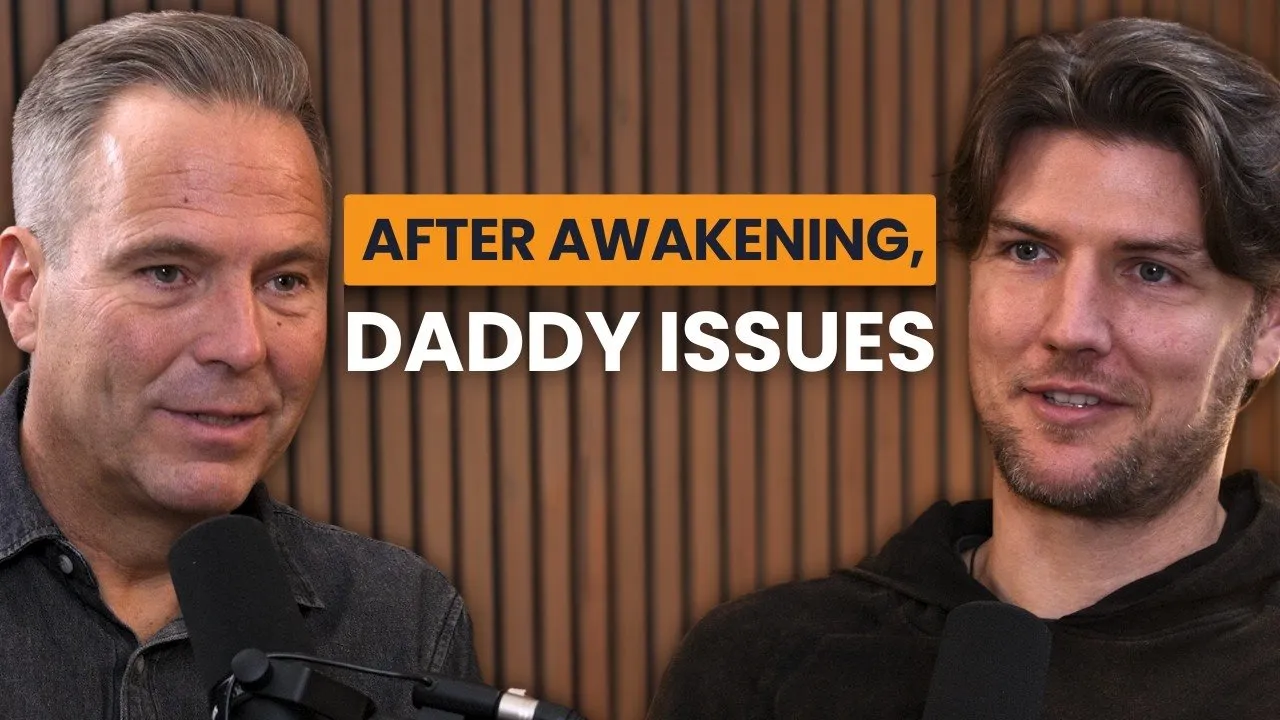
"Before awakening, daddy issues; after awakening, daddy issues... evolution doesn't stop."
However, one significant change is sensitivity. Awakening often brings an intolerance for misalignment. The system becomes highly sensitive to situations, relationships, or work that are not true to one's essence. This clarity compels action. Bad habits may drop away simply because they become too painful to maintain in a state of heightened awareness.
Conclusion
Awakening is a natural part of human evolution, much like growing up. It is not reserved for monks in caves; it happens to business people, artists, parents, and athletes. It can be triggered by meditation, flow states, deep suffering, or confrontation with death.
For those seeking this shift, the advice is counterintuitive: stop trying to manage your experience. Instead, focus on view (vulnerability and curiosity), non-management (letting things be), and enjoyment. If you have touched this state and it feels fleeting, do not chase it. Be grateful for the moments it is present. Savoring the glimpse is the surest way to allow the background of awareness to naturally come to the foreground of your life.