
Table of Contents
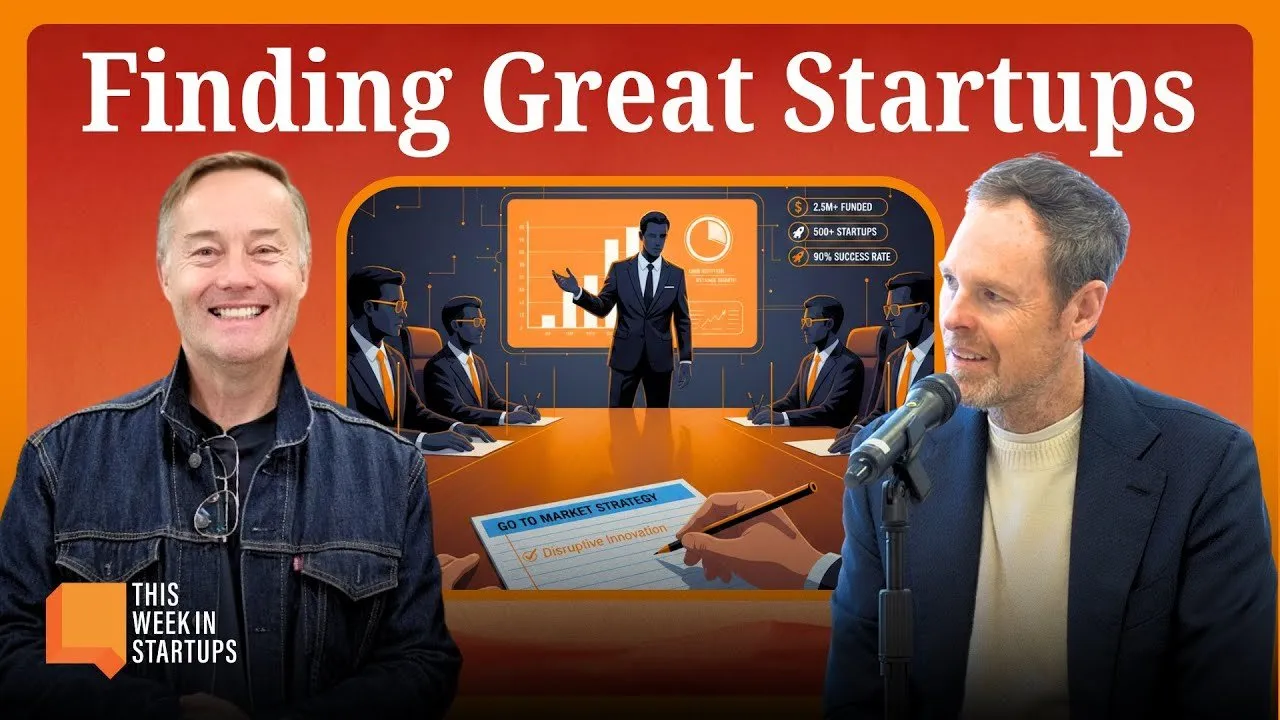
The landscape of angel investing has shifted dramatically over the last decade. What was once a cottage industry characterized by folding chairs and handshake deals has matured into a high-stakes, sophisticated ecosystem. Yet, despite the influx of capital and the professionalization of the asset class, the fundamental truths of building a company remain unchanged. In a candid conversation at Founder University in Tokyo, Jason Calacanis sat down with veteran angel investor Thomas McInerney to dissect what truly separates successful technical founders from the rest of the pack.
McInerney, whose portfolio includes heavy hitters like Notion, Segment, and late-stage investments in SpaceX and OpenAI, offers a perspective refined by over 130 investments. The dialogue reveals that while market trends—like the current AI boom—move with the speed and fickleness of fashion, the core attributes of a resilient founder are timeless. From the necessity of deep domain expertise to the psychology of "looking at the track, not the wall," the path to a billion-dollar outcome is paved with specific behavioral traits and financial discipline.
Key Takeaways
- The "Idea Maze" is the ultimate litmus test: Great founders don't just have a plan; they have anticipated every dead end, pivot, and iteration required to reach their goal.
- Buzzwords are a warning sign: Relying on jargon usually indicates a founder is following trends rather than solving fundamental problems from first principles.
- Character is revealed in the margins: Investors often use the "waiter test" and assess humility to determine if a founder can build a team and endure failure.
- Cash is oxygen: The most common cause of startup death is simply running out of money; frugality and creating value from limited resources are non-negotiable skills.
- Optimism is a strategy: To capture 1000x returns, investors and founders must focus on the narrow path to success rather than the multitude of reasons a company might fail.
The Archetype of the Investable Founder
When capital becomes a commodity, the differentiator in early-stage investing shifts entirely to the individual steering the ship. The current ecosystem favors technical founders who possess a unique blend of youth, energy, and deep domain expertise. This is not merely about coding ability; it is about having a distinct point of view that challenges the status quo.
Navigating the Idea Maze
A critical concept in evaluating founders is their ability to navigate the "Idea Maze." This metaphor describes a founder’s depth of thought regarding their specific vertical. When an investor challenges a premise, a high-caliber founder doesn't get defensive. Instead, they demonstrate that they have already mentally traversed that path, identified the dead ends, and calculated the necessary pivots.
This depth is exemplified by Elon Musk’s approach to complex engineering problems. Whether discussing the granular physics of battery replacement for the original Tesla Roadster or the evolution of SpaceX from a biosphere project to a rocket company, the ability to break down complex systems into understandable first principles is a hallmark of elite founders. They acknowledge what they don't know, but their "headlights" shine further down the road than anyone else's.
Humility and the "Volley"
The dynamic between investor and founder should resemble a tennis volley. It requires a rhythm of challenge and response. If a founder resorts to filibustering or becomes defensive when asked about competitors or market saturation, it signals a lack of adaptability. The best founders possess the confidence to bet on themselves combined with the humility to process feedback and iterate. This intellectual honesty is essential for hiring, fundraising, and eventually navigating the inevitable crises of startup life.
Red Flags That Kill Deals
In the high-velocity environment of venture capital, investors are often looking for reasons to say "no" to narrow down their funnel. Certain behaviors serve as immediate disqualifiers, signaling that a founder may be prioritizing the wrong metrics or lacks the authenticity required to succeed.
The Buzzword Trap
One of the most significant indicators of a weak thesis is the overreliance on industry jargon. When a pitch is cluttered with terms like "SaaS-enabled" or "AI-native" without substance, it suggests the founder is mimicking external trends rather than building from an internal conviction.
"You're taking too much from the outside world and those trends are sort of like fashion. They change daily."
Simplicity is the ultimate sophistication. A founder should be able to reduce their concept to simple English. If the value proposition cannot be explained without a dictionary of current tech buzzwords, the underlying idea likely lacks the robustness to survive when the market cycle shifts.
Valuation and Character Assessment
Another major red flag is an obsession with valuation over partnership. Early-stage optimization for equity retention often comes at the expense of getting the right backers on board. If a company achieves a massive outcome, the difference between owning 10% or 20% becomes negligible compared to the binary outcome of success versus failure.
Furthermore, character assessment often happens off the pitch deck. Investors frequently utilize the "waiter test"—observing how a founder treats service staff during a meal. Rudeness or dismissal of staff is a potent predictor of how a founder will treat employees and manage culture. A toxic culture acts like an immune system that rejects high-quality talent, eventually crippling the company.
Financial Discipline: The Oxygen of Startups
The romanticized vision of startup life often clashes with the brutal reality of cash flow. For early-stage companies, cash is oxygen. The primary objective in "Year Zero" is simply to not die. This requires an almost fanatical dedication to frugality. Investors look for founders who can extract a dollar of value from a nickel, rather than those who need a hundred dollars to generate a dollar of value.
Managing Runway and Expectations
A common pitfall for first-time founders is miscalibrating their fundraising status. There is a dangerous gap between a "verbal commitment" and money in the bank. Until a term sheet is signed, the deal does not exist. Founders must act as forcing functions, driving investors to a decision rather than allowing themselves to be strung along.
When runway tightens, difficult decisions must be made immediately. Whether it requires cutting staff or reducing salaries, extending the runway is the only way to buy enough time to get lucky. History is filled with companies like Airbnb and FedEx that survived near-death experiences simply because they managed to stay alive long enough for the market to turn in their favor.
The Psychology of the 1000x Return
The mathematics of venture capital are counterintuitive to the human brain. We are wired to understand linear growth, but venture success is predicated on power laws—where a single investment can return 1,000x or even 10,000x, eclipsing all other losses combined. To capture these outliers, investors and founders alike must cultivate a specific type of optimism.
Focusing on the Line, Not the Trees
In racing and skiing, instructors teach drivers and athletes to look at the track, not the wall. If you stare at the obstacle, you will inevitably hit it. The same logic applies to building a company. A list of reasons why a startup will fail is always long and rational. However, successful founders focus entirely on the narrow path where it could work.
"Look at the track, not the wall... If you overoptimize on [risks], you will talk yourself out of every decision."
This mindset shift—moving from risk mitigation to opportunity recognition—is what allows founders to tackle seemingly impossible sectors, such as nuclear energy or space exploration. It requires suspending disbelief and focusing on the "negative space" between the obstacles.
Conclusion
Whether in Silicon Valley, Tokyo, or Riyadh, the fundamentals of company building transcend geography. The ecosystem has evolved from a niche hobby to a global economic engine, but the core requirement remains a founder who can navigate the "Idea Maze" with humility, articulate their vision without jargon, and manage their resources with discipline. For those who can maintain optimism in the face of daunting odds, the potential for exponential impact has never been greater.


%20%7C%20E2236)