Table of Contents
ASUS has released the 2026 iteration of its Zenbook Pro Duo, significantly refining its dual-screen laptop concept from an experimental niche product into a viable daily driver for mobile professionals. By addressing previous design flaws with a new ceramic-aluminum chassis and integrating a massive battery upgrade, the company aims to dominate the multi-display mobile computing market, though high pricing and operating system inconsistencies remain notable barriers.
Key Points
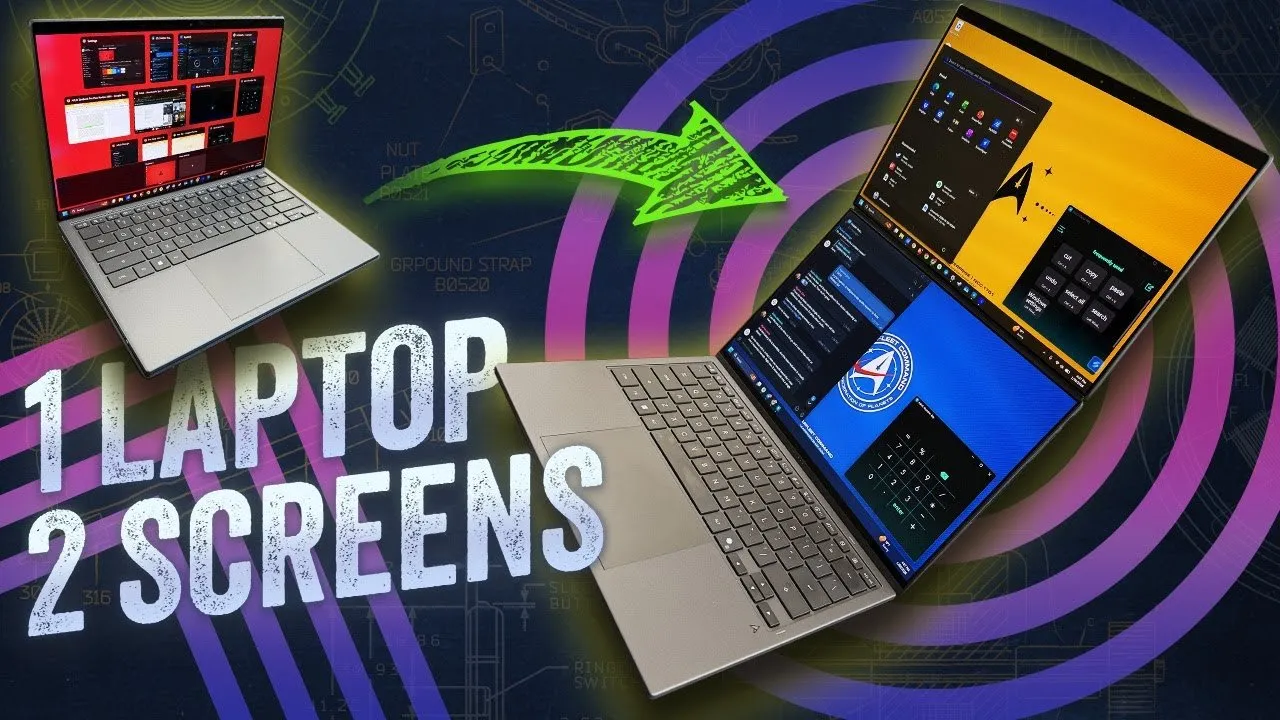
- Refined Form Factor: The 2026 model features two 14-inch screens on a single plane, eliminating the previous "drop hinge" design for a seamless visual experience.
- Material Innovation: A new "Ceruminum" plasma-treated finish offers a stone-like texture, replacing standard aluminum to reduce the device’s industrial aesthetic.
- Battery Breakthrough: A 32% larger 99Wh battery delivers approximately 8 hours of heavy, dual-screen usage without increasing the chassis weight.
- Hardware Connectivity: Includes twin Thunderbolt ports, USB-A, HDMI, and a 3.5mm jack, catering to legacy and modern workflows.
- Market Position: Priced between $2,100 and $2,300, it competes directly with Lenovo’s Yoga Book 9i but offers superior portability integration.
Design and Engineering Evolution
Since 2018, ASUS has iterated on secondary displays, evolving from trackpad screens to the current dual 14-inch panel configuration. The 2026 Zenbook Pro Duo represents the culmination of this "duo" strategy. While the device is only 5% more compact than its predecessor, the user experience has been radically altered by the removal of the asymmetric drop hinge. Both screens now reside on the same visual plane, separated by a negligible bezel, creating a unified workspace for multitasking.
A significant change lies in the chassis material. ASUS has introduced a finish dubbed "Ceruminum"—aluminum treated with high-temperature plasma to generate a ceramic oxidation layer. This results in a surface that mimics the tactile feel of pottery rather than cold metal.
"While the new model is only about 5% more compact than the last one, and the mass is almost identical, the 26 version feels eons ahead... It is the first [dual-screen laptop] I could envision in the hands of a normal person."
Despite the addition of a larger battery and complex hinge mechanisms, the unit maintains a weight of 3.6 lbs. The keyboard offers 1.7mm of travel—deeper than many competitors, including the MacBook—and charges via pogo pins when docked, eliminating the need for separate charging cables.
Performance and Endurance
For professionals who require multi-monitor setups, the Zenbook Pro Duo 2026 offers a distinct advantage over portable external monitors. The workflow allows for vertical stacking of applications—such as keeping research materials on the top screen while drafting documents on the bottom—without the footprint required by side-by-side monitors.
The most critical improvement in this generation is power efficiency. The device houses a 99Wh battery, a 32% increase over the previous year. Real-world stress tests involving video streaming, content creation, and maximum display brightness yielded roughly 8 hours of continuous operation. This endurance suggests the device can handle a full workday without being tethered to a power outlet, a rarity in the dual-screen category.
Software Hurdles and Hardware Concerns
While the hardware engineering has matured, the software experience presents challenges. The device runs on Windows 11, which continues to struggle with dual-screen optimization. Users may encounter bugs ranging from wallpaper settings resetting daily to inconsistent search functionality. ASUS attempts to mitigate this with custom overlay software, but implementation flaws persist, such as trackpad gesture controls that lead to accidental audio unmuting during typing.
Furthermore, early reviews have highlighted potential quality control issues with the detachable keyboard. When used wirelessly, interference issues—possibly related to Bluetooth grounding or antenna placement—have been reported, causing connectivity drops when palms rest on the device. Additionally, the webcam quality has been described as "mediocre," a surprising omission for a premium device in this price bracket.
Market Implications
The Zenbook Pro Duo 2026 positions itself as a solution for the "mobile workstation" demographic that finds standard clamshell laptops limiting. Its primary competitor, the Lenovo Yoga Book 9i, requires carrying a separate keyboard and kickstand, whereas the Zenbook integrates all components into a singular, foldable package.
At a price point of $2,100 to $2,300, ASUS is targeting enterprise users and creatives who prioritize screen real estate over budget. If the Bluetooth connectivity concerns prove to be isolated incidents rather than widespread defects, the Zenbook Pro Duo 2026 stands as the most integrated and practical execution of the dual-screen laptop to date.
ASUS is expected to roll out driver updates to address software stability in the coming weeks, as the device becomes widely available to global markets.