Table of Contents
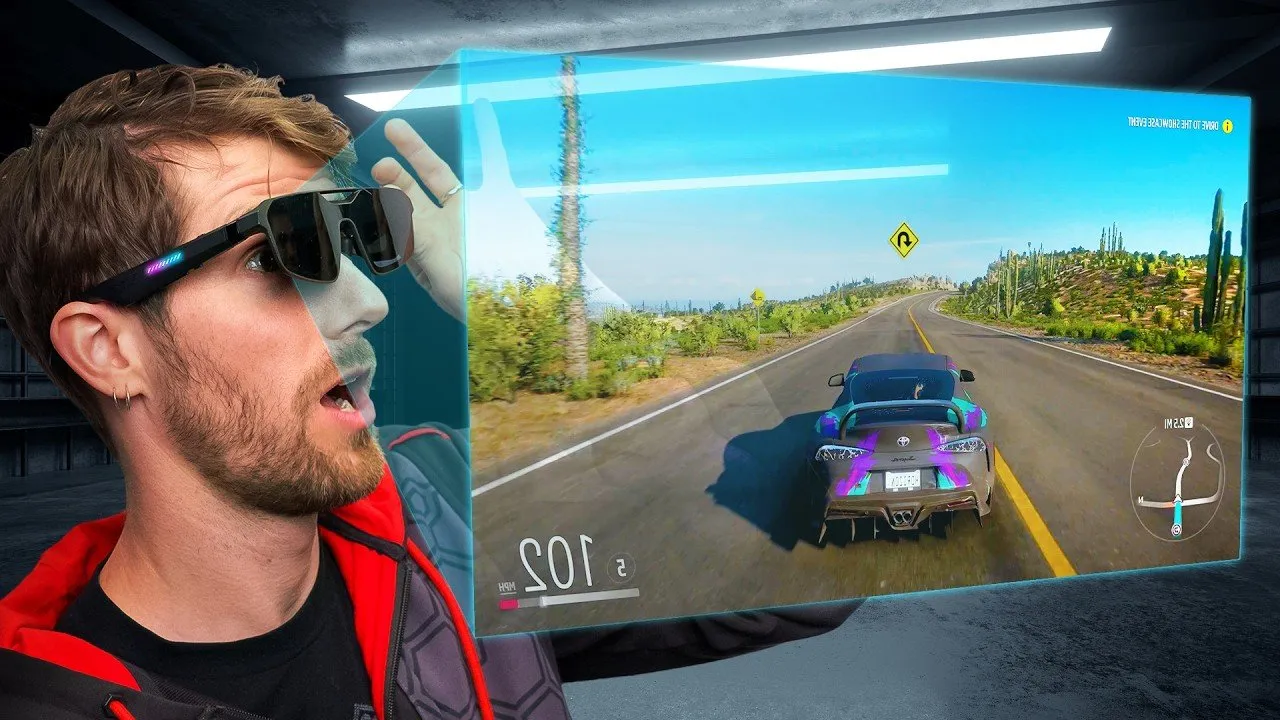
ASUS has officially entered the wearable display market through a strategic partnership with augmented reality (AR) manufacturer XREAL, unveiling a new pair of gaming-focused glasses designed to act as a portable, high-performance monitor. Dubbed the ROG XXRel R1, the device leverages Micro OLED technology to deliver high refresh rates and low latency, targeting gamers who require desktop-grade performance in a mobile form factor. The announcement, made ahead of broader CES coverage, highlights ASUS’s intent to expand its Republic of Gamers (ROG) ecosystem into the emerging category of face-worn displays.
Key Points
- Partnership-Driven Hardware: Developed in collaboration with XREAL, the glasses feature a 1080p Micro OLED display with a 57-degree field of view.
- Gaming-Grade Performance: The device boasts a variable refresh rate capable of hitting 240Hz and a 0.1ms response time.
- Dedicated Connectivity: A specialized dock is included to support HDMI and DisplayPort connections for consoles and PCs lacking native USB-C video output.
- Availability: The glasses are slated for a Q2 retail release, though pricing remains unannounced.
Hardware Specifications and Display Technology
The core of the ROG XXRel R1 lies in its visual capabilities, which are distinct from traditional VR headsets. Rather than creating a fully immersive virtual world, these glasses project a virtual screen equivalent to a 171-inch display viewed from a distance. The visuals are powered by dual 1920x1080 Micro OLED panels, offering a contrast-rich image with 700 nits of brightness.
To distinguish the product from standard AR glasses, ASUS has integrated specific features tailored to competitive gaming. The device supports a refresh rate that scales from 120Hz up to 240Hz, a significant jump over standard 60Hz or 120Hz wearable displays. This high refresh rate is paired with an instantaneous 0.1ms response time, designed to minimize motion blur and input lag.
The build quality mirrors XREAL’s existing "Pro" lineup, featuring a lightweight 91-gram chassis achieved by omitting an internal battery in favor of a tethered power connection. The glasses also utilize electrochromic dimming technology, allowing users to physically darken the outer lenses to block external light for better immersion.
"Instantaneous response times make such a difference to how the game looks and feels. It is worth noting, however, that there is no HDR support at this time. So, it's bright and it's OLED and... you get that really nice contrast, but no support for HDR at the moment."
Connectivity and The ROG Dock
A significant hurdle for wearable displays has been compatibility with devices that lack fully featured USB-C video output, such as older desktops or current-generation gaming consoles. ASUS addresses this with a proprietary dock bundled with the glasses. This accessory features two HDMI inputs, one DisplayPort input, and a power input, serving as a bridge between the glasses and a wide array of gaming hardware.
This connectivity hub enables the glasses to function as a secondary display or a primary monitor for portable setups. According to early demonstrations, this allows users to connect to powerful desktop rigs to fully utilize the 240Hz refresh rate capabilities, which may be difficult to drive via handheld gaming PCs alone.
Software Features and User Experience
The user interface is navigated via rocker buttons on the frames, allowing users to toggle between display modes. "Follow Mode" keeps the screen fixed to the user's field of view, while "Anchor Mode" locks the virtual screen in a specific point in 3D space, utilizing the device's internal tracking.
ASUS has also ported features from its ROG gaming monitors directly to the wearable. Users can overlay a crosshair for shooter games or enable a real-time frames-per-second (FPS) counter. Privacy is cited as a secondary benefit; with the speakers dialed down or Bluetooth headphones connected, the content on the screen is invisible to bystanders, making it viable for working on confidential materials or gaming in public spaces.
Limitations and Health Considerations
Despite the advanced display technology, the device currently lacks High Dynamic Range (HDR) support, a feature standard in many premium gaming monitors. Furthermore, the physical nature of the device may present challenges for some users. Early testing suggests that while the Micro OLED display is sharp, the stereoscopic nature of the image can cause eye strain or "3D headaches" during prolonged use, particularly when using Follow Mode.
ASUS recommends limiting usage sessions to 30 to 40 minutes initially to allow the eyes and body to adjust to the focal distance and motion. Additionally, while the glasses include nose pads and a frame for prescription inserts, the fit may vary significantly depending on head shape and size.
"These types of products are not for everyone. Some people can't handle VR or augmented reality for long periods of time... without issues like eye strain, headaches, and nausea. ASUS recommends... that you should limit your time with them to maybe 30 to 40 minutes at a time."
Market Release and What's Next
The ROG XXRel R1 glasses are scheduled to hit retail markets in the second quarter of this year. At launch, ASUS plans to bundle the glasses with the connectivity dock, positioning the package as a complete solution for console and PC gamers. The company has not yet committed to selling the glasses as a standalone unit without the dock.
Pricing information remains unavailable, making it difficult to assess the value proposition against existing competitors like the XREAL Air 2 Pro or the Viture One. As the release date approaches, industry analysts will be watching to see if the addition of 240Hz support and gaming-specific firmware justifies the likely premium price point of the ROG branding.