Table of Contents
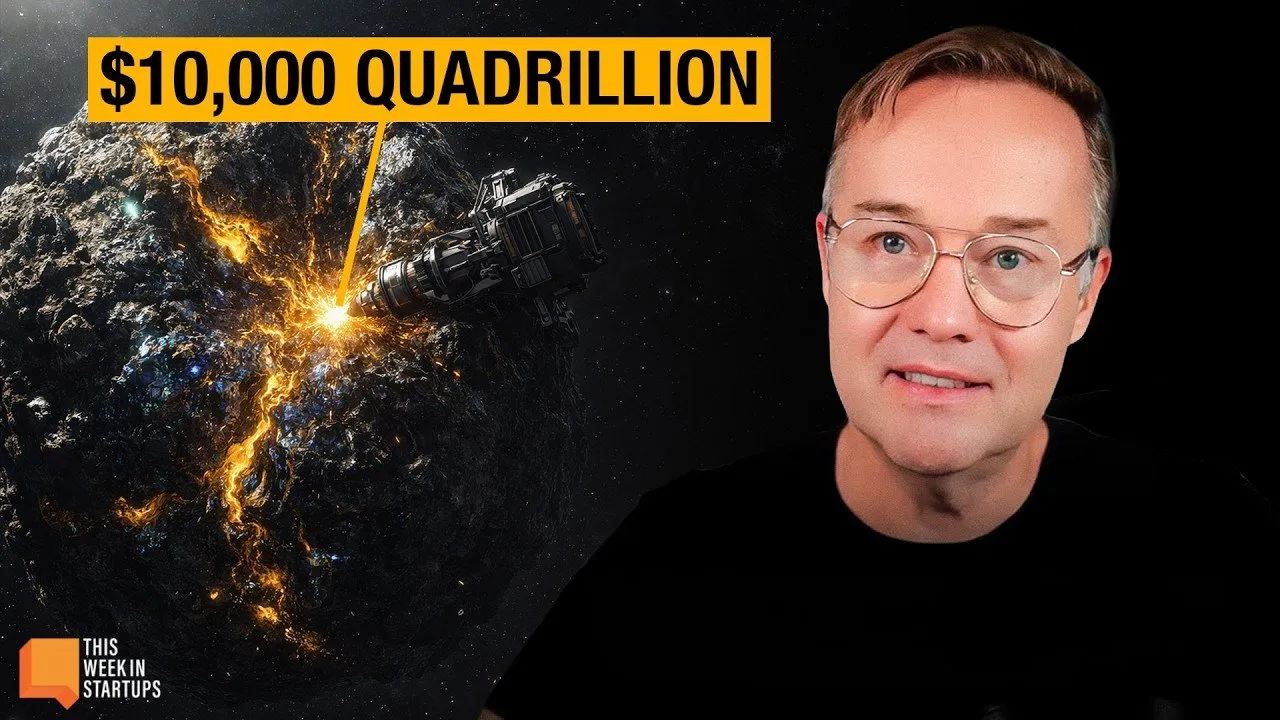
The space industry is shifting from theoretical science fiction to a tangible, multi-billion dollar frontier. While legacy players focused on orbital logistics and communication, a new wave of startups is looking further afield—specifically to near-Earth asteroids. These celestial bodies represent not just scientific curiosity, but a massive resource opportunity, with potential PGM (platinum group metal) deposits worth hundreds of millions per mission.
Key Takeaways
- Commercial Asteroid Mining: Astroforge is pioneering missions to extract platinum group metals from near-Earth asteroids, aiming to move beyond the Earth-Moon system for industrial resources.
- Incentive-Based AI Training: Decentralized networks like BitTensor and the Templar subnet are proving that large-scale AI models can be trained through competitive, incentivized nodes rather than centralized data centers.
- Open Source Tools: Localized, privacy-first AI tools like OpenOats are democratizing real-time note-taking and fact-checking, allowing individuals to run high-performance AI agents on consumer-grade hardware.
- Economic Evolution: Lowering the cost of access to space and compute is triggering a "second-order" effect, enabling startups to build on foundational technologies to solve previously impossible logistical and industrial challenges.
The Asteroid Mining Frontier
For decades, asteroid mining was relegated to the realm of blockbuster films. Today, companies like Astroforge are actively developing the spacecraft required to bridge the gap between imagination and reality. By targeting near-Earth asteroids—specifically metal-rich bodies that are roughly 200 meters in diameter—these startups are proving that the logistics of space mining are closer to docking with the International Space Station than the explosive surface landings seen in movies.
Refining the Economics of Space
The core challenge remains the cost of mass. Despite the progress made by companies like SpaceX in reducing launch costs, every kilogram sent into orbit carries a premium. Astroforge’s strategy involves building smaller, more efficient craft capable of extracting valuable metals like iridium and platinum. These metals, vital for cancer therapies, electronics, and automotive emissions control, are difficult to mine sustainably on Earth. By shifting the supply source to space, the company aims to move from a resource-constrained model to one of relative abundance.
"Mining is one of the most destructive things we do on this planet. There's no other way to have our way of life unless we go out in the cosmos and mine it for its resources." — Matt Gallich, CEO of Astroforge
The Rise of Decentralized AI Training
While space mining targets physical resources, a parallel revolution is occurring in the digital realm. The BitTensor network has introduced a novel approach to artificial intelligence: decentralized training. Rather than relying on a single, massive server farm, projects like Templar are using incentive structures to encourage participants globally to contribute GPU power and computational effort.
Solving for Scale and Sovereignty
The Templar project successfully demonstrated the training of a 72-billion-parameter model using a distributed network. This model, while not yet a "frontier" performer, highlights the potential for "sovereign AI." Nations and organizations that lack the capital to build multi-million dollar data centers can now leverage decentralized networks to develop custom models, ensuring technological independence.
Democratizing AI with Open Source
The barrier to entry for building sophisticated AI tools has reached an all-time low. Projects like OpenOats serve as a prime example of the "SAS apocalypse," where open-source, community-driven tools are rivaling polished, proprietary software. By enabling real-time, local-first note-taking and fact-checking agents, these tools offer users the ability to enhance their productivity without compromising data privacy or funneling their meeting content into third-party corporate ecosystems.
"The moral imperative is what got us started then you understand that there is actually a massive economic opportunity around it." — Sam Dair, Founder of Templar
The Future of Media and Franchise Economics
Beyond technology, the media landscape is undergoing its own economic transformation. The shift toward long-form, multi-season television adaptations of established intellectual property—such as the upcoming Harry Potter series—illustrates a move away from the traditional, condensed movie model. By producing 10 hours of content per "season" or book, studios can deepen the audience's emotional connection, increase the lifetime value of fans, and build sustainable, franchise-wide revenue streams through merchandise and theme parks.
Conclusion
We are currently witnessing a convergence where the "better, faster, cheaper" ethos of traditional tech meets the high-stakes, long-term vision of space exploration and decentralized AI. Whether it is mining asteroids for platinum or training large language models over the internet, the common thread is the power of incentivized innovation. As these technologies mature, they will not only create new markets but potentially reshape the foundations of our modern economy, providing tools and resources that were previously beyond reach.