Table of Contents
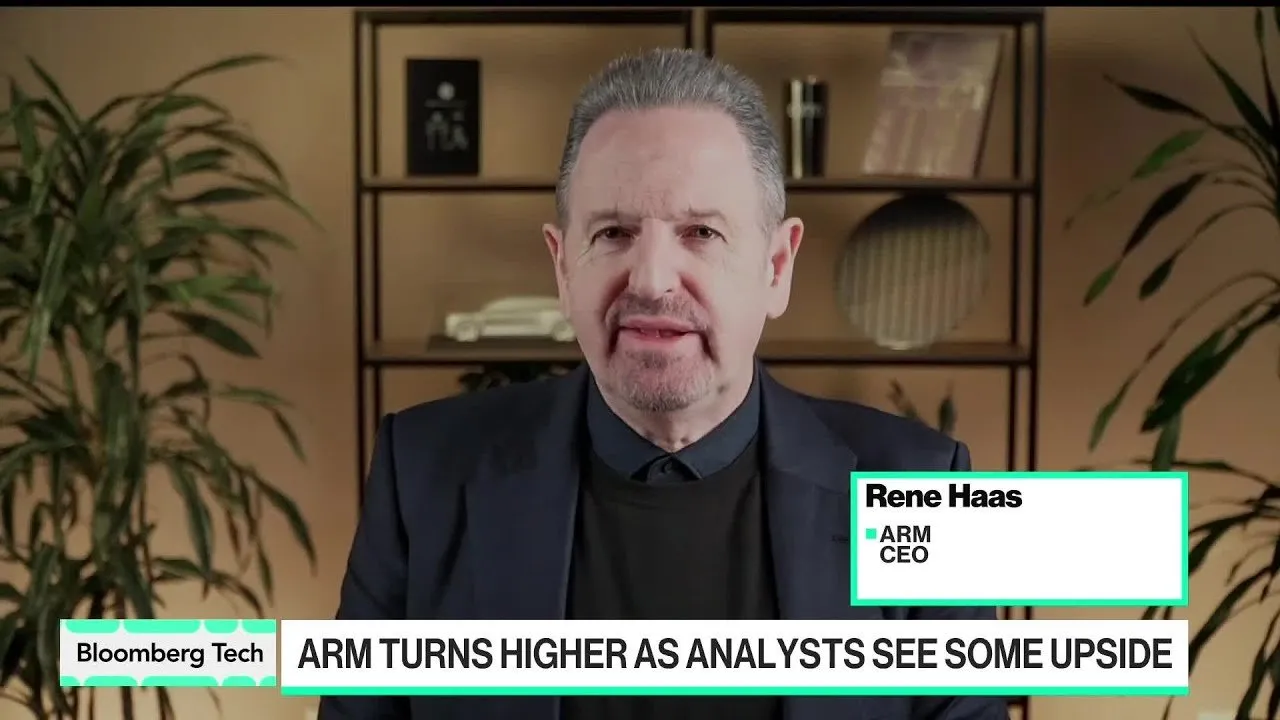
Arm Holdings CEO Rene Haas announced that the company’s data center business has more than doubled year-over-year, driving record financial results and signaling a potential shift in the chip designer’s primary revenue stream away from the smartphone market. Following a quarter marked by record royalties and revenue, Haas emphasized that the rise of "agentic AI" and massive capital expenditures by hyperscalers are creating an unprecedented demand for high-core-count CPUs.
Key Takeaways
- Record Financials: Arm reported record revenue of $1.24 billion and record royalties of nearly $740 million, a 27% increase year-over-year.
- Data Center Surge: The data center segment grew by over 100% year-over-year, with Haas predicting it will become Arm's largest business unit within a few years.
- Technical Shift: Growth is driven by higher core counts in chips from partners like NVIDIA and AWS, specifically to handle complex AI workflows.
- Hyperscaler Dominance: Arm has secured over 50% market share among major cloud providers (hyperscalers).
- Ownership Stability: SoftBank, Arm’s majority shareholder, has no plans to sell its stake, viewing AI as a long-term transformative opportunity.
Data Center Business 'Exploding'
While Arm has historically been defined by its ubiquity in the smartphone and handset market, the company is undergoing a rapid transformation. During a recent analysis of the company's earnings, Haas revealed that the data center business is growing at a rate that has accelerated the company's internal timelines.
Despite a sluggish memory market impacting the broader semiconductor industry, Arm remains insulated due to its diversification. Haas noted that the company’s data center royalty revenue is "exploding," driven by aggressive adoption from industry giants.
"Our data center business is exploding. We were up probably north of 100% year on year. We think in a few years, it'll be our largest business... We have a line of sight that says we see it coming, and it's probably coming sooner than we had thought."
This growth is underpinned by Arm's penetration into the hyperscaler market, where it now commands over 50% market share. The company raised its guidance for the upcoming quarter, citing minimal impact from memory shortages that are affecting the lower end of the hardware stack.
The Mechanics of Growth: More Cores, More Royalties
The acceleration in revenue is not merely a result of selling more units, but also due to the increasing architectural complexity of the chips themselves. Haas explained that the industry is shifting toward chips with significantly higher core counts to manage the demands of modern computing workloads.
For example, Amazon Web Services' (AWS) Graviton chips have evolved from 96 cores to 192 cores per chip. Similarly, NVIDIA’s Vera CPU platform has increased from 72 cores on Grace to 88 cores. For Arm, this density directly correlates to revenue.
"What does that mean? That means more cores means more royalties and [a] high growth rate. Why are there more cores? When you think about agentic AI and everything associated with agents moving workloads across systems, managing workflows... That's the kind of work only CPUs can do."
Haas pushed back against the narrative that the AI boom is exclusively a GPU story. While GPUs handle model training, the "agentic" aspect of AI—managing inference, workflow movement, and system orchestration—requires robust CPU performance, positioning Arm’s architecture at the center of the AI infrastructure build-out.
Infrastructure Investment and Market Outlook
Addressing concerns regarding a potential "AI bubble," Haas pointed to the continued, massive capital expenditure commitments from major technology firms. He cited Alphabet’s potential $180 billion investment and Microsoft’s Stargate initiative as evidence that the industry views AI as the "final frontier" of technology, requiring infrastructure that exceeds previous historical precedents.
The market is also seeing a shift toward homogeneous computing environments. Haas welcomed the move by NVIDIA CEO Jensen Huang to sell the Vera CPU as a standalone product to the market. This development supports a trend where data centers prefer a unified Arm-based stack for efficiency, maintenance, and upgradeability.
"Inside the data center, you're going to start to see movement towards a homogeneous type of structure where people would love to have the ARM stack running almost everything. It's just easier from a maintenance standpoint... The Vera Rubin platform compared to Grace Blackwell uses 6x the number of CPUs."
Looking Ahead
Regarding Arm's ownership structure, Haas dispelled rumors of a sell-off by majority shareholder SoftBank. He confirmed that SoftBank CEO Masayoshi Son remains "very long on Arm," viewing the company as central to the future of artificial intelligence.
Moving forward, Arm is positioning itself to address the unpredictability of future AI architectures. With chip development cycles taking several years, predicting the precise needs of AI models four years in advance is difficult. Haas asserts that Arm’s focus on programmability, flexibility, and power efficiency makes it the safest bet for manufacturers designing chips for an uncertain but high-demand future.