
Table of Contents
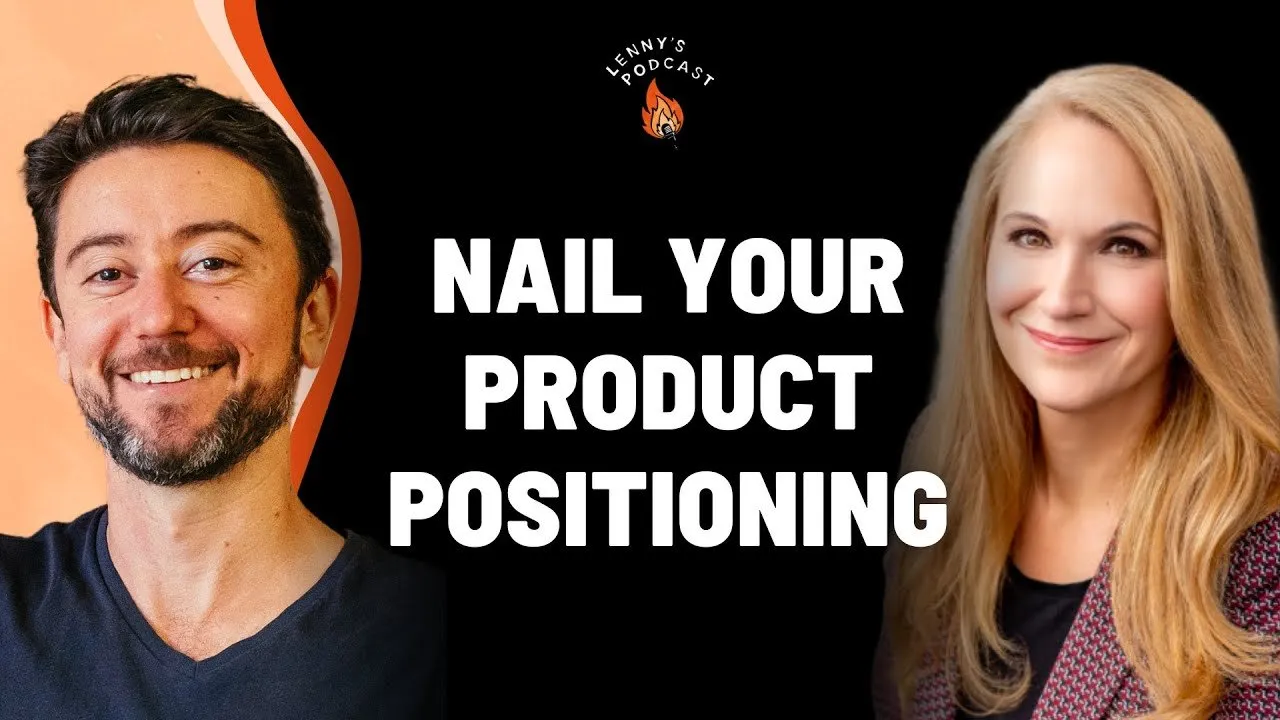
If your product isn't performing as expected, there is a strong chance the product itself isn’t the problem. The issue is likely your positioning. In B2B technology, it does not matter if a random person on the street understands your homepage. What matters is whether your ideal buyer lands on your site and immediately thinks, "This is exactly what I need."
April Dunford, author of the industry-defining book Obviously Awesome, has positioned more B2B tech companies than perhaps anyone else on the planet. Having led marketing teams at seven successful startups and consulted with over 200 companies, she has developed a repeatable methodology for finding the context where a product shines brightest. Below, we explore her framework for nailing product positioning, how to distinguish between segmentation and personas, and when to tighten your narrative.
Key Takeaways
- Positioning is context: It defines how your product is the best in the world at delivering specific value to a specific set of customers.
- Start with the competition: You cannot differentiate until you clearly define what you are beating, including the "status quo" (spreadsheets and interns).
- The "Champion" is the only persona that matters: In complex B2B sales, focus your narrative on the person championing the deal internally rather than creating personas for every stakeholder.
- Timing dictates strategy: Early-stage startups should have a loose "positioning thesis," while growth-stage companies must identify patterns and tighten their focus aggressively.
- It is a team sport: Effective positioning requires alignment across sales, marketing, product, and the C-suite.
Defining Positioning and Identifying the Problem
Positioning is frequently misunderstood as merely "messaging" or a tagline. However, it is fundamentally a business strategy concept. April Dunford defines it simply: Positioning defines how your product is the best in the world at delivering some value that a well-defined set of companies care a lot about.
It encompasses your competitive alternatives, your unique differentiation, the value you deliver, and the specific market category you intend to win. When positioning is working, it feels like magic—the deal logic becomes obvious to the prospect. When it is broken, it manifests in specific, painful ways across the sales funnel.
Signs Your Positioning is Weak
Because weak positioning drags down every metric, there isn't a single dashboard number that flashes red. Instead, you must look for qualitative signals, particularly in sales conversations:
- The "Back Up" Request: If a sales rep gets halfway through a pitch and the customer asks them to start over, the narrative is confusing.
- The Wrong Comparison: If customers say, "Oh, I get it, you're just like Salesforce," when you are definitely not like Salesforce, your context is wrong.
- The Value Disconnect: This is the most dangerous signal. The customer understands what you do but asks, "Why would anyone pay for that?" They see the features but miss the strategic value.
"It doesn't matter if I can understand what it is or not... if I'm selling a deeply technical thing to deeply technical buyers, it's okay if your grandmother doesn't understand what it is. What matters is does it resonate for your buyers?"
The 5-Step Positioning Methodology
Many teams attempt to fix positioning by locking themselves in a room and asking, "Why do customers love us?" This approach is flawed because it relies on subjective opinions rather than market realities. To build robust positioning, Dunford advocates for a specific five-step sequence.
1. Competitive Alternatives
You must establish a stake in the ground regarding what you have to beat to win the deal. In B2B, there are two types of competitors: direct "shortlist" competitors and the status quo.
Teams often ignore the status quo, yet roughly 40% of B2B deals are lost to "no decision." This means you didn't lose to a competitor; you lost to a spreadsheet, a pen and paper, or an intern doing the job manually. If you don't position against the status quo, customers will never feel the urgency to switch.
2. Differentiated Capabilities
Once you know what you are comparing against, list every feature or capability you have that the alternatives lack. This goes beyond software features; it can include pricing models, professional services, or security compliance. It is a fact-based inventory of your unique assets.
3. Differentiated Value
Map your features to value. For every unique capability, ask: "So what? Why does the customer care?"
This process usually distills a long list of features into two or three major value themes. Unlike a generic brainstorming session, this method ensures your value propositions are strictly derived from things that only you can provide.
4. Best-Fit Customers
Not every company cares about your unique value. If your differentiator is granular security controls, a two-person startup won't care, but a bank will. Determine the characteristics of a target account that make them care disproportionately about your specific value themes. This creates your "best-fit" customer profile.
5. Market Category
Finally, choose a market category that provides the best context for your product. The goal is to position the product in a context where its value is obvious to the target customer.
For example, Help Scout competes in a crowded market against giants like Zendesk. However, Help Scout positions itself not just as "cheaper Zendesk," but as a solution for companies that view customer support as a growth driver rather than a cost center. By targeting e-commerce and direct-to-consumer brands that rely on loyalty, their shared inbox features become strategic assets rather than just ticketing tools.
Segmentation vs. Personas in B2B
A common friction point in positioning is the confusion between market segmentation and buyer personas. Marketers often conflate the two or over-index on consumer-style personas that are irrelevant in enterprise sales.
True B2B Segmentation
Segmentation is about the company, not the person. In B2B, you should segment based on firmographics and technical characteristics that indicate a high probability of buying. For example, "We sell to companies with 500+ employees, using Marketo, who have a creative team larger than three people." This allows sales teams to build actionable prospect lists.
The "Champion" is the Only Persona That Matters
In a complex B2B sale, 5 to 7 people might touch the deal (IT, Legal, Procurement, End Users). Marketing teams often waste time building cute "one-pagers" for every single stakeholder—"Eric the IT Guy" or "Sally the Sales Rep."
Dunford argues this is a waste of time. The only persona that truly dictates success is the Champion. This is the person who discovers the problem, finds your solution, and takes on the burden of selling it internally to the economic buyer.
"If our positioning doesn't resonate for that champion, we're dead in the water... The champion's going to do this heavy lifting of selling IT. We likely aren't even going to get all that involved."
Your positioning narrative must arm the Champion with the arguments they need to convince their boss and vetting teams. If you win the Champion, they will help you win the others.
Timing: Thesis vs. Tightening
The approach to positioning changes as a company matures. There is a distinct difference between early-stage discovery and growth-stage execution.
The Early-Stage "Tuna Net"
When you are pre-product market fit or just launching, you have a positioning thesis. You have a hypothesis about who will buy and why, but you lack data. In this phase, it is strategic to keep positioning somewhat loose—like a fishing net designed for tuna that might accidentally catch a lot of grouper.
If you tighten your positioning too early based on a guess, you might alienate the market segment that actually wants your product. Allow the market to pull you. Watch who buys and use that data to inform your strategy.
The Growth-Stage Tightening
The transition happens when you see a pattern. You realize that despite different industries, your happiest customers all share specific traits—perhaps they all use a specific legacy tool or have a certain team structure. Once that pattern is clear, you must tighten the positioning aggressively.
At this stage, generic messaging becomes a liability. You want to "smash your foot on the gas" regarding the specific segment where you win, tailoring your sales narrative, website, and roadmap to serve that best-fit customer exclusively.
Conclusion
Positioning is not a static exercise. Markets shift, competitors evolve, and products mature. However, the fundamentals of great positioning remain constant: understand who you are beating, articulate the value only you can deliver, and focus strictly on the customers who care the most.
Whether you hire a consultant or gather your leadership team in a conference room for a week, the output must be more than a document. It must be a sales narrative that everyone—from the CEO to the newest sales rep—can tell with confidence. When the entire company aligns around a clear position, sales cycles shorten, churn decreases, and the product finally gets the recognition it deserves.



)