Table of Contents
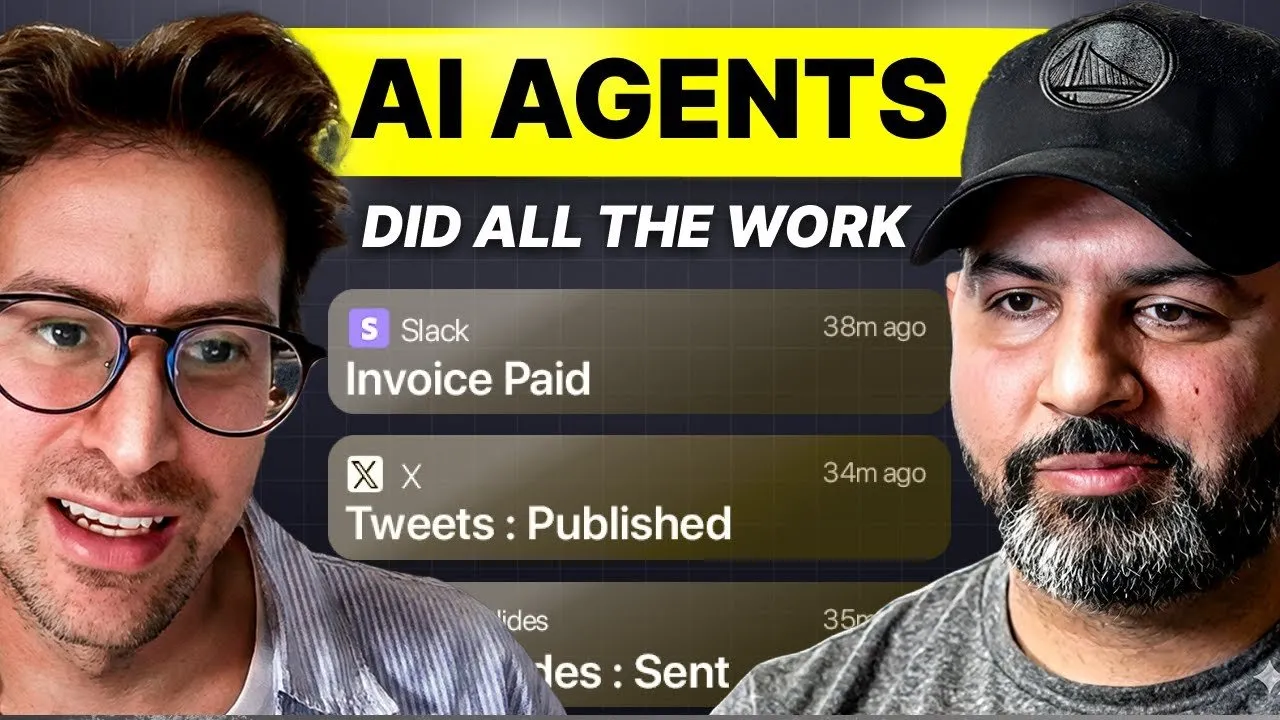
Sam Altman has famously predicted the imminent arrival of the one-person, one-billion-dollar startup. While the valuation may seem ambitious, the infrastructure required to support such a venture is rapidly materializing. The gap between individual creativity and enterprise-scale execution is narrowing, driven by a new generation of AI agents that do more than just chat—they work.
Furkan, a former co-founder of AppLovin (a company now valued at roughly $175 billion), is bridging this gap with a new platform called Nebula. Moving beyond the standard "chatbot" interface, Nebula is designed as an autonomous agent system capable of executing code, managing file systems, and interacting with third-party software. It represents a fundamental shift from AI as a passive assistant to AI as an active employee, offering a glimpse into a future where a single founder can orchestrate complex, multi-departmental workflows without a traditional headcount.
Key Takeaways
- Agentic Autonomy over Chat: Unlike standard LLMs that wait for prompts, Nebula uses "Cron jobs" (scheduled tasks) to perform work autonomously on a recurring schedule, such as publishing content or analyzing data daily.
- The "Cloud Code" Paradigm: The platform mimics an engineering environment for non-technical tasks, allowing agents to write and execute Python code, manage files, and browse the web to complete complex objectives.
- Service Business Disruption: The technology enables the creation of "agencies" where the primary labor force is digital, potentially reducing the human capital required for service delivery by a factor of 20.
- Strategic Direction is the New Moat: As execution becomes commoditized by agents, the human differentiator shifts entirely to "taste," creative direction, and high-level strategy.
The Architecture of Autonomy: Beyond the Chatbot
Most current interactions with Artificial Intelligence occur through a chat interface: a user asks a question, and the AI provides an answer. However, Furkan argues that for AI to power a business, it must move from conversation to execution. Nebula is built to look and feel like Slack, but instead of human colleagues, the channels are populated by specialized AI agents.
The core innovation lies in the system's ability to interface with the "real world" of software. While an LLM creates text, Nebula is equipped with a browser, a file system, and—crucially—the ability to write and execute its own code.
"I wanted to make all the other work feel the same [as engineering]. To me, in many ways, this is like cloud code for everything else—for the non-engineering tasks, for all the other work that I want to get done."
Code Execution as a Bridge
When a user asks Nebula to create a presentation, it doesn't just hallucinate the text of a slide. It writes a Python script, utilizes Google Slides APIs, generates images based on aesthetic prompts, and physically builds the file. If the code fails or an API rejects a request, the agent identifies the error, rewrites the code, and attempts the task again until it succeeds.
This "self-healing" capability mimics the workflow of a human engineer. It transforms the AI from a text generator into a problem solver that can navigate technical hurdles without human hand-holding.
Building the "Business-in-a-Box"
The primary use case for this technology is the "business-in-a-box"—autonomous systems that can run distinct departments or entire revenue streams with minimal oversight. During the demonstration, Furkan showcased a fully autonomous blogging operation that requires zero ongoing human input.
The workflow operates on a scheduled loop:
- Research: The agent scans X (formerly Twitter) and Google News for trending topics within a specific niche (e.g., VR gaming).
- Synthesis: It drafts a blog post based on the researched data, adhering to a specific style guide.
- Asset Generation: It generates relevant imagery using visual AI tools.
- Publication: It connects to the Ghost CMS API to format, upload, and publish the post.
- Optimization: It integrates with analytics tools like PostHog to review performance data.
The Power of Recursive Optimization
The true power of this system is not just in creation, but in optimization. A human founder can instruct the agent to analyze the previous week's traffic data, identify which keywords performed best, and adjust the content strategy for the following week. This creates a feedback loop where the business essentially "learns" and improves its output over time without direct human intervention.
"I start thinking, what's the smallest company project that I could do? A blog is kind of one of the things I landed on... I have a blog that I use as my testing ground... and it's now 15 days in a row, I've been doing three posts a day. The blog has gotten to about a hundred hits a day. I just set it up. I spent less than 30 minutes on the setup."
The Future of Agency Models and Service Work
One of the most immediate implications of systems like Nebula is the disruption of the service economy. Currently, businesses hire agencies for content marketing, lead generation, and data analysis. These agencies operate on a labor-heavy model, selling human hours for output.
With agentic workflows, an entrepreneur can replicate the output of a specialized agency team—researchers, writers, graphic designers, and data analysts—using a single platform. This suggests a future where "AI Agencies" emerge, offering standard services at a fraction of the cost because the labor is digital.
However, this abundance of automated work raises a critical question: If everyone can generate infinite content, does the value of that content drop to zero?
Taste as the Ultimate Differentiator
As technical execution becomes trivial, the value chain shifts toward direction and curation. Just as the dot-com era made having a website a competitive advantage until everyone had one, AI execution will eventually become the baseline standard. The winners in this new economy will not be those who can produce the most, but those who can direct their agents with the highest fidelity and creativity.
"I think as we get more advanced... the basic version of it is not going to be useful. I'm going to have to apply this same logic to kind of the next level of things. My content is going to have to be superior. My delivery is going to have to be superior."
The role of the human operator evolves from "writer" to "editor-in-chief." The human provides the creative spark, the aesthetic taste, and the strategic goal; the AI handles the mundane logistics of research, drafting, and distribution.
Conclusion
We are entering an age of abundance where the constraints on executing ideas are rapidly dissolving. Tools like Nebula suggest that the "one-person billion-dollar company" will not necessarily be built by a lone genius working 100-hour weeks, but by an architect who effectively orchestrates a fleet of digital workers.
For entrepreneurs, the opportunity lies in identifying workflows that are currently bottlenecked by human labor and re-imagining them as automated loops. While the technology is still in its "tinkering" phase, the trajectory is clear: the future of business belongs to those who can best direct the machine.