Table of Contents
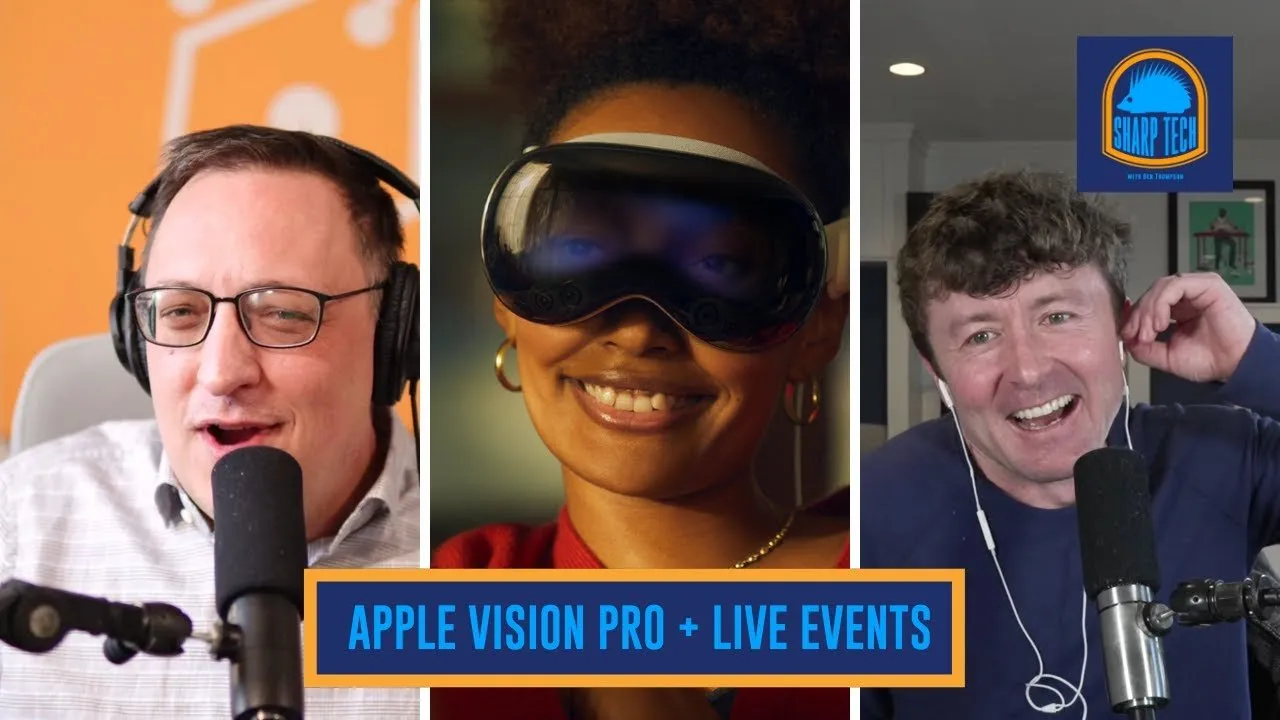
Leading technology analyst Ben Thompson has issued a blistering critique of Apple’s content strategy for the Vision Pro, arguing that the company’s recent immersive NBA broadcast demonstrates a fundamental misunderstanding of the medium. Speaking on the Sharp Tech podcast, Thompson contends that Apple is hindering the headset’s adoption by "over-engineering" live events to mimic television rather than leveraging the hardware’s unique ability to simulate physical presence.
Key Points
- Production Overload: Analysts criticize Apple's recent immersive NBA broadcast for using rapid camera cuts and studio commentary, which disrupt the user's sense of immersion.
- The "Presence" Argument: Experts argue the Vision Pro’s killer app is a static, high-quality "seat" at live events, not a produced narrative typical of 2D television.
- Strategic Bottleneck: Apple’s culture of perfectionism and control is reportedly limiting the volume of available content, stalling user adoption.
- Missed Opportunities: There is significant demand for "virtual tourism" and raw live feeds—such as European soccer matches or concerts—that remain untapped due to current production constraints.
The Problem with "Over-Produced" Reality
Following the recent immersive broadcast of the Los Angeles Lakers versus the Orlando Magic, arguably the highest-profile test of the Vision Pro’s live sports capabilities to date, reception has been mixed. While the visual fidelity remains high, the editorial choices behind the broadcast have drawn sharp criticism.
According to Thompson, the author of Stratechery, Apple is applying legacy television logic to a spatial medium. Traditional sports broadcasts rely on narrative construction: multiple camera angles, replays, and commentators to guide the viewer through the action on a flat 2D screen. However, this approach proves disorienting in a virtual reality environment.
"The moment you would start to feel that [immersion], boom, it would cut to another camera angle... It was so frustrating and it was kind of uncomfortable to watch. You would be in the middle of a fast break where I'm on one camera and it suddenly switches to another camera and I literally missed the basket because I was discombobulated as to where I was."
The core argument is that VR users are not seeking a better version of television; they are seeking a facsimile of being there. By forcing the viewer to jump between perspectives and inserting studio presenters, Apple breaks the suspension of disbelief that justifies the headset's $3,500 price tag.
TV Logic vs. Immersive Presence
The distinction between television and immersive video is rooted in control. Television directors control what the viewer sees to tell a story. In contrast, spatial computing allows the user to control where they look, provided the camera feed is stable. Thompson draws a parallel to the history of sports broadcasting, noting that while TV evolved from single-camera setups to multi-camera productions to compensate for a lack of presence, VR restores that presence, making the multi-camera setup obsolete.
The "over-engineering" extends beyond camera cuts. The inclusion of studio shows and heavy production values adds significant overhead, which paradoxically reduces the amount of content Apple can produce. This has resulted in a "content drought" for the device, where users wait months for sparse immersive experiences.
The proposed solution is radically simple: place a high-resolution 180-degree camera in a prime location—such as courtside at an NBA game or the front row of a concert—and leave it there. This approach would not only improve the user experience by maintaining immersion but would also drastically lower production costs, allowing for a higher volume of content.
Apple's "Control Freak" Dilemma
The struggle to pivot to a simpler content strategy highlights a clash between Apple’s hardware DNA and the requirements of a content platform. Apple is historically a product company that prides itself on perfectionism and curation. However, successful video platforms like YouTube or TikTok thrive on volume and the "long tail" of content, relying on algorithms rather than human editors to surface quality.
By insisting on heavily produced, "perfect" broadcasts, Apple is limiting the ecosystem. Thompson argues that Apple lacks the "cultural DNA" to adopt a laissez-faire approach, which would involve trusting the hardware to deliver the experience without heavy-handed post-production.
"It requires a tremendous amount of confidence in what you have... that actually the hardware experience is great and the experience can stand alone. It feels like they don't have that confidence and it's feeling like we have to do a bunch of stuff to make it good instead of letting it do it on its own."
This perfectionism creates a bottleneck. If Apple allowed for "lazy" broadcasts—simply setting up cameras without commentary or graphics—they could theoretically sell virtual tickets to thousands of events worldwide, from Premier League soccer matches to local concerts, creating a marketplace that drives hardware sales.
Market Implications and Future Outlook
The demand for raw, immersive experiences appears to be tangible. During the discussion on Sharp Tech, correspondence from Vision Pro owners highlighted a willingness to pay premium subscription fees for simple "seat-based" access to events they cannot physically attend, such as Arsenal football games in London or F1 races.
If Apple continues to prioritize production value over immersion and volume, they risk stalling the platform's momentum. The consensus among analysts is that the Vision Pro is a technical marvel in search of a killer use case. Live sports and events could be that use case, but only if Apple pivots from being a broadcaster to being a ticket scalper for virtual seats.
Looking ahead, the industry will be watching to see if Apple loosens its grip on production standards. Opening the platform to third-party developers or broadcasters who are willing to deploy simple, static camera rigs could rapidly expand the library of immersive content, potentially saving the device from becoming a niche curiosity.