Table of Contents
Consumers navigating the 2026 home theater landscape face critical decisions regarding hardware longevity and display technology, particularly when choosing between established streaming boxes and next-generation displays. Digital Trends recently addressed these market concerns, offering definitive buying advice on the Apple TV 4K's relevance and the ongoing rivalry between Sony, LG, and Samsung for living room dominance.
Key Takeaways
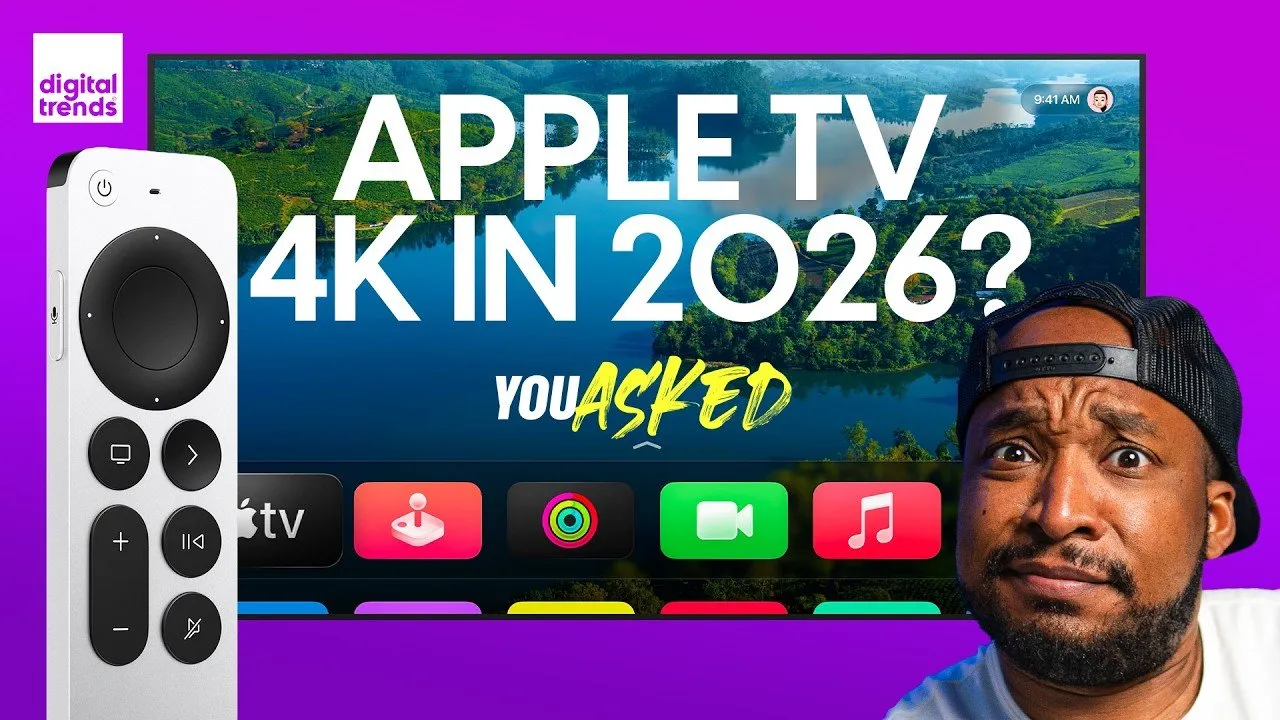
- Apple TV 4K Viability: Despite rumors of new hardware, the current Apple TV 4K remains a recommended purchase in 2026 due to robust software updates and ad-free usability.
- Mid-Range OLED Winner: The LG C5 is preferred over the Sony Bravia 8 (Mark I) for its superior brightness and gaming connectivity options.
- Bright Room Solution: For large, well-lit environments, the Sony Bravia 9 beats high-end OLEDs like the Samsung S95F due to higher peak brightness and a significantly lower price point.
Apple TV 4K: Longevity Over Speculation
Despite the tech industry's rapid refresh cycle, the current Apple TV 4K continues to hold its ground as a premier streaming device in 2026. While consumers often hesitate to purchase hardware late in its lifecycle for fear of immediate obsolescence, experts argue that waiting for a hypothetical upgrade is unnecessary. The existing model remains "snappy and responsive," maintaining its status as a high-performance vehicle for content delivery.
Apple solidified the device's longevity with a significant operating system update last year, introducing a new "liquid glass" aesthetic and enhanced features such as saved account logins. Unlike many competitors that clutter the user interface with intrusive advertising, the Apple TV platform retains a clean, premium user experience.
"I know we all love to torture ourselves with the thought of a newer version coming out right after we buy the previous model, but we've been hearing reports and rumors about a new Apple TV 4K coming for so long that I refuse to believe anything until I actually see it."
Display Wars: LG C5 vs. Sony Bravia 8
In the competitive mid-range OLED market, the LG C5 has emerged as the superior choice for mixed usage, particularly for movie enthusiasts and gamers. When compared to the Sony Bravia 8 (Mark I), the LG C5 offers distinct advantages in panel brightness—a critical factor for maintaining detail in dark scenes and combating ambient light.
Connectivity remains a deciding factor for gamers. LG provides more robust support for high-bandwidth activities, offering a greater number of HDMI 2.1 ports and superior refresh rate options compared to Sony's offering. While a theoretical "Bravia 8 Mark II" might offer improved processing, the current consensus heavily favors LG for value and performance.
Optimizing for Bright Rooms: Bravia 9 vs. Samsung S95F
For consumers equipping large, bright living spaces, the debate shifts from pure OLED black levels to luminance capabilities. In a scenario involving a 75-inch display placed in a sunlit room, the Sony Bravia 9 proves to be the pragmatic choice over Samsung’s high-end S95F OLED.
The Bravia 9 is engineered specifically to overpower ambient light, utilizing high peak brightness and HDR performance to maintain picture integrity where OLEDs might struggle. While the Samsung S95F features an anti-glare screen, its OLED blacks can appear lighter under direct heavy lighting, potentially compromising the contrast advantage inherent to the technology.
Financial considerations also play a significant role in this segment. The Sony Bravia 9 is currently tracking approximately $1,000 lower than the comparable 77-inch Samsung S95F. Furthermore, the Sony model supports Dolby Vision, a standard absent from Samsung displays, making it a more versatile option for film enthusiasts despite having fewer HDMI 2.1 ports than its competitor.
As display technology matures, the distinction between Mini-LED and OLED continues to narrow, but environmental factors like room brightness remain the primary driver for hardware selection in 2026.