Table of Contents
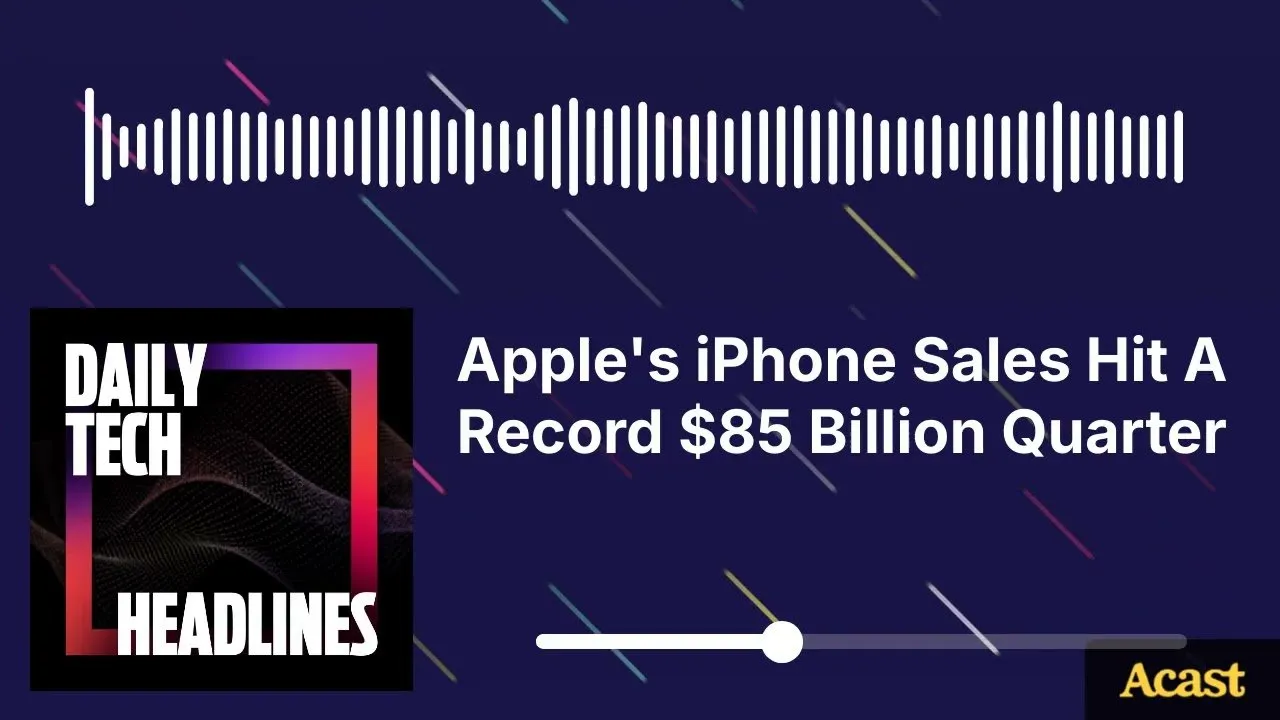
Apple delivered a historic financial performance on January 30, 2026, reporting record-breaking iPhone revenue of $85 billion driven by surging demand for the iPhone 17 in Greater China. Simultaneously, the technology sector is bracing for a massive liquidity event as OpenAI reportedly accelerates preparations for a fourth-quarter public listing with a valuation targeting $500 billion.
Key Points
- Apple Revenue Surge: iPhone sales jumped from $69 billion to $85 billion, with Greater China revenue rising significantly from $18.5 billion to $25.5 billion.
- OpenAI IPO Plans: The AI giant is valued at $500 billion and is holding informal talks with banks for a potential Q4 2026 listing.
- Medical AI Breakthrough: A Swedish study published in The Lancet indicates AI-assisted screening reduced late-stage breast cancer diagnoses by 12%.
- Strategic Infrastructure Deals: Perplexity inked a $750 million cloud deal with Microsoft, while China approved the purchase of 400,000 Nvidia H200 chips.
Apple's Record Quarter and OpenAI's Market Ambitions
Apple’s latest earnings report highlights a robust recovery and expansion in key international markets. The company achieved its best-ever quarter for iPhone sales, reaching $85 billion in revenue, a substantial increase from the $69 billion recorded in the prior year. The primary catalyst for this growth was the iPhone 17, which reinvigorated sales in Greater China. Revenue in the region climbed to $25.5 billion, up from $18.5 billion previously. Additionally, India emerged as a vital growth engine, posting record revenue across iPhone, Mac, iPad, and services segments.
While Apple consolidates its hardware dominance, OpenAI is positioning itself for what could be the largest initial public offering of 2026. Currently valued at $500 billion, the organization is reportedly strengthening its finance team and engaging in informal discussions with banking institutions. A successful IPO in the fourth quarter is viewed as critical for securing the capital necessary to sustain its massive AI infrastructure requirements and chip acquisitions, despite facing headwinds from leadership changes and ongoing litigation with co-founder Elon Musk.
AI Infrastructure and Chip Trade Developments
The race to secure computational power continues to reshape corporate alliances and international trade. AI search startup Perplexity has signed a three-year, $750 million agreement with Microsoft to utilize the Azure cloud service. Facilitated through Microsoft’s foundry program, this partnership enables Perplexity to run models from OpenAI, Anthropic, and xAI.
Perplexity stated that this does not change its primary spending on its main cloud provider, Amazon Web Services, which sued the startup last year.
On the geopolitical front, trade barriers regarding advanced semiconductors appear to be shifting. Reports indicate that China has approved the purchase of 400,000 Nvidia H200 AI chips by major tech firms including ByteDance, Alibaba, and Tencent. This approval follows U.S. authorization for Nvidia to sell these advanced units to vetted Chinese firms, subject to a 25% tariff. While this opens access to superior hardware, the deal may attract further scrutiny from U.S. regulators regarding national security concerns.
Healthcare Innovation and Consumer Tech
In a significant development for medical technology, a large-scale study involving 100,000 women in Sweden demonstrated the efficacy of AI in healthcare. Published in The Lancet, the study found that AI-assisted breast cancer screening led to a 12% reduction in late-stage diagnoses. The protocol utilized AI to triage low-risk mammograms to a single radiologist while flagging high-risk cases for double reading.
The results showed tangible improvements in clinical outcomes:
- Detection Rates: AI-assisted groups showed an initial detection rate of 81% compared to 74% in standard screenings.
- Cancer Rates: The AI group reported lower interval cancer rates of 1.55 per 10,000 versus 1.76 per 10,000.
In consumer software, Google has launched "Project Genie," an advanced interactive video prototype available to premium AI subscribers for $250 per month. Utilizing models like Nano Banana Pro and Gemini 3, the tool generates interactive 720p video environments. Meanwhile, NASA has delayed the wet dress rehearsal for the Artemis 2 mission due to cold weather, pushing the potential launch window to February 8th.
As the tech landscape shifts from hardware records to AI implementation in health and infrastructure, market watchers will closely monitor the regulatory response to the Nvidia-China deal and the formal filing of OpenAI's IPO prospectus later this year.