Table of Contents
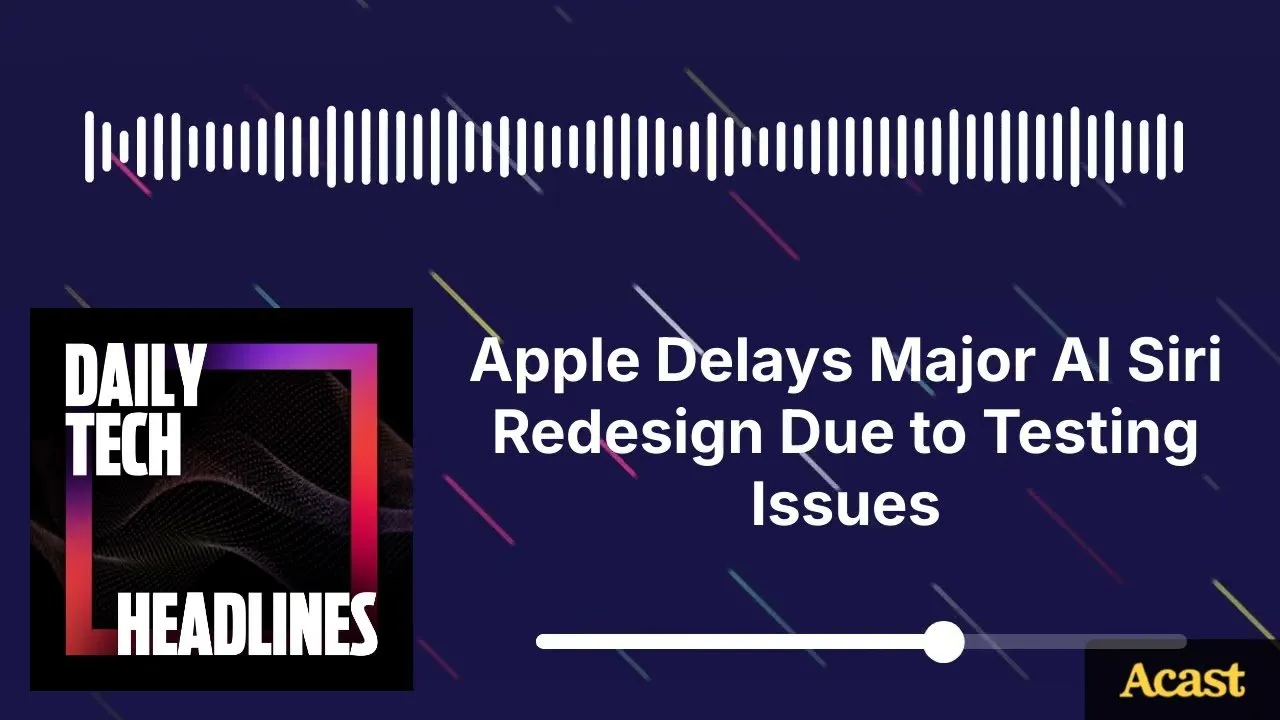
Apple Inc. has reportedly postponed the full rollout of its highly anticipated AI-powered Siri redesign, initially envisioned as a more sophisticated conversational assistant, due to significant internal testing hurdles. These issues include noticeable sluggishness and a failure to consistently process user queries. Instead of a singular launch, the technology giant now plans to implement new features incrementally through forthcoming iOS updates, with the first potentially arriving as early as next month.
Key Points
- Apple's ambitious AI Siri redesign faces delays due to internal testing problems, including performance sluggishness and query processing failures.
- New Siri capabilities will be introduced gradually through successive iOS updates like iOS 26.4, 26.5, and 27, rather than an immediate comprehensive launch.
- Anthropic has significantly upgraded its free Claude chatbot tier, providing previously paid features and asserting a commitment to an ad-free model, positioning it as a direct challenger to OpenAI's plans for ad-supported ChatGPT.
- Elon Musk's xAI is undergoing a substantial reorganization, marked by personnel departures and aggressive hiring, following its acquisition by SpaceX and amidst preparations for an anticipated IPO alongside regulatory scrutiny of its Grok AI.
Apple's AI Ambitions Face Delay
The delay in Apple's AI-powered Siri redesign underscores the complexities of integrating advanced artificial intelligence into core operating systems. Originally slated for a more unified release, the internal testing issues have prompted a shift to a phased rollout strategy. Users can expect to see new functionalities appear incrementally, starting with updates like iOS 26.4, possibly in March, followed by iOS 26.5 in May, and iOS 27 later in the year. The company had previously confirmed that Google's Gemini models would play a crucial role in powering the enhanced Siri, which is ultimately expected to function more like an AI chatbot.
Competitive Shifts in the AI Chatbot Arena
In the rapidly evolving AI landscape, Anthropic has made a strategic move by significantly upgrading the free tier of its Claude chatbot. Free users now gain access to previously paid features, including file creation and editing using Sonet 4.5 for documents like Excel and PDFs, third-party integrations, and custom task teaching skills. This enhancement directly challenges OpenAI's reported plans to introduce advertisements to its free ChatGPT offering. Anthropic has underscored its commitment to an entirely ad-free user experience, a stance recently highlighted in a Super Bowl advertisement that subtly mocked OpenAI's new ad model and GPT-4o.
Beyond product development, Anthropic is also making a significant political investment, committing $20 million to the 2026 political elections through its Public First Action PAC. This PAC aims to support pro-AI regulation candidates, including Republicans Marsha Blackburn and Pete Ricketts. With a target of $75 million, the PAC is smaller than its rival, the Leading the Future PAC, which commands $125 million. Anthropic justifies this spending as essential for establishing robust policy safeguards, though critics, such as David Saxs, view it as a potential strategy for regulatory capture. This move follows the U.S. President's executive order establishing a national AI regulatory framework.
xAI Restructures Amidst Rapid Expansion
Elon Musk, CEO of SpaceX, announced a significant reorganization within his artificial intelligence venture, xAI. The overhaul includes internal personnel departures and an aggressive hiring push, aimed at improving the speed of execution. This restructuring follows the recent exits of co-founders Jimmy Ba and Tony Woo, adding to previous high-profile departures within the company. The changes occur shortly after SpaceX's acquisition of xAI last week in an all-stock transaction, valuing the combined entity at an estimated $1.25 trillion. xAI is also reportedly preparing for an anticipated Initial Public Offering (IPO) this year, while simultaneously navigating regulatory probes into its Grok AI chatbot regarding its potential role in the creation of deepfake pornography.
The tech industry continues to demonstrate dynamic shifts, with major players navigating product development challenges, intense competitive pressures, and evolving regulatory landscapes, all while pushing the boundaries of artificial intelligence and its integration into daily life.


![Bitcoin: An Unfortunate Pattern [Update]](/content/images/size/w1304/format/webp/2026/03/bitcoin-unfortunate-pattern-update.jpg)