Table of Contents
At the Mobile World Congress (MWC) in Barcelona this week, Apple broke its long-standing tradition of avoiding major trade shows to unveil the iPhone 17e and an updated iPad Air, signaling a more aggressive stance in the mid-range hardware market. Simultaneously, Microsoft faces a community relations crisis after attempting to censor its own corporate name and the derogatory term "slop" on the official Co-pilot Discord server. These developments, alongside a wave of robotic and modular hardware concepts from Lenovo and Honor, define a week of significant shifts in consumer electronics and digital policy.
Key Points
- Apple surprised MWC attendees by launching the iPhone 17e with MagSafe support and 256GB of base storage for $599.
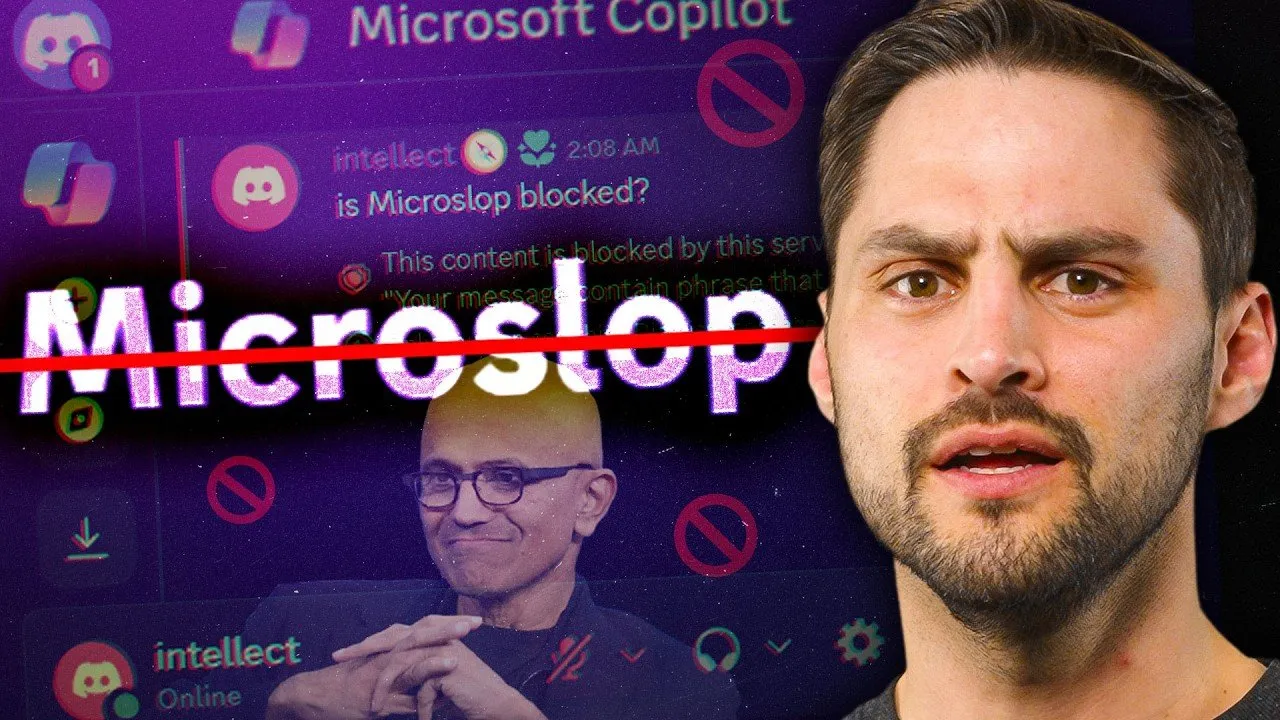
- Microsoft moderators disabled its Co-pilot Discord server after users revolted against a new filter banning the words "Microsoft" and "slop."
- Lenovo and Honor showcased the "robotification" of hardware, including a modular Thinkbook laptop and a phone with a motorized gimbal arm.
- New California legislation, the Digital Age Assurance Act, will require all operating systems to implement age-verification protocols by 2027.
Hardware Dominance and Surprise Entries at MWC
The Mobile World Congress usually serves as a showcase for Android ecosystems, but Apple commanded the narrative this year by announcing the iPhone 17e. The device addresses long-term criticisms of Apple’s budget line by integrating MagSafe technology and doubling base storage to 256GB while maintaining a $599 price point. Apple also refreshed the iPad Air, upgrading the internals from the M3 to the M4 chip with 12GB of RAM, scheduled for retail release on March 11.
The Android sector responded with highly specialized hardware. Xiaomi debuted the Leica Lights Phone 17 Ultra, which pushes the boundaries of mobile photography with a massive rear-mounted lens assembly. In the foldable space, Motorola showcased the Razer Fold, its first book-style foldable, and announced a partnership with the GrapheneOS Foundation to offer a privacy-focused enterprise edition of the device. Qualcomm bolstered these hardware advancements by revealing its next-generation modem, which features native 5G-over-satellite capabilities.
Censorship Backlash and AI Sentiment
While hardware manufacturers celebrated new launches, Microsoft encountered significant friction within its AI community. In an attempt to manage the reputation of its Co-pilot service, the company implemented a word filter on its official Discord server that prohibited users from typing "Microsoft" or "slop"—a slang term often used to describe low-quality AI-generated content. The move backfired as users bypassed the filters with creative spellings, eventually forcing moderators to lock the server entirely.
This internal tension follows a recent blog post by Microsoft CEO Satya Nadella, who encouraged the industry to move beyond the "slop versus sophistication" debate. Referring to the future of AI consumption, the report highlights the growing divide between corporate branding and user perception. Regarding the industry's direction, the source noted:
"Ten years from now, you're going to feel pretty foolish when you're slurping happily from the trough with all the other piggies. So stop calling it slop. Investors can hear you."
Modular Concepts and Robotics
Lenovo dominated the experimental category at MWC with several "concept" devices that may signal the future of personal computing. The Thinkbook modular AI PC features a system of magnetic, swappable screens and keyboards, allowing for on-the-fly hardware customization. The company also demonstrated the Legion Go Fold, a foldable Windows-based gaming handheld designed to maximize screen real estate without increasing the device's footprint.
Robotics also integrated into mobile form factors. Honor revealed a prototype smartphone featuring a motorized 200-megapixel gimbal camera on the rear. This "robot phone" can autonomously track subjects and provide mechanical stabilization, even performing choreographed movements to music. This trend toward "workmate" AI was further exemplified by Lenovo’s desktop assistant—a robotic arm with an interactive face designed to assist with office productivity tasks.
Regulatory Shifts and Industrial Innovation
Beyond consumer gadgets, significant shifts in software regulation and industrial technology were revealed. California’s Digital Age Assurance Act, passed in late 2025, will mandate that all operating systems—including Linux and Steam OS—prompt users for age verification during setup by January 1, 2027. While the system relies on self-reporting rather than government ID uploads, non-compliance could result in fines of up to $7,500 per violation.
In the environmental sector, chemist Omar Yagi unveiled a shipping-container-sized atmospheric water generator. Using metal-organic frameworks (MOFs)—porous molecular sponges—the system can extract up to 1,000 liters of drinkable water per day from desert air with humidity as low as 20%. The system is designed to run entirely on renewable wind and solar energy, providing a potential lifeline for remote or water-stressed communities.
As MWC concludes, the industry's focus shifts to the practical implementation of these concepts. Investors and consumers alike will be watching Apple’s March launches and Microsoft’s ongoing community management strategies to see if corporate policy can keep pace with rapid technological evolution and shifting user sentiments.