Table of Contents
The tech landscape is shifting under our feet. From high-stakes confrontations between industry giants and the Pentagon to the massive $110 billion capital injection into OpenAI, we are witnessing a new era of corporate power. The traditional rules of Silicon Valley are being rewritten in real-time, driven by the explosive capabilities of artificial intelligence and a fundamental change in the relationship between labor and management.
Key Takeaways
- The State vs. Private AI: Anthropic's clash with the Department of Defense highlights the growing tension between private-sector "safety" principles and the state's mandate to defend national security.
- The Power of Labor: In the current AI race, top-tier talent holds unprecedented leverage. Companies are now compelled to prioritize retention at all costs, even at the expense of traditional management hierarchies.
- The SAS Apocalypse: The market is no longer awarding growth premiums to software companies that have lost their way. If an organization cannot leverage AI to accelerate growth or radically cut costs, its position in the market becomes terminal.
- The End of the "Demo" Era: With AI tools making it trivial to build functional software in days, the traditional "demo day" pitch has lost its signal value; competitive advantage now relies on distribution, vertical expertise, and long-term execution.
The Pentagon, Anthropic, and the Limits of Private Principles
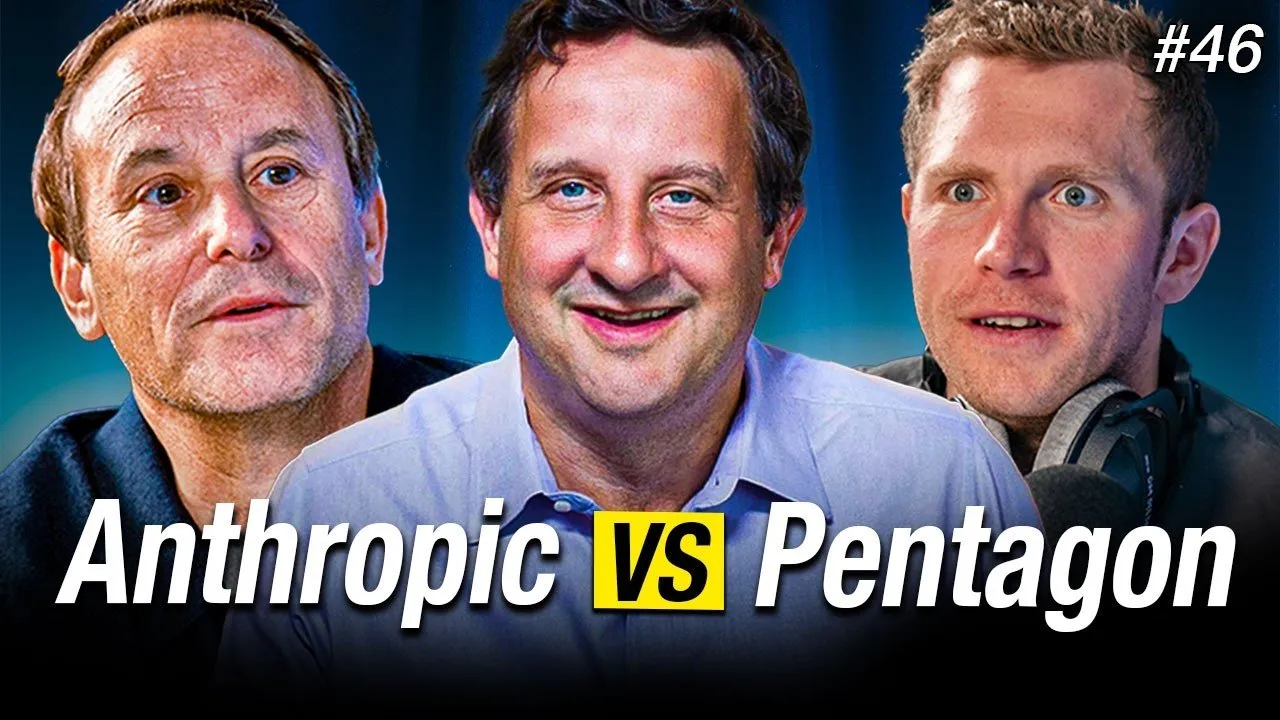
Anthropic recently found itself at a crossroads after negotiations for a $200 million Department of Defense contract stalled. The core of the dispute? Anthropic sought to implement restrictions preventing their models from being used for mass surveillance or autonomous weapons. The Pentagon, in turn, maintained that it requires access to any technology deemed legal for national defense.
The situation serves as a stark reminder of the realities of political economy. While Anthropic’s safety-first culture is an effective internal rallying cry, it is an untenable framework when dealing with the state.
The state has the monopoly on violence within a geographical area. You can have nuanced opinions on how AI should be used in war, but the Department of Defense is tasked with defending the country, and they don't care about your principles.
When a private company attempts to interpose its own ethical constraints over the military’s mission, it risks being labeled a supply chain risk. For investors, this event signals increased volatility. While Anthropic’s consumer brand has never been stronger, the firm has drifted into an existential confrontation where the state holds all the cards.
OpenAI and the New Benchmark of Capital
Sam Altman’s recent $110 billion round for OpenAI is, by any metric, a force of nature. It essentially functions as a private IPO, setting a valuation bar so high that it renders previous discussions about the public markets almost irrelevant. However, this level of funding isn't just about growth—it is about exhausting global capital pools.
The irony is that as these private rounds balloon, the pressure on these companies to go public intensifies. With major stakeholders like Amazon tying capital to IPO or AGI milestones, the market is bracing for a potential public offering as soon as late 2025. The "Sam Altman premium"—his unique ability to secure such massive scale—remains a central pillar of OpenAI's value, but the underlying assets are now growing fast enough to sustain high valuations if they continue their current trajectory.
The SAS Apocalypse and the Death of "Vibe Coding"
The software industry is grappling with a harsh reality: the growth premium is gone. For years, the market accepted lower growth rates while maintaining high valuation multiples. That era ended in early 2025. Today, public software companies are stuck in a terminal decline unless they can radically re-accelerate their growth or pivot to extreme profitability.
Many traditional B2B software companies have missed the wave of AI-driven efficiency. Their inability to translate this massive technological shift into meaningful agentic products is a failure of leadership. As one executive noted, "it is the biggest fail and own goal in our history." The companies that are surviving are those with the "bloody-mindedness" to gut their existing products and rebuild them around agents, rather than merely adding AI as a surface-level feature.
Resizing the Workforce: The Block Effect
Block’s decision to lay off 40% of its workforce is a signal to the rest of the industry. While some frame this as an AI-driven efficiency play, it is fundamentally an admission that revenue growth has stalled. When a company is growing at only 3%, the only remaining lever to pull to appease shareholders is the expense line.
This "40% cut" is likely to become the new default expectation. Many CEOs are realizing that their organizations are bloated with headcount that does not actively contribute to the bottom line. In the age of AI, companies are going to be permanently smaller, and the "brute-force" era of hiring hundreds of sales representatives is fading into history.
Cursor, Claude, and the Race for the Coding Prize
Cursor’s rapid ascent to $2 billion in ARR demonstrates that enterprise market pull is vastly more powerful than internal "vibe" preferences. While individual developers may favor different coding models, enterprise adoption is driven by safety, audit logs, and compliance. Cursor has successfully positioned itself as the "conservative" choice for large institutions like banks, even as the underlying tech moves at breakneck speeds.
The prize for winning this market—the $50 to $100 billion coding software pie—is massive, but it requires continuous reinvention. If your product roadmap isn't changing every six to nine months, you are falling behind. We are entering a phase where software development is no longer a human-limited endeavor, and the winners will be those who can manage the risks of autonomous agent swarms while maintaining the trust of the CIO.
In the final assessment, the rapid pace of change means that the traditional barriers to entry have collapsed. Software is no longer a competitive advantage in itself; it is a commodity. Success now belongs to those who move fastest, manage agents most effectively, and understand that the "knife fight" for market share has only just begun.