Table of Contents
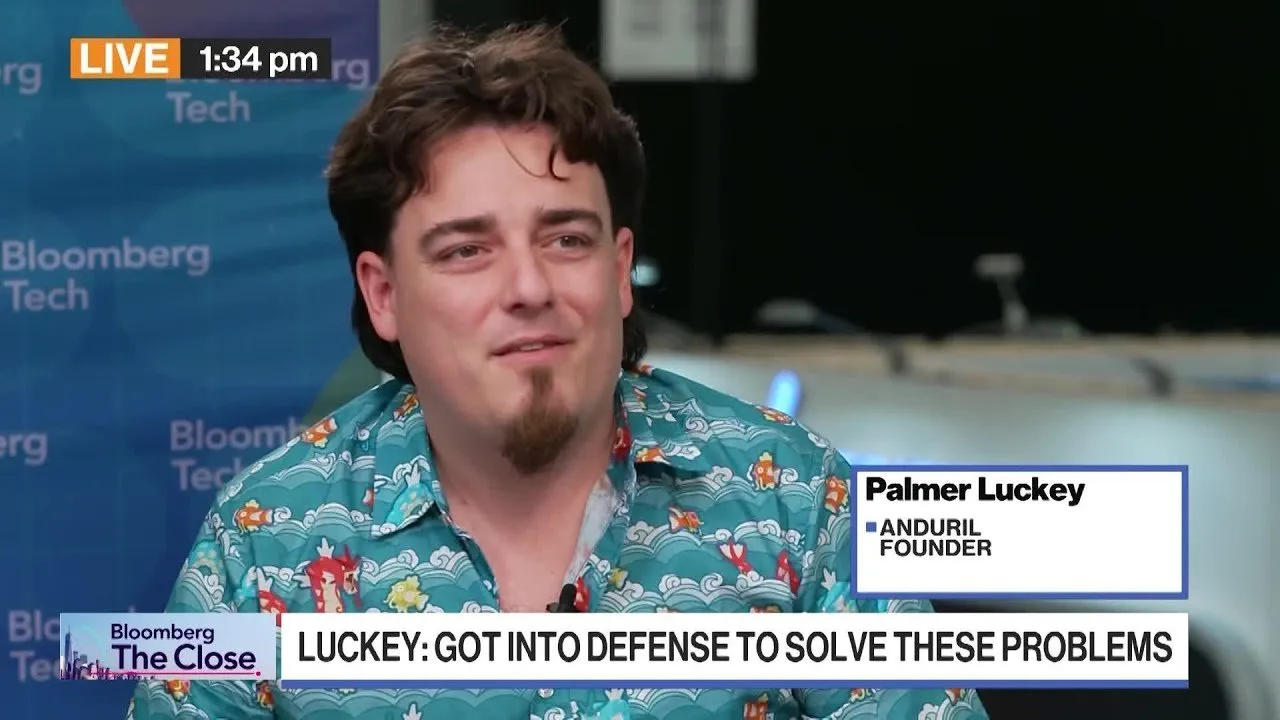
Anduril Industries founder Palmer Luckey asserted that defense contractors relying on taxpayer funding should be subject to strict government oversight, including potential restrictions on executive compensation and stock buybacks. Speaking at CES in Las Vegas, Luckey addressed reports of potential Executive Orders from the incoming administration while providing critical updates on Anduril’s manufacturing expansion and the geopolitical challenges facing the U.S. drone industry.
Key Takeaways
- Support for Oversight: Luckey argues that companies funded by "the public's wallet" must accept accountability measures, including salary caps or dividend restrictions.
- Manufacturing Expansion: Anduril is investing $900 million into its "Arsenal One" facility in Columbus, Ohio, which is reportedly ahead of schedule.
- Drone Dominance: Luckey conceded that China currently holds a significant lead in the global drone industry due to aggressive state intervention.
- Project Status: While major infrastructure projects are on track, Luckey admitted to technical delays regarding a man-portable counter-drone system.
Defense Contractor Oversight and Compensation
Amid reports that President-elect Trump is considering Executive Orders to restrict defense contractor leadership—potentially limiting CEO pay and stock buybacks—Luckey took a stance distinct from many of his industry peers. He argued that public funding inherently comes with public accountability.
Luckey suggested that restrictions on executives at publicly funded companies are a logical consequence of government contracts. He compared temporary strictures to being "grounded" until performance metrics are met.
"When you are effectively run on the public's wallet, the public should be able to impose whatever restrictions they want on you. If I am getting paid by taxpayers, they should have the ability to elect representatives... who can hold me to account in any way they wish."
He further elaborated that while specific restrictions might not always benefit the defense base strategically, the concept of oversight is valid. "If they say that I'm not allowed to pay myself $1 until I get caught up, I think they should be allowed to do that," Luckey added, emphasizing that there is "no level of oversight or intervention that I am against" when working on taxpayer time.
Manufacturing Updates and Technical Hurdles
Beyond policy, Luckey provided a progress report on Anduril’s operational commitments. The company is currently constructing Arsenal One, a massive manufacturing plant in Columbus, Ohio, intended to produce autonomous fighter jets and other defense systems. Luckey confirmed the company is investing $900 million of its own capital into the project.
According to Luckey, the Ohio facility is ahead of schedule. The company has already hired an initial wave of Ohio-based workers, transported them to California for training on existing production lines, and redeployed them to Columbus to set up the new factory. Production is slated to begin this summer.
However, Luckey remained transparent about technical challenges in other areas. He highlighted a specific delay with a "man-portable counter system" designed to shoot down attacking drones. He cited unexpected technical difficulties for the delay, rather than a lack of investment.
"If you only build things with no technical risk, you're not trying hard enough... We'll continue to do things that from time to time will turn out to be harder than we thought."
Geopolitics and the Drone Gap
Addressing the global security landscape, Luckey offered a stark assessment of the United States' position relative to China. He attributed China's dominance in the drone sector to robust industrial policy, supply chain investments, and state intervention that allows them to flood global markets.
"China has the best drone industry in the world. That's not even close," Luckey stated, noting that the U.S. currently struggles to compete due to differences in labor laws, emissions regulations, and energy prices.
Despite this, Luckey expressed optimism regarding recent bans on Chinese-made DJI drones. He predicts these regulatory moves could catalyze the domestic market, potentially allowing a strong U.S. drone industry to emerge within the next one to three years to fill the vacuum.
Looking ahead, Anduril continues to explore an initial public offering (IPO), with Luckey noting that the company is considering going public as it scales its operations to meet increasing defense demands.

![URGENT: This Next Market Rotation Will Go Parabolic! [& It’ll Be Quick]](/content/images/size/w1304/format/webp/2026/03/market-rotation-parabolic-shift-forecast.jpg)