Table of Contents
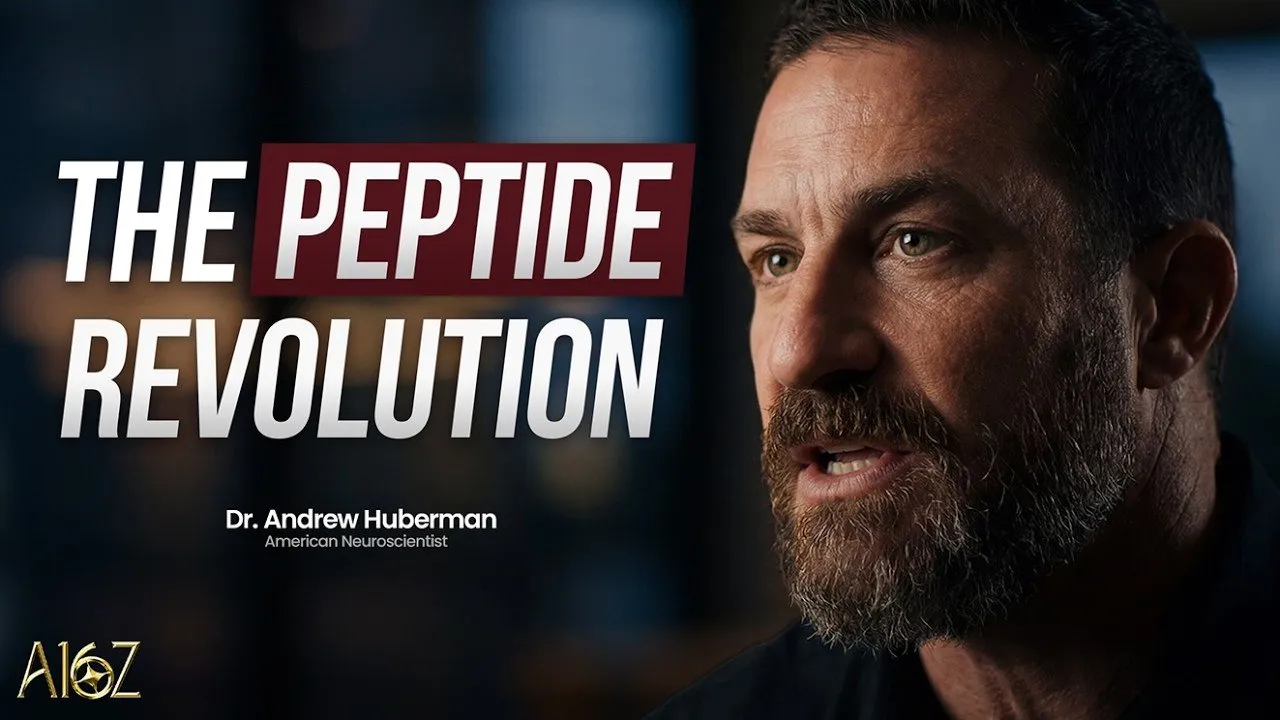
In the last five years, consumer interest in personal health has shifted from a niche preoccupation to a mainstream imperative. Driven by advancements in biotechnology, a growing skepticism of institutional healthcare, and a collective realization of our own mortality during the pandemic, people are increasingly taking the reins of their own well-being. Dr. Andrew Huberman, neuroscientist and host of the Huberman Lab, has been at the forefront of this movement, helping individuals navigate the complex intersection of science, self-care, and emerging health technology.
Key Takeaways
- Individual Agency: There has been a fundamental shift where individuals now prioritize proactive health management, utilizing everything from wearables to supplements to improve their longevity.
- The Peptide Revolution: Compounds like GLP-1 agonists and BPC-157 are changing how we treat obesity and injury, though they come with significant risks, regulatory gray areas, and the potential for misuse.
- Circadian Biology: Mental and physical health are inextricably linked to light and dark cycles. Optimizing your circadian rhythm—by getting morning sunlight and ensuring darkness at night—is a foundational tool for wellness.
- The Future of Bio-Interaction: Future health tech will move beyond just "reading" our data to "writing" to our biology, using precise stimulation to improve sleep, focus, and recovery.
The Shift Toward Self-Directed Healthcare
Historically, health trends were dominated by niche groups like professional bodybuilders or competitive athletes. However, the last decade has seen a collision between elite performance science and everyday life. Dr. Huberman notes that the COVID-19 pandemic acted as a massive catalyst, forcing people to confront their health status independently of traditional, sometimes rigid, government-provided guidelines.
The rise of tools like Vitamin D monitoring, creatine, and consistent resistance training signals a departure from purely aesthetic fitness goals toward functional longevity. As people have become more skeptical of institutional messaging, they have turned to mechanistic science to understand why specific protocols work. This transparency is crucial; understanding the biology behind a recommendation makes it significantly more likely that an individual will maintain healthy habits over the long term.
"We are all responsible for our own health. Just because they go to a doctor for an annual physical does not mean they're healthy or protected or safe."
Peptides: The New Frontier of Bio-hacking
Perhaps the most controversial and transformative development in modern health is the rise of peptides. Compounds like the GLP-1 agonists (used for weight loss) have the potential to theoretically eradicate obesity, yet their popularity has outpaced our regulatory safeguards. While these drugs can help individuals shed up to a third of their body weight, they often lead to muscle loss if not paired with resistance training.
Risks and Research
Beyond GLP-1s, other compounds like BPC-157 (body protection compound) are being used for tissue repair and inflammation reduction. However, the lack of human-centric clinical data remains a concern. Dr. Huberman emphasizes a cautious approach, noting that stimulating cellular pathways indiscriminately could have unintended consequences, such as the potential to accidentally vascularize tumors.
"Anytime you're stimulating cell growth, it could start going ary and then get a tumor or something like that. If that's within your margins of risk, and that's up to you."
Optimizing Sleep and Circadian Rhythms
Sleep remains the single most important factor for cognitive and physical recovery. Dr. Huberman argues that while we currently rely on external aids like cooling mattresses, the future of sleep tech will involve "writing" to our biology. By targeting specific cooling points—such as the palms and soles of the feet—we may soon be able to modulate core body temperature with precision rather than cooling an entire room.
Additionally, he highlights the necessity of managing cortisol properly. A healthy physiological state requires a strong cortisol pulse in the morning that troughs by late afternoon. When individuals find themselves "fried" at night, it is often a sign of a disrupted circadian cycle or inadequate carbohydrate intake to manage cortisol levels effectively.
The Future: From Reading to Writing Biology
The next phase of health innovation lies in moving from diagnostic tracking to active physiological modification. Currently, we use wearables to read data—heart rate, sleep quality, and glucose levels. The next evolution will allow us to input instructions, using tools to prime the brain for deep focus or rapid REM sleep.
Dr. Huberman suggests that while AI can curate lists of healthy habits, the real value lies in understanding the mechanism behind them. This knowledge allows for "biochemical flexibility"—the ability to adjust protocols when life gets in the way without falling into a spiral of stress. As we continue to refine these technologies, the emphasis will remain on balancing advanced interventions with the timeless, fundamental requirements of human biology.
"I think in 5 years we're going to look back and we're like, 'Can you believe it? We were like cooling the room to try and fall asleep.'"
Conclusion
The landscape of human health is undergoing a radical transition, driven by the democratization of scientific information and the proliferation of biotechnology. Whether it involves the measured use of peptides or the simple, profound impact of morning sunlight, the path forward is defined by personal accountability and a deeper understanding of the mechanisms that govern our biology. While we look forward to the future of neural interfaces and real-time biomarker sensing, the core goal remains the same: to live a longer, healthier, and more intentional life.