Table of Contents
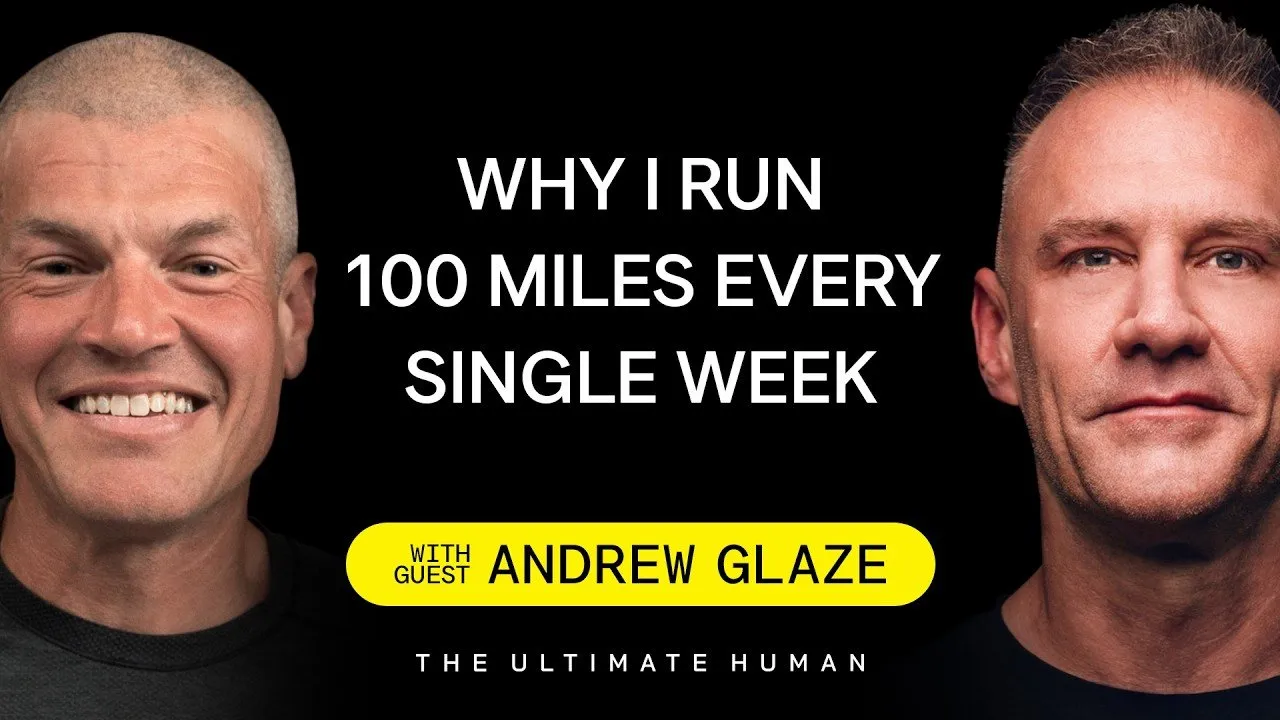
Ultra-endurance athletes often operate at the fringes of human capability, pushing physical limits that seem impossible to the average person. However, for Andrew Glaze, a veteran firefighter and accomplished ultra-runner, the journey into extreme distance running was not born solely from a desire for physical dominance, but from a necessity to manage mental health. In a compelling conversation with human biologist Gary Brecka, Glaze opens up about his transition from a struggle with anxiety and PTSD to becoming one of the most consistent endurance runners in the world, logging over 100 miles a week for more than 300 consecutive weeks.
Their discussion transcends the mechanics of running, diving deep into the psychology of pain, the necessity of failure, and the specific bio-hacks—both simple and complex—that allow a human body to endure 240-mile races through unforgiving terrain. Glaze’s story offers a profound look at how voluntary suffering can silence the involuntary noise of trauma.
Key Takeaways
- Exercise as a Mental Health Tool: Glaze utilizes ultra-endurance running to manage PTSD symptoms accumulated from years in the fire service, finding that extreme physical exertion quiets the mind.
- The "Pain Cave" Creates Presence: In the deepest stages of physical exhaustion, the brain focuses solely on survival, effectively shutting out anxiety and past trauma.
- Consistency Over Intensity: Glaze has maintained a streak of running over 100 miles per week for 300 consecutive weeks, often breaking daily mileage into two sessions to prevent injury.
- Real Food Fueling: Unlike many athletes who rely on gels, Glaze trains his gut to process solid foods like vegan burgers and avocados during races to sustain energy over days.
- Resilience Through Failure: His eventual success at the Moab 240 came only after two significant failures, teaching him that failure is a necessary data point for future success.
The Intersection of Trauma and Endurance
Before becoming a recognizable figure in the ultra-running community, Glaze battled significant mental health challenges in his twenties. Describing a lifestyle of inactivity, substance use, and depression, he stumbled into exercise as a remedial measure. However, as his career in the fire service progressed, the mental demands shifted from general anxiety to specific Post-Traumatic Stress Disorder (PTSD).
First responders often witness humanity at its most vulnerable and tragic moments. Glaze notes that these traumatic memories "stack" over time, leading to a dysregulated nervous system characterized by insomnia and hyper-vigilance. While many in high-stress professions turn to alcohol to numb these symptoms, Glaze turned to the trail.
"Because of the amount of pain and soreness and your brain really telling you to stop, you actually feel the most alive in those moments. And you know there's no PTSD creeping in."
The Silence of the Pain Cave
Glaze describes a phenomenon well-known to endurance athletes: the "pain cave." This is the mental state achieved when physical exhaustion is absolute. For Glaze, this state provides a unique therapeutic benefit. When the body is pushed to the limit—such as at mile 80 of a 100-mile race—the brain switches into a primal survival mode. In this state, complex psychological stressors, work anxieties, and PTSD triggers are silenced because the brain is entirely consumed by the immediate task of moving forward and staying alive.
Conquering the Moab 240
One of the focal points of Glaze's career is the Moab 240, a grueling 240-mile footrace through the desert and mountains of Utah. This event serves as a perfect case study for his philosophy on failure and resilience. Glaze did not finish the race on his first two attempts, experiences that were physically dangerous and mentally defeating.
Hallucinations and physical collapse
During his first attempt, Glaze pushed 200 miles before succumbing to sleep deprivation. While hallucinating, he fell off a cliff after a tree broke, injuring his back. In his second attempt, he suffered heat stroke at mile 85, a life-threatening situation where his body stopped sweating entirely. These failures, while devastating, provided the strategic data required to eventually succeed.
The Strategy of Redemption
On his third attempt, Glaze returned with a refined strategy. He incorporated a crew, a van for rest, and a specific sleep protocol—sleeping from 3:00 a.m. to 6:00 a.m. to wake up with the sunrise. This adjustment allowed him to manage the hallucinations that plague ultra-runners. Glaze describes these visual distortions vividly, recalling moments where rocks turned into "troll dolls" or sleeping racers appeared as robot dogs.
"You need to train your brain to be able to handle a lot of very tough situations. And what better way to do that than in an ultramarathon."
Despite a 150-year storm event that turned dry riverbeds into rushing currents, Glaze completed the race, proving that strategic adaptation is just as important as physical fitness.
Unrelenting Consistency and Training Protocols
Perhaps more impressive than any single race result is Glaze’s consistency. He recently celebrated 300 consecutive weeks of running at least 100 miles per week. This volume puts immense wear and tear on the body, yet Glaze manages to remain largely injury-free through specific protocols.
The "Double Day" Approach
To mitigate the risk of overuse injuries, Glaze rarely runs his daily mileage in a single session. Instead, he splits the distance. If the goal is 20 miles, he will run 13 miles in the morning and 7 in the evening. This allows the body a window of recovery and reduces the continuous impact on tendons and joints. He emphasizes that muscles adapt faster than tendons, so building volume slowly over a decade is key to durability.
Training on Shift
As a battalion chief, Glaze cannot simply take days off to train. He integrates his running into his work shifts, often running small loops around the fire station while carrying his radio and phone. This requires immense mental fortitude, as the scenery never changes and the running is monotonous, further hardening his mind for long, lonely stretches during races.
Fueling and Recovery for the Long Haul
In a world increasingly obsessed with high-tech biohacking, Glaze’s approach remains surprisingly foundational, focusing on diet, basic supplementation, and consistency.
Nutrition: Real Food vs. Gels
While energy gels are a staple for marathoners, they often cause gastrointestinal distress during multi-day efforts. Glaze, who follows a vegan diet, trains his body to process solid, real foods while running. At aid stations, he is known to consume veggie burgers, burritos, and avocados—providing the caloric density and fat required to sustain energy output over hundreds of miles.
Supplementation and Recovery
Glaze admits he doesn't have access to high-end treatments like hyperbaric chambers or stem cell therapy. Instead, he relies on accessible recovery methods:
- Sauna and Cold Plunge: Standard protocols for inflammation reduction.
- Red Light Therapy: Specifically used on his feet to maintain skin and tissue health.
- Supplements: His stack includes Flaxseed oil, Algae oil (for Omega-3s), Zinc, Magnesium (at night), Vitamin D3 + K2, and a B-Complex.
Gary Brecka noted that while Glaze’s regimen is effective, his ability to recover suggests that the body’s capacity to adapt to stress is far greater than generally assumed, provided the foundational elements of nutrition and consistency are met.
Philosophy: "Smile or You're Doing It Wrong"
Glaze’s approach to life and running is encapsulated in the title of his upcoming book, Smile or You're Doing It Wrong. This philosophy, inspired by his late father, emphasizes positivity as a mechanism for survival and success. Whether facing a difficult diagnosis, a stressful shift at the fire station, or mile 200 of a race, Glaze believes that shifting one's mindset toward positivity changes the physiological and psychological outcome.
Ultimately, Glaze runs to explore the depths of his own potential. He views the "ultimate human" not as the person who wins the race, but as the person who contributes selflessly to society and leaves the world better than they found it. Through his running, he has built a global community, inspiring others to find their own version of the 240-mile race, whatever that challenge may be.
Conclusion
Andrew Glaze’s journey challenges the conventional limits of the human body and mind. His story illustrates that elite performance isn't just about genetic gifts or expensive technology; it is about the relentless pursuit of self-improvement and the willingness to endure discomfort. By reframing pain as a tool for presence and viewing failure as a necessary step in learning, Glaze demonstrates that we are all capable of enduring far more than we believe.