Table of Contents
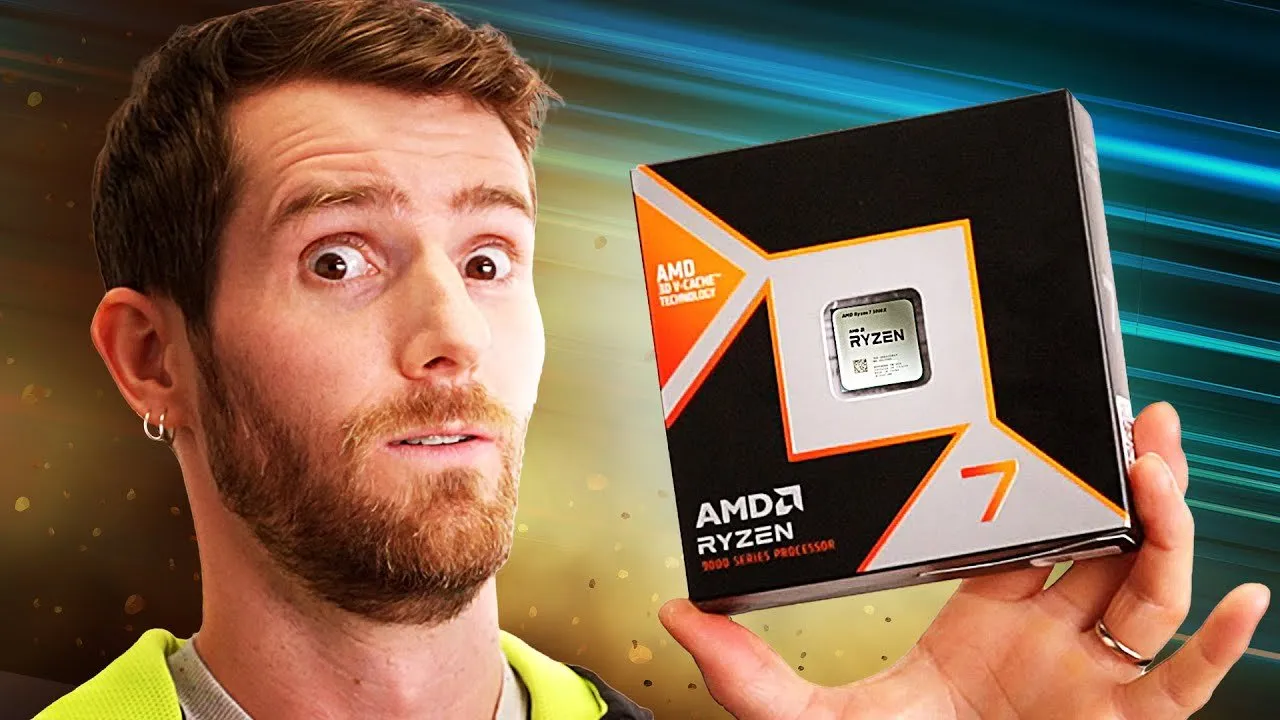
AMD has reinforced its leadership in the high-performance computing sector with the release of the Ryzen 7 9850X3D, a mid-cycle processor refresh designed to maximize the potential of the AM5 platform. By leveraging improved manufacturing processes to boost clock speeds without increasing power consumption, AMD delivers a chip that outperforms its predecessor, the 9800X3D, in both gaming and productivity tasks, solidifying its position against Intel’s Core Ultra lineup.
Key Points
- Performance Gains: The 9850X3D offers higher clock speeds up to 5.6 GHz, delivering measurable improvements in esports titles and productivity applications compared to the 9800X3D.
- Surprising Efficiency: Despite increased frequencies, the new chip demonstrates superior thermal management and similar or lower power draw in key benchmarks compared to previous iterations.
- Gaming Dominance: Benchmarks confirm the processor is currently the fastest consumer gaming chip on the market, particularly excelling in 1080p high-refresh-rate scenarios.
- Market Position: The release serves as a premium stopgap solution for enthusiasts awaiting AMD's next-generation Zen 6 architecture, expected late this year or early next.
Refining the AM5 Platform
The launch of the Ryzen 7 9850X3D represents a strategic "fine wine" approach to processor maturation. Rather than introducing a radically new architecture, AMD has utilized refined manufacturing capabilities to extract greater performance from the existing Zen 5 design. This release targets the enthusiast segment of the market where users demand the absolute highest frame rates and processing speeds available.
The primary differentiation for the 9850X3D is its ability to hit higher boost frequencies—targeting 5.6 GHz—while maintaining thermal efficiency. Industry analysts had initially anticipated that achieving these speeds would require significantly higher voltage and power draw, a common trade-off in "refresh" cycles. However, testing reveals that AMD has managed to increase performance without compromising the thermal envelope.
"It's a better product than I thought it was going to be... My initial reaction was it's probably going to be a roided out 9800X3D and I expected a big boost to both power draw and heat output... But that turned out to not be the case."
Benchmark Analysis: Gaming and Productivity
In controlled testing environments, the 9850X3D distinguishes itself as the current market leader, though the margin of victory varies significantly depending on the use case.
Gaming Performance
When paired with top-tier hardware, such as the NVIDIA GeForce RTX 4090, the 9850X3D leads the pack in 1080p gaming benchmarks. This resolution is critical for testing CPU limitations, as it minimizes the graphics card as a bottleneck. In competitive esports titles like Counter-Strike 2 and Rocket League, the processor achieves the highest average frames per second (FPS), outperforming both Intel's Core Ultra desktop chips and their 14th Gen flagships.
However, the performance gap narrows as visual fidelity increases. At 1440p resolution or when utilizing Ray Tracing, the burden shifts back to the GPU. Under these conditions, the 9850X3D performs within a 5% margin of other high-end chips. While the immediate visible difference may be negligible for casual gaming at 4K, the processor's raw speed offers better "future-proofing" for upcoming GPU upgrades and AI-driven upscaling technologies.
"AMD's 9850X3D is the fastest gaming chip that we tested thanks to all of the things that made its predecessor processor the fastest before. Eight of AMD's Zen 5 cores coupled with ample 3D V-Cache creates a combo that puts Intel to absolute shame."
Productivity and Efficiency
Beyond gaming, the increased clock speeds yield tangible benefits in creative and professional workloads. The processor consistently outperforms the 9800X3D in both single-threaded and multi-threaded applications. The single-threaded gains are particularly notable, driven directly by the frequency boost.
Despite these gains, the 9850X3D does not completely displace Intel in heavy multi-threaded production environments. Intel’s architecture, which utilizes a higher total core count, retains an advantage in specific workstation tasks that can leverage every available core. Nevertheless, AMD’s efficiency remains a strong selling point; in Cinebench stress tests, the 9850X3D ran slightly cooler and drew less power than its predecessor while achieving higher scores.
Market Implications and Consumer Advice
The introduction of the 9850X3D creates a new pricing tier at the top of the consumer CPU market. For users already operating on a Ryzen 7 9800X3D, the upgrade path offers diminishing returns. The performance delta, while measurable, likely does not justify the cost of a full replacement for existing AM5 owners.
However, for consumers building a new high-end rig or upgrading from significantly older hardware (such as the AM4 platform), the 9850X3D represents the pinnacle of current gaming technology. It offers a clear value proposition: the best possible performance for buyers who are not price-sensitive.
Conversely, budget-conscious consumers may find better value in the secondary market or previous generations. The continued viability of AM4 chips, such as the 5700X3D, or Intel’s discounted 12th Gen processors, provide competent gaming experiences at a fraction of the total platform cost.
Looking Ahead: The Road to Zen 6
The Ryzen 7 9850X3D serves as a bridge to AMD’s future roadmap. While it secures the performance crown for the first half of the year, the industry is already looking toward the next major architectural leap. AMD is expected to unveil its true successor based on the Zen 6 architecture toward the end of this year or early next year.
Furthermore, the desktop CPU market anticipates a response from Intel, as its next-generation architecture migrates from mobile to desktop platforms. Until then, AMD remains the dominant force for gamers seeking uncompromised performance.