Table of Contents
At CES 2026, the battle for semiconductor dominance intensified as AMD and Intel unveiled competing visions for the future of high-performance computing and on-device artificial intelligence. While AMD focused on refining its gaming supremacy and expanding its AI hardware ecosystem, Intel marked a significant milestone in its turnaround strategy with the debut of processors built on its proprietary 18A process node.
Key Takeaways from CES 2026
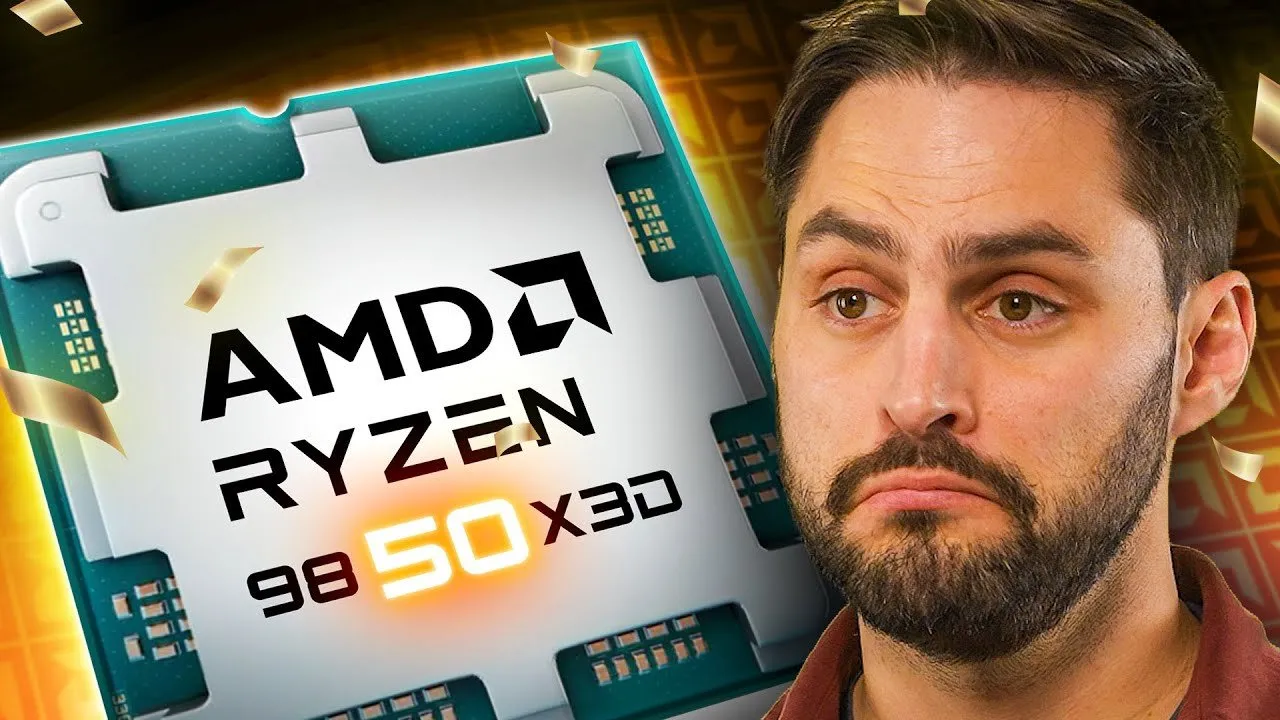
- AMD's Self-Competition: The new Ryzen 7 9850 X3D claims the title of fastest gaming CPU, offering a 7% performance uplift over the company’s own 9800 X3D.
- Intel's 18A Debut: The Core Ultra Series 3 "Panther Lake" chips promise up to 27 hours of battery life and significant integrated graphics improvements.
- Nvidia's Software Push: Instead of new hardware silicon, Nvidia introduced DLSS 4.5 with 6x frame generation and new G-Sync Pulsar display technology.
- Physical AI Integration: From Lego’s cloud-free Smart Play bricks to Amazon’s autonomous security trailers, hardware is increasingly decoupled from mandatory cloud tethering.
The Silicon Wars: AMD Dominates Gaming, Intel Targets Efficiency
AMD arrived in Las Vegas with an aggressive strategy, effectively competing against its own product stack to maintain market leadership. The company announced the Ryzen 7 9850 X3D, a processor that supersedes the 9800 X3D as the premier silicon for gaming. Early benchmarks presented by the company indicate a modest but significant 7% performance increase, reinforcing AMD's stranglehold on the high-end gaming sector.
Beyond gaming, AMD expanded its portfolio with the Ryzen AI 400 series for laptops, targeting enterprise users with enhanced processing power for heavy productivity workloads. Additionally, the company unveiled the Ryzen AI Halo, a mini PC designed specifically for developers, featuring Ryzen AI Max Plus CPUs intended to rival Nvidia’s DGX Spark in the AI development space.
Conversely, Intel’s showcase centered on the Core Ultra Series 3, codenamed "Panther Lake." These are the first major PC processors manufactured on Intel’s new 18A process node, a critical component of the company's "IDM 2.0" strategy to return to full-stack in-house manufacturing.
"Intel is claiming strong gaming performance here, about 73% faster on average than AMD's Radeon 890M in early demos and performance sometimes even rivaling discrete laptop GPUs."
The Panther Lake SKUs feature up to 16 CPU cores and 12 XE3 GPU cores. Intel reports a 60% improvement in multi-threaded performance and battery efficiency capable of reaching 27 hours in specific use cases. Furthermore, the new Arc B390 integrated graphics appears to be a disruptive force in the mobile market, potentially challenging entry-level discrete GPUs.
Nvidia Doubles Down on Display and AI Software
While competitors focused on raw silicon, Nvidia leveraged its dominance in AI software to enhance existing hardware capabilities. The company unveiled DLSS 4.5, the latest iteration of its upscaling technology. This update introduces a second-generation transformer model designed to sharpen edges and reduce ghosting, alongside a dynamic 6x frame generation mode for high-refresh-rate 4K gaming.
In the display market, Nvidia introduced G-Sync Pulsar. Launching with partners including Acer, ASUS, and MSI, this technology combines variable refresh rates (VRR) with advanced backlight strobing and adaptive brightness. The aim is to eliminate motion blur, providing visual clarity comparable to monitors with four times the base refresh rate.
Hardware Innovation: From Modular Laptops to Smart Bricks
The laptop market saw significant diversification at CES 2026. Samsung’s Galaxy Book 6 series touted a massive 30-hour battery life, positioning it as a direct competitor to ARM-based alternatives in longevity. Meanwhile, Schenker introduced the Panther Lake Element 16, a modular laptop designed for long-term upgradability, challenging the framework established by repairability advocates.
In a surprising move, Lego entered the tech space with the "Smart Play" system. The platform utilizes a standard-sized 2x4 smart brick housing a custom 4.1mm ASIC, sensors, and wireless radios. Notably, the system operates on a low-latency local mesh network without requiring cloud connectivity, addressing privacy concerns often associated with connected toys.
On the enterprise security front, Amazon’s Ring division debuted a mobile security trailer. This solar-powered, LTE-equipped unit features six cameras for 360-degree surveillance, integrated into the Amazon Sidewalk network, signaling a push into commercial and industrial security sectors.
Health Tech and Cybersecurity
Health technology continued to trend toward personalization and rapid diagnostics. Key announcements included Abbott's Libra Assist app, which predicts glucose responses to food in real-time, and Ixie’s autofocus smart glasses that adjust prescriptions automatically. Additionally, Pocket Mini Lab introduced portable allergen testing, capable of detecting gluten and other contaminants in minutes.
The event also highlighted growing cybersecurity tensions. During the conference, reports circulated regarding "Martha Root," a hacker who utilized an AI chatbot to dismantle a niche extremist dating platform, underscoring the dual-use nature of the generative AI technologies being celebrated on the show floor.
As the industry looks toward Q3 2026, the focus remains on the practical implementation of these technologies. With Intel’s 18A node entering mass production and AMD pushing the limits of 3D V-Cache, the hardware landscape is more competitive than it has been in a decade.