
Table of Contents
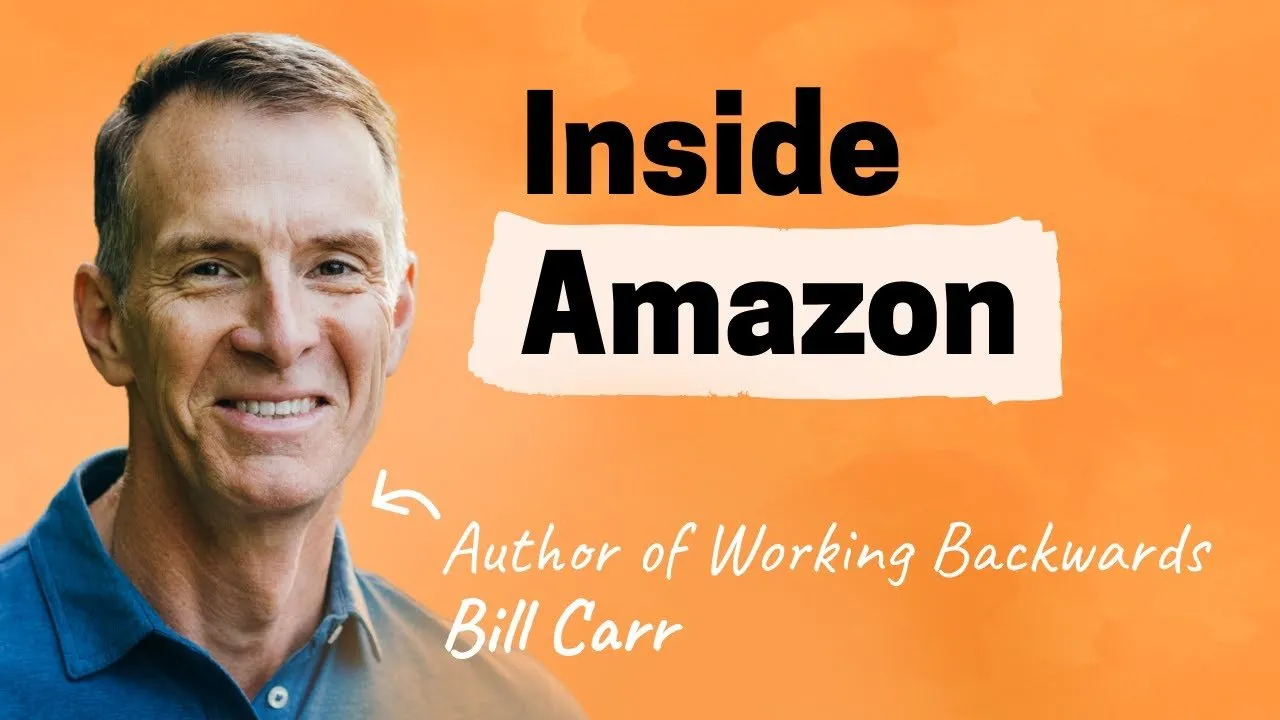
Amazon is often studied for its revolutionary products—AWS, Prime, Kindle—but its most enduring invention may well be its internal operating system. Between 2003 and 2007, as the company transitioned from a hyper-growth retailer to a complex global enterprise, it developed a specific set of mechanisms to manage innovation at scale. Bill Carr, co-author of Working Backwards and former VP of Digital Media at Amazon, reveals that these processes were not accidental. They were engineered to solve the "complexity limit" that stalls most organizations.
By shifting from a project-based mindset to a program-based culture, and by prioritizing customer inputs over financial outputs, Amazon built a system that allows for decentralized autonomy without sacrificing high standards. The following breakdown explores the core principles that enable Amazon’s unique way of working, offering a blueprint for leaders looking to replicate that agility.
Key Takeaways
- Work Backwards from the Customer: Start with the customer experience and work backward to the technology, rather than starting with a product idea and looking for a market.
- Implement Single-Threaded Leadership: To move fast, teams need separable, autonomous ownership where a single leader is wholly responsible for a program’s success.
- Focus on Input Metrics: Revenue and share price are lagging indicators. Success comes from managing controllable inputs like selection, price, and convenience.
- Use the PR/FAQ Process: Replace slide decks with written narratives (Press Release/FAQ) to rigorously test ideas before writing a single line of code.
- Raise the Bar on Hiring: Use "Bar Raisers"—interviewers with veto power outside the hiring chain—to ensure every new hire is better than 50% of the current workforce.
The Philosophy of Working Backwards
The phrase "Working Backwards" is more than a catchy slogan; it is a rejection of the "skills-forward" approach common in many tech companies. In a traditional model, companies look at their existing competencies—engineering resources, sales channels, or proprietary technology—and ask, "What can we build with this?" Amazon flips this dynamic entirely.
The process begins with a specific customer need or problem. Teams are encouraged to ignore current constraints—such as lack of expertise or infrastructure—and define the ultimate solution the customer wants. This approach forces the organization to acquire new skills rather than relying on old ones.
We took it as an article of faith. If we served customers well... things like sales, things like revenue and active customers... would follow.
This philosophy was codified during a critical window when Amazon expanded beyond retail into digital media and cloud computing. By trusting that customer obsession would eventually yield financial results, leadership empowered teams to build products like the Kindle and AWS, which initially seemed outside the company's core competency.
The PR/FAQ: A Mechanism for Clarity
To operationalize the concept of Working Backwards, Amazon replaced traditional PowerPoint pitches with the PR/FAQ process. Before a product is built, the product manager must write a mock Press Release (PR) and a Frequently Asked Questions (FAQ) document.
Writing the Future
The internal Press Release is written as if the product has already launched. It must vividly describe the customer problem and the solution in plain language that a layperson can understand. If the press release doesn't sound exciting or valuable, the product isn't worth building. This document serves as a forcing function for clarity, stripping away jargon and sales fluff.
The Funnel vs. The Tunnel
Carr emphasizes that this process creates a "product funnel" rather than a "product tunnel." In many organizations, once a project enters the pipeline (the tunnel), momentum carries it to launch regardless of its viability. The PR/FAQ process generates a funnel where many ideas are written down and debated, but few survive to the build phase.
You want to create a product funnel, not a product tunnel... thinking about yourself honestly as a venture capitalist. They don’t fund every company that they meet with.
By rigorously vetting ideas on paper—an inexpensive resource—companies save engineering hours—their most expensive resource—for the initiatives with the highest probability of success.
Single-Threaded Leadership and Autonomy
As organizations scale, dependencies kill speed. When a product team needs to negotiate with a platform team, a marketing team, and a finance team to get anything done, innovation grinds to a halt. Amazon’s solution was to dismantle the matrixed organization in favor of "Single-Threaded Leadership."
A Single-Threaded Leader (STL) does not just manage a project; they own a program. They are given the resources (engineers, designers, marketers) required to deliver their goals without needing to constantly petition other departments. This reduces the need for "coordination costs" and endless meetings.
Countermeasures for Functional Excellence
The risk of autonomous teams is the potential loss of functional excellence. If an engineer reports to a business generalist rather than a VP of Engineering, who ensures their code quality remains high? Amazon implemented specific countermeasures to mitigate this:
- Centralized Auditing: While teams are autonomous, core functions like security and hiring standards remain centralized.
- Dual Roles: Senior engineers and directors often hold secondary roles, such as conducting code reviews for other teams or serving on promotion panels, to ensure standards remain uniform across the company.
Mastering Metrics: Inputs vs. Outputs
One of the most critical distinctions in Amazon’s management style is the separation of input metrics from output metrics. Most companies manage to outputs: revenue, profit, and stock price. However, these are lagging indicators. By the time a leader sees a drop in quarterly revenue, the damage has already been done.
Amazon focuses obsessively on controllable input metrics. These are the variables that the company can directly influence and that, if improved, will causally lead to better outputs.
The Flywheel Effect
Inspired by Jim Collins’ book Good to Great, Amazon identified the inputs that drove its specific "flywheel":
- Lower prices
- Broader selection
- Faster delivery speed
Carr notes that managing inputs prevents short-term, destructive behaviors. When management pushes for a quarterly revenue target (an output), teams often resort to "fire drills" like spammy promotions or flash sales. These tactics might hit the number for the quarter but degrade the customer experience over time. By focusing on inputs, leaders ensure that the daily work contributes to long-term health.
The data rarely makes the decision for you. What is happening is then a lot of judgment and interpretation of the data, weighing that... to then come to a decision.
Cultural Mechanisms for Decision Making
Processes and metrics are useless without a culture that supports truth-seeking. Amazon reinforces this through specific leadership principles that guide behavior in high-stakes environments.
The Reality of "Disagree and Commit"
This principle is often misunderstood as "do what you are told once the boss decides." Carr clarifies that it is actually a two-way obligation. First, team members are obligated to respectfully challenge decisions when they disagree, ensuring the leader has all available information. Second, once a decision is made, the dissenter must support it fully, not merely comply while waiting for it to fail.
Successful commitment involves understanding the "kernel" of the leader's thesis—even if you disagree with the tactics—and doing everything possible to make that vision successful.
The Bar Raiser Program
To combat the dilution of talent during periods of rapid hiring, Amazon instituted the Bar Raiser program. In every interview loop, one interviewer is designated as the Bar Raiser. This person is not the hiring manager and often comes from a different department.
Their role is to ensure the candidate is better than 50% of the current employees in that role. They have veto power over the hiring manager. This creates a systemic check against "urgency bias"—the tendency for managers to hire a "good enough" candidate simply to fill a seat. This mechanism ensures that the quality of talent increases, rather than regresses to the mean, as the company scales.
Conclusion
Amazon’s success is not strictly defined by what it sells, but by how it decides what to sell. The frameworks of Working Backwards, Single-Threaded Leadership, and Input Metrics are not exclusive to e-commerce; they are applicable to any organization facing complexity.
However, Carr warns against "cargo culting"—simply copying the artifacts (like writing memos) without understanding the underlying principles. Implementing these changes requires discipline and, most importantly, buy-in from the very top. For leaders willing to embrace the discomfort of rigorous thinking and long-term planning, these mechanisms offer a proven path to sustainable innovation.



)