Table of Contents
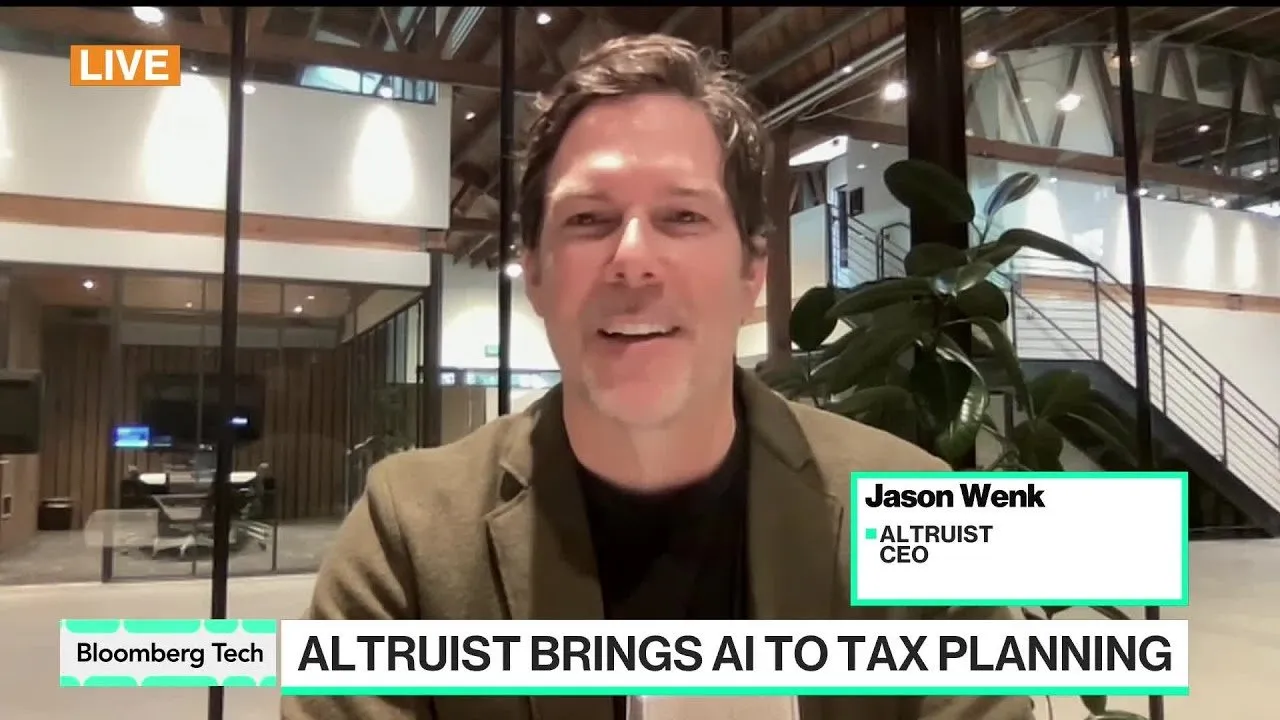
Altruist CEO Jason Wenk recently addressed the significant market volatility spurred by artificial intelligence advancements in wealth management, clarifying how Altruist's new AI-powered tax optimization tool, Hasl, is designed to empower financial advisors rather than displace them. His remarks come on the heels of a week that saw tens of billions in market capitalization vanish from traditional financial institutions, signaling a profound shift in industry operational efficiency and client accessibility.
Key Points
- AI advancements triggered a rapid market cap decline for some wealth management incumbents, with up to $100 billion wiped out in a week.
- Altruist's AI tool, Hasl, aims to empower financial advisors by automating complex tasks like tax optimization, reducing processes from hundreds of hours and tens of thousands of dollars to minutes for approximately $100 per month.
- Crucially, Hasl operates as a separate, custodian-agnostic entity, allowing advisors from any firm, including competitors like Charles Schwab and Fidelity, to integrate its capabilities.
- The synergy of modern infrastructure with AI presents a significant competitive advantage against traditional firms reliant on antiquated systems.
- AI is positioned as an "equalizer" to make wealth management more affordable and accessible to a broader client base.
AI's Disruptive Force in Wealth Management
Jason Wenk expressed his surprise at the scale of the market's initial reaction, noting, "I don't think anybody could have possibly thought that, you know, somewhere between, you know, tens of billions and maybe a $100 billion of market cap would be wiped out in a week." He underscored that this disruption stems from AI's powerful potential. However, Wenk clarified Altruist's philosophy, asserting that AI is intended to empower advisors, not replace them. This strategy directly addresses long-standing criticisms within wealth management, such as high minimums, prohibitive costs, and inconsistent results—issues often rooted in extensive manual labor and outdated processes.
"AI very much is an incredible equalizer... What used to take, you know, teams that were, you know, 10 or more people working hundreds of hours and costing many tens of thousands of dollars. It can be done in, like, two to three minutes."
Wenk explained that by dramatically reducing the time and cost associated with complex tasks, AI makes sophisticated financial advice significantly more affordable and accessible to clients.
Hasl: A New Paradigm for Advisor Tools
Altruist's inaugural AI offering, Hasl, is an advanced tax optimization tool strategically launched during the U.S. tax season. Wenk highlighted its transformative efficiency: a process that once required extensive human resources and significant expenditure can now be completed in mere minutes for a monthly advisor fee of around $100. A critical aspect of Hasl's strategy is its universal accessibility. While Altruist directly competes with major custodians like Charles Schwab, Fidelity, and LPL, Hasl was established as a separate entity to serve all independent financial advisors, regardless of their chosen custodian.
"We wanted Hasl to be something that any adviser could use to help any client, and we didn't want them to be forced into using a single custodian."
This open approach has already seen thousands of advisors using custodians like Schwab leverage Hasl. Furthermore, Wenk revealed that "hundreds of very large significant wealth management companies around the world" have initiated contact within a short period, signaling widespread interest in potential partnerships.
The Incumbent Challenge: Infrastructure Meets AI
Wenk emphasized that Altruist's competitive edge extends beyond just AI, stressing the crucial role of modern, vertically integrated infrastructure. He contended that simply layering AI onto outdated systems yields minimal value, likening it to "putting like a... self driving on a horse and buggy." Altruist's platform streamlines operations like account opening, funding, and asset management, creating an ecosystem that amplifies AI's power. This combination, offering a "20 or 30% better" digital experience that becomes "two or 300% better" with AI, poses a formidable challenge to legacy institutions.
Meanwhile, major industry players are also acknowledging AI's impact. Charles Schwab CEO Walt Bettinger reportedly stated:
"AI is a real accelerant. So it was puzzling to see our stock sell off related to AI because we're benefiting it from it in multiple ways and bringing it to our clients. It's allowing us to reach new clients, and I think that's why you won't see population of advisers shrink is that AI will be useful in reaching new clients that we couldn't before."
Wenk concluded that Hasl's model uniqueness is rooted in its access to "really clean data," particularly transactional data from its custodial operations, providing the "ultimate system of record" necessary for highly personalized and effective analysis.
As the financial services industry navigates this technological evolution, Altruist anticipates the development of additional AI "agents" to further enhance and democratize financial advice. The current rapid adoption and interest in tools like Hasl suggest a continued acceleration of operational efficiency and a potential reallocation of assets among custodians, fundamentally reshaping the wealth management landscape in the years to come.