Table of Contents
Despite widespread expectations for a significant cryptocurrency market rally in 2025, many alternative cryptocurrencies (altcoins) underperformed due to structural economic flaws, specifically regarding token unlocks and supply mechanics. A new report titled "Annual Report 2025" by Tokconomist reveals how aggressive inflation schedules and unsustainable valuation models eroded portfolio values, signaling a critical shift toward "Tokenomics 2.0" focused on genuine revenue and value accrual.
Key Points
- Surge in Buybacks: Crypto projects conducted $8.1 billion in token buybacks in 2025, a 145% increase from the previous year, though execution strategies yielded vastly different price outcomes.
- Revenue vs. Treasury: Tokens utilizing revenue-funded buybacks and burns saw average 90-day gains of 73%, while those relying on treasury funds to buy back their own tokens dropped by 33%.
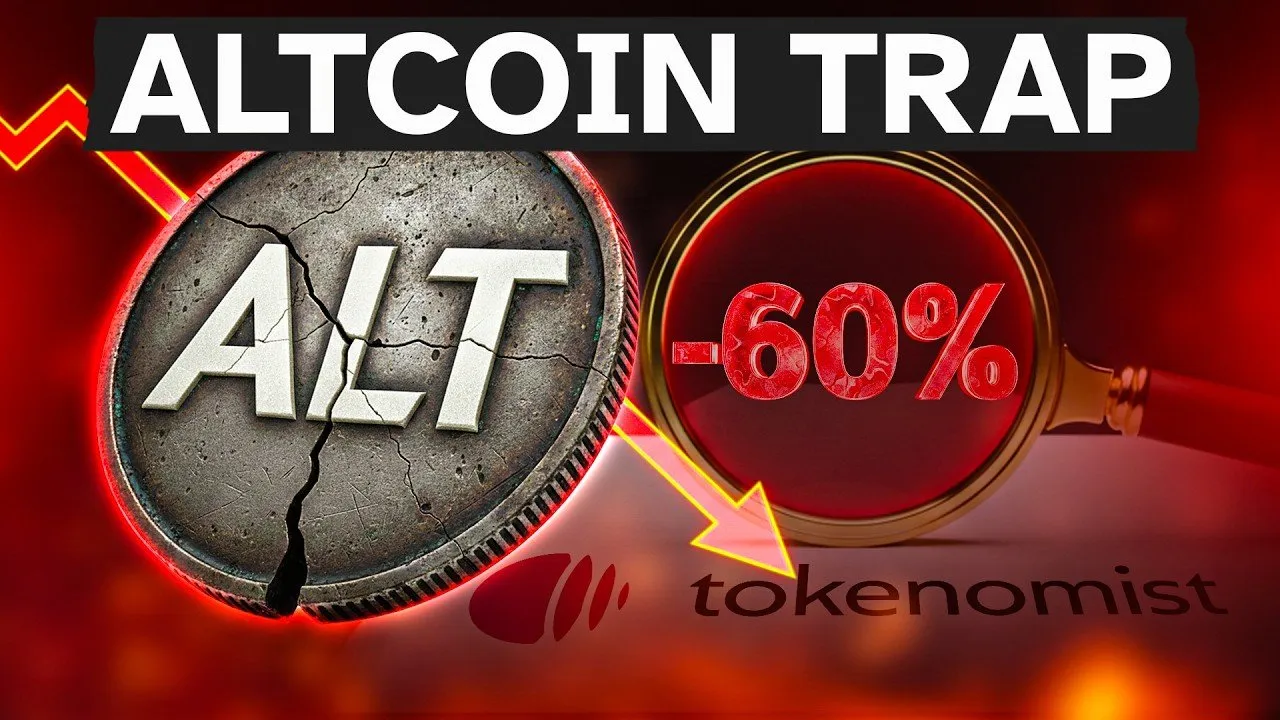
- The Valuation Disconnect: New project launches with high Fully Diluted Valuations (FDV) relative to capital raised suffered average losses of over 60%, highlighting the dangers of "low float, high FDV" models.
- Inflationary Pressures: Despite burn mechanisms, major networks like Ethereum and Solana ended the year net inflationary due to changes in transaction fee dynamics and staking emissions.
The $8.1 Billion Buyback Wave
The cryptocurrency sector witnessed a maturation in capital allocation strategies in 2025, with projects collectively spending $8.1 billion on token buybacks. This represents a massive jump from the $3.3 billion recorded in 2024. However, the report indicates that the headline figure is heavily skewed, with 79% of the total volume attributed to OKX’s exchange token, OKB.
Even excluding outliers, the data shows a monthly increase in buyback activity across the decentralized finance (DeFi) sector, rising from $70 million in January to $350 million by October. Yet, the report emphasizes that the source of capital is the primary determinant of price performance.
"A $10 million treasury-funded buyback redistributed to stakers creates fundamentally different dynamics than $10 million in revenue-funded burns. Same dollar amount, opposite tokenomic impact."
Data indicates that the market punished projects that attempted to artificially prop up prices using treasury funds. Projects combining revenue, protocol fees, and treasury funds for buybacks performed the worst, falling an average of 52% in the 90 days following implementation. Conversely, pure revenue-funded buy-and-burn models correlated with the strongest positive price action.
Burn Mechanics and Net Inflation
While token burns are often marketed as deflationary catalysts, the 2025 data suggests that emissions frequently outpaced burns, leading to net inflation for major assets. The report asserts that "buybacks mean nothing if emissions exceed them."
Ethereum, for instance, burned approximately $280 million in ETH. However, following the Dencun upgrade, transaction activity migrated to Layer 2 solutions, reducing mainnet fees and consequently the burn rate. Combined with staking issuance, Ethereum ended 2025 slightly inflationary at 0.5%.
Solana underwent a more drastic structural change. Following the implementation of a Solana Improvement Document (SIMD) regarding priority fees, the daily burn rate of SOL dropped by approximately 95%. While $338 million in SOL was burned, staking emissions resulted in a net inflation rate of 3.9%.
Deflationary Outliers
A few projects managed to achieve genuine deflation through aggressive revenue capture:
- OKB: Achieved a 46% deflation rate by burning 93% of its supply to align with Bitcoin’s scarcity model, funding $6.4 billion in buybacks entirely through protocol revenue.
- Hyperliquid (HYPE): Directed 97% of trading fee revenue toward continuous buybacks and burns. A governance vote further reduced the fully diluted valuation by converting fees to a burn address, cutting circulating supply by 13%.
The "Low Float, High FDV" Trap
The report provides a scathing analysis of Token Generation Events (TGEs) in 2025, particularly regarding the ratio between capital raised and launch valuation. Seven major projects analyzed—including Bio Protocol, Berachain, and Monad—averaged losses exceeding 60% post-launch.
The primary driver of this underperformance was the disparity between private funding and public valuation. Projects launching with extreme FDV multiples faced severe corrections:
- Bio Protocol: Raised $37 million but launched at a $2.8 billion valuation (a 77x multiple). The token subsequently collapsed 94%.
- Kaito: Launched at a 261x multiple relative to its raise, resulting in an 80% price decline.
In contrast, projects with more modest multiples performed significantly better. Story Protocol, which launched with a 19x multiple, saw a minor decline of 9%, outperforming its peers. This data reinforces the market's growing intolerance for inflated valuations unsupported by network effects or revenue.
Impact of Supply Unlocks
Token unlocks—the release of previously restricted tokens into circulation—remained a significant source of sell pressure. The report tracked ten major projects with unlocks ranging from $584 million to $2.3 billion. In almost every case, a dramatic increase in supply correlated with a sharp decline in price.
Notable examples included:
- Ethena (ENA): A $1 billion unlock increased supply by 140%, coinciding with a 73% price drop.
- Worldcoin (WLD): A $1.1 billion unlock increased supply by 76%, leading to a 71% decline.
- Avalanche (AVAX): A 9% supply increase resulted in a 60% price correction.
The sole exception among tracked assets was WhiteBIT (WBT), which rallied 136% despite a supply increase, a deviation attributed to its strong revenue generation and burn mechanisms.
Tokenomics 2.0: The Path Forward
The prevailing theme for the upcoming cycle is "Tokenomics 2.0," a shift where projects prioritize sustainable value accrual over speculative hype. The market is increasingly favoring protocols that distribute real yield to holders or utilize revenue for systematic supply reduction, moving away from the inflationary rewards that characterized the previous cycle.
Investors are advised to scrutinize unlock schedules for 2026. Upcoming events include a significant supply expansion for Pump.fun (19% increase in July) and WhiteBIT (27% increase in March). Conversely, established protocols like Arbitrum and Sui face relatively minor dilution events of under 2%.
As the market matures, the correlation between sound economic design and price performance is tightening. Projects that fail to balance emissions with genuine demand or revenue capture are likely to face continued devaluation, regardless of their technological utility.